
The revival of Wigan's Royal Court Theatre has transferred to the council as The Old Courts rebuilds
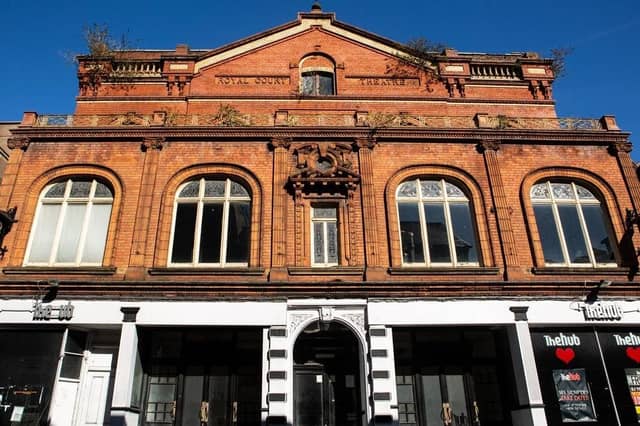

After major artistic plans for Wigan were wrecked by Covid and bungling workmen, the charity behind the town’s Old Courts hub is looking to brighter times ahead.
But bosses admit the recovery will be slow and its most ambitious plan – renovating the wonderful Royal Court Theatre on King Street – would be beyond them for so many years that the keys have been handed over to the council.
The Crawford Street-based Old Courts is in its 10th anniversary year and for the first five it was all systems go, hosting 1,000 events annually with the promised revival of the long-mothballed theatre.
First though the pandemic hit, which not only lamed a lot of productions and projects but also signalled a sea-change in government funding availability for independent operators.

Then a more singular disaster struck in 2023: contractors carrying out renovation works on the Old Courts caused part of the building to collapse, meaning that The Grand Vault music venue and seated theatre were put out of action indefinitely.
This lseverely curbed business, leading to 50 redundancies and the operation ticking over on a skeleton crew.
The organisation went from a £4.4m turnover to one turning over less than £1m.
Work on the Royal Court – bought by the organisation behind the Old Courts, Arts at the Mill, for £140k in 2020 and subsequently having £900k worth of Heritage England money spent on future-proofing it and several hundred thousand more on funding designs – was paused.
Since then there has been a protracted battle with the contractor’s insurers.
There was a major breakthrough when the blame was officially pinned on the contractor and £2.4m was paid up in insurance for repairing the damage.
But a claim for £3.9m, which is rising all the time, for loss of earnings, still isn’t settled.
After the building collapse, HM Revenue and Customs gave Arts at the Mill some discretion while it worked through the insurance claim, but after two years HMRC was beginning to get twitchy and asking if they were ever going to settle. There is currently £1.7m owed to various parties.
It is stressed that no artists, freelancers, or local partner organisations are owed anything and the only local liability outstanding is business rates with Wigan Council, which is subject to an active discretionary relief process that has typically reduced or cleared the figure in full in previous years.
Taking advice from experts at PricewaterhouseCoopers, bosses put Arts at the Mill into temporary administration and a charity called Wigan Heritage and Arts Trust, which bosses had long been planning to take over anyway, took charge of the day-to-day running.
It meant that HMRC couldn’t wind up Arts at the Mill and so completely close down all of its operations with the loss of everyone’s jobs.
MD David Jenkins said: “This is a positive and necessary step that safeguards the interests of creditors while we work towards recovering losses from the incident.”
He said he hoped now that the rest of the insurance issue would be settled rapidly, partly because the contractors are now officially at fault for the damage so they must be responsible for the losses too; and partly because the longer this drags on, the bigger the bill gets.
And when/if the money is paid out, it will easily wipe out the debt with the best part of £2m to spare which would be donated to the trust for future works.
Mr Jenkins said he hoped that the money issue would be settled round about the same time as the work to get the two Crawford Street venues up and running again: namely in the coming spring.
But that does not mean it will be all systems go for every project.
Mr Jenkins said ownership of the Royal Court was transferred to Wigan Council in June.
He added: “We have said we will still be actively involved in the project, but three years ago we had a 64-strong team with a realistic chance of raising monies. While we are now recovering, it will take us years to build back up and the theatre is not without costs, even while nothing is being done to it, including insurance and security.
“We asked the council if they would take it over. They have access to funds unavailable to independents like us – such as Levelling Up – and since Covid there have been no funds available for capital work for independents.
"The chances of raising £10m by an independent charity are between slim to none. This is far more likely a happening for the council as part of the wider King Street regeneration project.”
Mr Jenkins added that before Covid, an architect estimated that between £2m and £3m would be needed to bring back the theatre into commercial use. He said the most recent estimate, given rocketing construction costs post-pandemic, had shot up to a whopping £14m!
Aidan Thatcher, Wigan Council’s director of place, said: “The Royal Court Theatre is a landmark building on King Street and an important part of our heritage; and its refurbishment, redevelopment and re-use is part of our long-term vision for the wider regeneration of King Street and Wigan town centre.
“Bringing listed buildings like this back into active use is rarely easy, and our next challenge is to explore and secure funding that will be needed to breathe new life into the building.
“We will continue to work with partners and the wider community to secure a viable future for the Royal Court Theatre which not only respects its heritage but also drives a thriving future for King Street.”
Mr Jenkins added: “The Old Courts continues to host live music, theatre, exhibitions, weddings, and community projects, welcoming audiences and artists from across the region. The charity’s structure ensures stronger governance, long-term sustainability, and access to new streams of charitable funding.
“This marks a positive new chapter for both organisations and for Wigan’s creative community.”