
50 years since the death of a Wigan mountaineer on Mount Everest
Michael (Mick) Burke Mountaineer. He was born in Abram, Wigan on the 14 January 1941 He died on the 26 September 1975 at, or descending from, the summit of Mount Everest. At the time of his death, he was the only person standing on the highest place on Earth having completed, possibly, the first solo attempt of the summit of Everest.
FROM HUMBLE BEGINNINGS
Mick’s journey starts in the Langdale’s, in the Lake District, in the mid 50’s and took him from Wigan to the Lakes then onto Snowdonia, Scotland, The Alps, South America, United States of America, Canada, ending up in the Himalaya.
A friend of his mother introduced him to walking and scrambling in the Lakes when he was about 12 years of age and from the age of about 15, he was hitchhiking to the lakes on his own, every weekend.
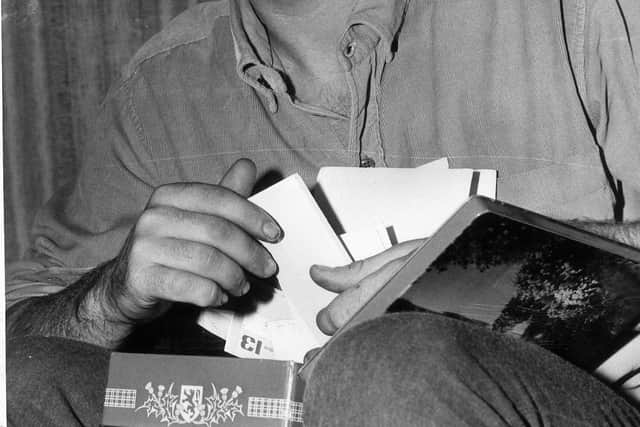

As it is 60+ years since he started climbing, it is hard to know what he climbed and who with.
Where l found evidence of the climbs he did and who with, l have written down but is more than likely that he did work his way through a lot of the hard routes (at that time) in the Lakes, Peak District, Snowdonia and Scotland.(Cenotaph Corner on Dinas Cromlech and The Corner on Clogwyn with Richard McHardy and ‘Ackers’ and on Heron crag and Deer Bield Buttress with Martyn Boysen and Kiplings Groove on Gimmer with Pat Walsh and Do Not on White Ghyll with Paul Ross are a few that l found)
He started on the crags in the Lake District and was part of the Langdale Lads climbing group based at the Wall End Farm in the Langdale Valley climbing mostly with Roger Marshall (who himself died near the summit of Everest in 1987) also with Pete Turnbull and Pete Muscroft along with Ian Sykes, Stewart Baird, Peter Tait, Ginger Warburton and Stu Gallagher to name but a few. He also climbed a lot with Martin Boysen and Richard McArdy and members of the ‘Alpha’ club and the Keswick club including Paul Ross.
He also climbed a lot with Pat Walsh in the '50s and early '60s.

After leaving his job at an insurance firm, in Manchester, in 1962, he lived in the lake District, taking part time jobs (barman at the Royal Oak in Ambleside among others) allowing him time to do more climbing in the Lake District and around the country.
It was to be in Alpine climbing that he excelled
Climbing bigger peaks in the Alps and under worse weather conditions between 1960 and 1964 increased his experience and led him to join the Alpine Club.
Climbing in the Alps in the '60s also led to him, in 1965, joining the American School at Leysin, Switzerland as a climbing/skiing instructor working for Royal Robbins. (American climber)
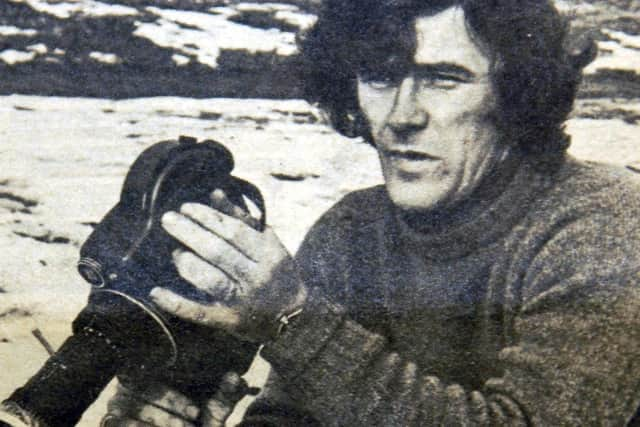
He also worked with John Harlin (American climber) at the International School of Mountaineering also based at Leysin.
He was sent, from Leysin, by Royal Robbins, to replace Don Whillans, and join Chris Bonington, on the West Face of the Eiger, helping him to photograph the summiteers on the Eiger ‘Directissima’ route that John Harlin (American climber), Dougal Haston and Leyton Kor (American climber) were attempting, but also competing with, a German team on the same route
John Harlin died in a fall, halfway up the route.
He ended up staying in a snow hole for two days with Chris Bonington, who was contracted to take photos of the climbers as they summited, in the most appalling weather conditions, near the top, on the West Face of the Eiger, and helping to rescue the climbers down to the snow hole, MB and CB had dug out, for another night and then helping them off the mountain the following day.
This stay, in the snow hole, led, a few years later, to Annapurna and two trips to the South West face of Everest on Chris Bonington’s expeditions.
He was climbing with Mike Kosterlitz (now a Nobel prize winner (Physics)) on the 2nd attempt of the ‘American direct’ route on the Petit Dru and they had to rescue 2 two French climbers on the way down. One of the French climbers had fallen into a crevasse on the way down and broke his leg and Mick and Mike got him out and waited with him while his colleague was sent to get help.
In 1966, in Chamonix, he joined a rescue party led by Gary Hemmings (American climber) that included Francois Guillot, Lother Mauch, Gilles Bodin, Gerhard Bauer and Rene Desmaison that rescued 2 German climbers that were trapped high up on the West Face of the Dru.
In February 1967, with Dougal Haston, he climbed the North Face of the Matterhorn, in winter. (Only the fourth winter accent on the North face.)
More climbing in the Alps throughout 1967.
In November 1967 it was down to South America and into Patagonia to attempt to climb the 3500ft South East Ridge of Cerro Torre.
A strong team consisting of Mick, Dougal Haston, Martin Boysen, Pete Crew and Jose Luis Fonrouge (Argentinian climber) along with journalist Peter Gillman.
After nearly three months battling the weather, they had to give up just 700ft from the summit.
The team split up and returned to England but Mick hitched his way through South, then Central America, with the best part of a month in Panama due to some passport problems and then up into the USA.
Some lecturing in New York State and a meet up and some climbing in New Hampshire with Rob Wood and also on the ‘Bloody Mary’ route on a big cliff called Pokomoonshine in New York State.
California dreaming and into Yosemite National Park and several climbs in the region before the big one. El Capitan. 3000ft of near vertical Granite wall.
Mick persuade Rob Wood to accompany him on ‘The Nose’ route of El Capitan and in June 1968 they became the first British climbers to complete the 4 day climb and the 15th team overall.
Into Canada, British Columbia, to climb some routes on a mountain called Squamish Chief, possibly with Rob wood as well.
Back to blighty, marriage to Beth then on to train as a cameraman.
In order to complete his training as a cameraman he had to produce and edit a programme for ITN.
He decided to film a climb of the North Face of the rock of Gibraltar, got permission from the authorities to do so, and asked Martin Boysen, along with a Captain Henry Day from the military base at Gibraltar, to climb it whilst he set up and filmed it.
Now with 10 years alpine climbing under his belt, Cerro Torre and El Capitan, it was time to go higher, to the Himalaya
Chris Bonington asked him to join the 1970 British Expedition to climb the South Face of Annapurna.
Climbs on Les Droits and Aiguille de Peigne with Don Whillans in 1969 preparing for Annapurna.
Annapurna South Face, the best part of 10,000ft, that had never been attempted, at that altitude, and under extreme conditions of temperature and height.
Along with a very strong team of British climbers including Nick Estcourt, Martin Boysen, Don Whillans, Ian Clough, Mike Thompson, Dougal Haston and an American Tom Frost.
Despite the arguments with Don Whillans and against all odds they succeeded. It was the first time a Face that big had been climbed.
Mick, along with Tom, climbed the rock band, approx. 1200 ft, at an altitude of over 23,000ft, that helped to get Don Whillans and Dougal Haston to the summit.
Micks own attempt along with Tom Frost failed. They both set out for the summit but Mick’s feet got very cold and he stopped climbing. Tom carried on a little higher before coming down.
Ian Clough died in an ice fall on the way back down the mountain.
After Annapurna there was less climbing and more working for the BBC as a cameraman.
Doug Scott organised an expedition to climb on Baffin Island in Canada in 1971 and Mick went along to film, (Sponsored by Players No.6), the climbers on the various mountains that they climbed and it was called ‘A Dangerous Alternative’ but he did little climbing himself.
Asked, by Chris Bonington, to join the 1972 British expedition to climb the, unclimbed, South west face of Mount Everest, were he chose to climb as a main member of the team, rather than just a camera man, he joined up with Chris Bonington, Dougal Haston, Doug Scott, Hamish MacInnes, Nick Estcourt and Dave Bathgate as the main climbers.
Defeated by the weather they got as far as 27,300ft.
Now working full time as a cameraman for the BBC, husband and father, to Sara, so very little climbing, but was serving the ACG (Alpine climbing group) as a Committee Member, secretary and correspondent.
Asked again, by Chris Bonington, to join the 1975 British expedition to climb the, still unclimbed, South west face of Mount Everest, were he again chose to climb as a main member of the team, but was also part ofthe BBC filming crew (led by Chris Rawlings) and was their high altitude camera man, he joined up with Chris Bonington, Dougal Haston, Doug Scott, Hamish MacInnes, Nick Estcourt, Martin Boysen, ‘Tut’ Braithwaite ,Pete Boardman and Mike Thompson as the main climbers.
This time they changed their route on the SW Face and on the 24 September 1975 Doug Scott and Dougal Haston reached the summit.
TO THE TOP OF THE WORLD
The second summit group set out early on the 26th September from camp 6 at 27,300ft for the seven to eight hr climb to the top.
Led by Martin Boysen then Pete Boardman then Pertemba (Sherpa) with Mick bringing up the rear. (also carrying the Blue Peter Flag to put on the top).
Martin’s oxygen packed in and he lost a crampon and he had to back to camp 6 and was over taken by the other 3, Mick was lagging behind (probably filming on the way up) by about an hr by the time the other two got to the south summit but then Pertemba’s oxygen started playing up and it took Pete about 30 – 40 mins to clear it before they could set off again.
Mick would have caught up somewhat and could possibly have seen the others above him.
Pete and Pertemba made the summit and stayed about half an hr before coming down. They met Mick above the Hillary Step and about 100m from the summit and he asked if they wanted to go back and he would film it, but Pertemba was struggling so Pete roped up with him and took him down to the South Summit were they agreed to wait for Mick.
The weather now turned really bad and a storm hit the top of Everest. (‘All the winds of Asia’-in Pete Boardman’s book). Pete and Pertemba stayed for an hour and a half at the South Summit waiting for Mick but he never returned. They had to leave or they were going to die themselves and they only just made it back to camp 6 hours later where they were stuck along with Martin. Martin was going to go back up the next day with all the oxygen he could carry to look for Mick as he may have had to go under the snow to ride out the storm but the storm continued for the next 3 days before the weather broke and they could escape from camp 6 and Chris had to clear everybody off the mountain.
Mick’s peers believe that did make the summit and that he probably fell, when descending, through a cornice during the near invisibility due to the spin drift created by the storm.
He would have been the 54 person to climb Mount Everest and the 4th Brit.