
Creepy Crawlies: Not all yellow and black insects are aggressive
Not everyone’s cup of tea but it’s undeniable that some of our insects are stunning to look at with their colour and shapes.
It won’t be long before the cranefly appears drawn to household lights and be warned if you leaver a door or window open then this catastrophic flier will be in bouncing off walls, ceilings and anything else in its flight path! Not much to find endearing about the humble Crane Fly though.
Then at this time of year there’s the ‘spiteful yellow and black horror – the wasp - who before he passes on into Wasp Heaven their final mission is to sting anything and anyone that comes in range! In reality this aggression is because their queen dies and the workers become desperate for sugary food sources, especially things like fermenting fruit, or ‘sugary’ things thrown into litter bins.
This mad search for ‘sugar’ makes them really really aggressive and much more likely to take their revenge and sting us humans. The really big, more mature nests, reaching their peak numbers, are also a major factor to increased encounters and aggressive behaviour as the foraging workers come into more frequent contact with people.
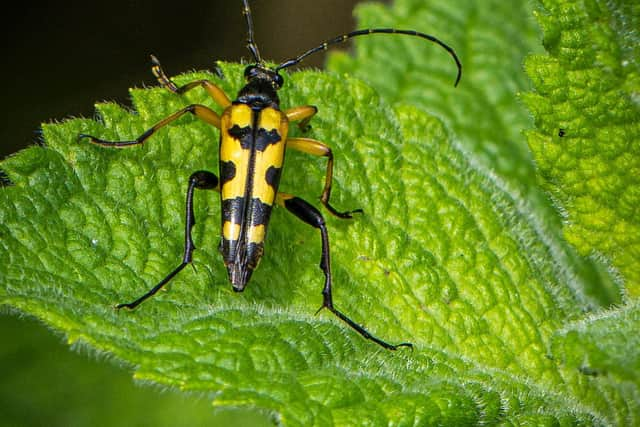

But not all ‘yellow and black’ insects are spiteful! Here’s one that I think looks quite striking in his ‘wasp’ copycat colours.
Let me introduce the Spotted Longhorn Beetle (Rutpela maculata)
This guy has somewhat of a pretty long life for an insect. Usually living two to three years and spending most of its life as a larvae snug inside rotten trees. They are out and about as adults from May to September.
Then after all that time as eggs and then larvae they emerge as striking yellow and black adults just living for two to four weeks. They are very common flower-visitors, especially Apiaceae species, feeding on pollen and the nectar. The larvae are polyphagous in the wood of deciduous trees. Their elytra (wing cases) are yellowish, with black dots and stripes, rough imitations of wasps, which probably gives them some protection from birds.
I think they are a really good-looking beetle with a fascinating lifecycle. They don't bite or sting and are true 'vegans'. They can be found on flowers, especially Apiaceae species, (otherwise known as the carrot family) where they gently feed on pollen and nectar. This one was in our garden on a hedge garlic leaf.
So, Yellow and black is a warning colour for insects because it provides high contrast, is easily recognized, and signals that the insect is dangerous, tastes absolutely disgusted, or poisonous to predators. This warning signal, called aposematism, is a clear signal or indicator that helps predators learn to avoid these insects after a single negative experience, thereby protecting the insect and saving the predator from a harmful encounter.
I suppose the ‘scariest member of the wasp family is the European Hornet whose size alone make many people panic! In reality they are not generally aggressive and are considered pretty docile, posing little threat to us unless their nest is disturbed or they feel threatened.