
Graham Workman column: back home safe and sound
What a journey they must have had!
Barn Swallow (Hirundo rustica)
So pleasing to see our summer friends back again home and safe.
What a journey they've just survived flying thousands of miles between their wintering areas in Africa back to their breeding grounds in the UK. They undertake this journey twice a year and average an incredible 200 miles a day.
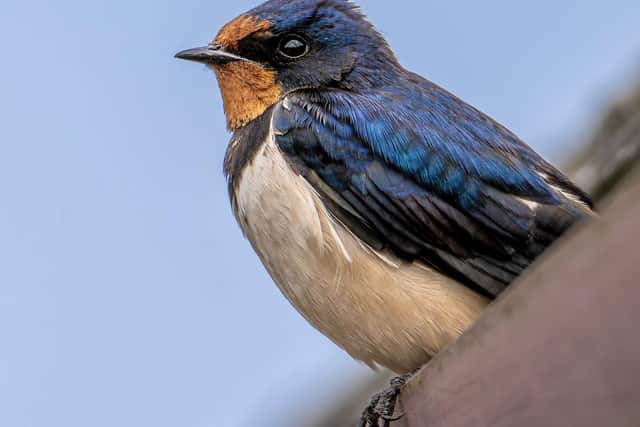

Swallows build cup-shaped nests using mud and straw, which they attach to structures like buildings, bridges, and eaves. The nest is lined with grasses and feathers to soften the inside. Swallows often return to the same nesting sites year after year. Research has shown that swallows prefer to nest near areas with high human activity, which is thought to be due to some kind of protection we provide from predators!
Did you know............Swallows have a special meaning in the eyes of the sailors from hundreds of years ago. They were always a welcome with a sighting of a swallow giving hope that land was just within reach. Within sailor communities a swallow tattoo used to symbolise that the sailor has travelled over 5,000 miles at sea, which in those days was no mean feat! However, a swallow in the presence of a dagger would suggest that a treasured friend died during a voyage.
Sadly, some regions in the UK have seen significant declines in swallow populations. This is potentially due to factors such as habitat loss and climate change affecting their breeding and wintering areas. In the last 10 years, populations have plummeted by over 46%, which we think are linked to catastrophic declines in insect numbers.
We are lucky in that we come across them still in barns when carrying out bat and barn owl surveys - so nice to see the baby swallows wide yellow gape thinking we are bring food with us - unfortunately not! What we do do though is make sure that any development within the Farm Site enhances nesting opportunities for Swallows, Swifts and House Martins and similar with several bat species. Bats, Swallows, Swifts and Martins are all the Farmers friends eg did you know a single Pipistrelle Bat (one of our smallest species here in the north west)can catch and eat up to 3000 insects every night!!!
Swifts are just as useful for the farmer too! They are remarkable birds known for their exceptional flying abilities, spending much of their lives in the air. They are summer visitors to the UK, arriving in early May and departing around mid-July. Swifts are not related to swallows or martins, but belong to the same bird family as hummingbirds, Apodidae. They are incredibly fast and agile flyers, often seen in "screaming parties" around dusk. Their screams were in some rural areas considered really bad luck – the screams were from demons who had possessed the birds hence one of the old medieval names of swifts being The Devil’s Bird.
Here's a scientific gem. Did you know Swifts can sleep while flying, believed to be achieved through unihemispheric slow wave sleep, where one half of the brain rests while the other keeps them awake. Mmmm I know a few friends who have the same ability LOL!!