
A Wigan school and scientist are to be the latest recipients of heritage Blue Plaques
An historic seat of learning and a renowned scientist whose work has had a lasting impact will receive Wigan borough Blue Plaques for 2026.
Following a public nomination process throughout this year, Wigan Grammar School and Dr John Garton have been chosen by Wigan Council.
Wigan Grammar School’s plaque will be placed at the Thomas Linacre Centre on Parson’s Walk, Wigan, and Dr Garton’s at his family home in Golborne.
Coun Chris Ready, cabinet holder for communities and neighbourhoods, said: "Wigan Grammar School holds a special place in the history of our town, shaping generations and contributing to the borough’s proud educational heritage. It’s fitting that we honour this institution as part of our Blue Plaque scheme.


“Equally, Dr John Garton’s pioneering work in crop manufacturing has had a profound impact on agriculture and food production worldwide.
"His innovations helped transform farming practices and improve sustainability, making him a truly significant figure not just locally, but globally.
“Both recipients exemplify the values of progress and excellence that our borough celebrates, and we look forward to unveiling these plaques in 2026.”
Dr Garton (1863–1922) was the first scientist to show grain crops were self-fertilising and invented the process of the multiple cross-fertilisation of crop plants.
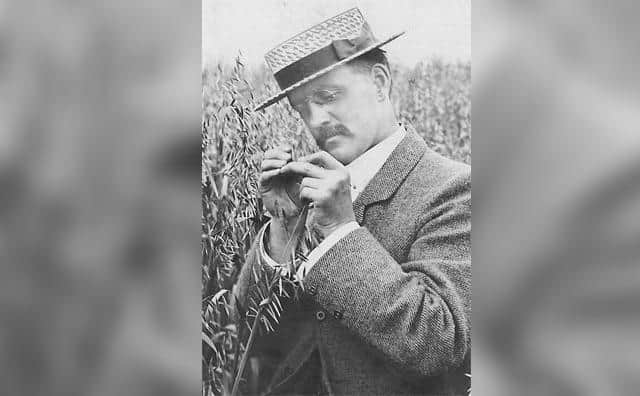
As a result, a large number of new and distinct breeds of oats, barleys, wheats, clovers and grasses have been produced
He was awarded a Doctor of Laws in 1922 for his contribution to science by the University of Edinburgh.
During the ceremony, it was noted that Dr Garton’s contribution proved to be of immense national importance during The Great War due to significantly increasing crop yields as a direct result of his work
The school’s nomination highlights there had been a Grammar School in the town since 1597, until its closure in 1972, making it one of the longest running institutions in the borough.
During that time its home has moved between four buildings, first in Crompton Street, Scholes, the second in the Millgate area, and the third and fourth on the site of the current TLC.
The plaque scheme, launched in 2018, sees permanent memorials installed in public places, highlighting the impact recipients have made on local heritage and culture.
Two plaques are awarded by the local authority each year.
To find out more, please visit: Blue Plaque Scheme