
Wigan Infirmary bosses told improvements needed in urgent and emergency care and medical care
Both urgent and emergency care and medical care at Wigan Infirmary are now rated as “requires improvement” by the Care Quality Commission.
Improvements are needed to both urgent and emergency care and medical care services at Wigan Infirmary, inspectors reported.
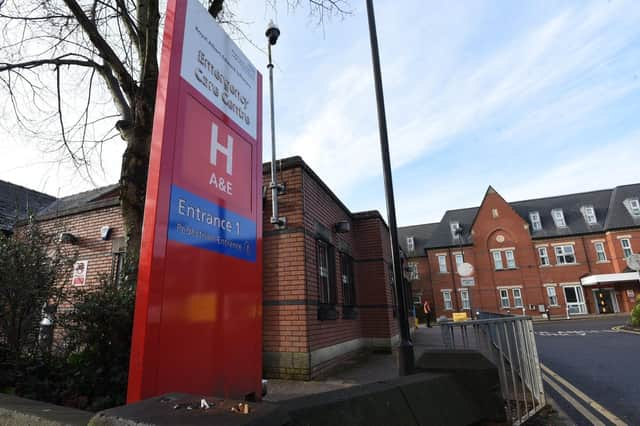

The Care Quality Commission (CQC) did an unannounced inspection after receiving concerns about emerging risks within the urgent and emergency care department.
It led to ratings for both services being downgraded from “good” to “requires improvement”, as well as the overall rating for the hospital.
Bosses at Wrightington, Wigan and Leigh Teaching Hospitals NHS Foundation Trust (WWL) say they “recognise the areas where improvement is required and are working hard to address them”.
In urgent and emergency services, CQC rated the categories of “safe”, “caring”, “responsive” and “well-led” as requiring improvement, with “effective” judged to be “good”.
It said the service was in breach of legal regulations relating to safe care and treatment, staffing, the environment and overall management.
Inspectors found sepsis targets were not being met and in two cases staff identified potential sepsis but follow-up actions were not completed 18 hours later, when national guidelines state they should be done within an hour.
CQC reported leaders had not ensured there were dedicated spaces to safely accommodate high-risk young people with mental health needs, and staff reported physical and psychological harm as a result.
They said the physical limitations of the department meant staff could not always respect people’s dignity and privacy and people raised concerns about being in shared cubicles.
Inspectors also found staff were passionate about providing good care and people said staff treated them with kindness and understanding.
Transformation plans had been introduced and there were early signs of improvement in some areas, including the time taken to initially triage people and better ambulance handovers times.
There was also improved morale and culture across the service and staff were broadly optimistic about upcoming changes, CQC said.
In medical care, the categories of “safe”, “responsive” and “well-led” were downgraded to “requires improvement”, while “caring” and “effective” remained “good”.
The service was in breach of regulations relating to safe care and treatment, staffing, infection prevention and control, and overall management.
Inspectors found temporary escalation spaces (corridor care) used to cope with high demand for beds, but leaders had not ensured all staff understood who could be placed there .
There were several areas without sufficient staff to meet people’s needs.
CQC said staff had to place some people on alternative wards and they sometimes experienced several unnecessary ward moves, did not always receive specialist care as promptly and sometimes faced delayed discharge.
But inspectors also found people were generally positive about the care they received and said they felt respected, supported and involved in decisions about their care.
The service encouraged people to share feedback and acted upon their concerns, while staff worked well with each other and wider services to ensure people’s needs were met.
Inspectors issued a warning notice for urgent and emergency care, related to the triage system, sepsis identification and treatment, and how the department was accommodating people with mental health needs.
Gill Hodgson-Reilly, CQC deputy director for hospitals, secondary and specialist care in the North West, said: “We found an emergency department under significant pressure, where people faced long waits for treatment in environments that weren’t always appropriate for their needs.
“People told us staff were caring and compassionate but it was clear that widespread systemic pressures, and the environment in which staff were working, made it difficult for them to keep people safe and had a negative impact on many people’s experience of care.
“We found that excessively long waits for specialty beds were causing delays throughout the emergency department. Records showed the trust to be among the worst performing in England for the proportion of people spending more than 12 hours in the emergency department and in the month prior to our inspection, over 900 people had to stay in the emergency department for more than 12 hours.
“Inspectors also had concerns about the main emergency department waiting room, which was often significantly overcrowded and couldn’t accommodate the numbers, or needs, of people accessing the department.
“During the assessment we saw people in mental health crisis, people with intravenous fluids being administered, people in nightwear and someone with a police escort, all together in the waiting room, whether they had been deemed safe to wait or assessed as needing escalation.
“The trust was aware of the issues and risks within the department but hadn’t always taken sufficient action. For example, at the last inspection we told leaders they needed more consultants to safely staff the emergency department but at this assessment there were even less consultants, with only 10 consultants in post when national guidance recommends 18 to 25.
“We’ve told leaders where we expect to see rapid improvements and will continue to monitor the department closely to ensure people are kept safe in the meantime.”
WWL said it had “accelerated” improvement work since the inspection in May, including the full implementation of the Manchester Triage System, enhanced recognition and treatment of sepsis, immediate changes to the A&E environment, improving patient flow and reducing length of stay, reduced reliance on temporary escalation spaces and fewer unnecessary ward moves.

Chief executive Mary Fleming said: “We acknowledge the findings of the report, recognise the areas where improvement is required and are working hard to address them.
“Providing safe, compassionate and high-quality care is our absolute priority and we remain fully committed to delivering the improvements needed for our patients and communities.
“Since the inspection, we have accelerated improvement work through our Emergency Department Transformation Programme, our trust-wide Fundamentals of Care Programme and our established system-wide Better Lives programme. This includes improving sepsis recognition and treatment, strengthening patient flow and the care environment, and working closely with mental health partners.
“Our Better Lives programme continues to bring partners together across Wigan borough to address wider health and care system pressures and help people receive the right care, in the right place, at the right time.
“We are already seeing improvements, but we know there is more work to do.
“The report also recognises the compassion, kindness and professionalism of our staff, and I would like to thank colleagues across WWL for their continued commitment to our patients and communities.
“Those strengths, combined with a clear focus on improvement, give me confidence that we will continue to build safer, better and more responsive services for the people we serve.”