
Fewer patients seen within four hours at Wigan Infirmary's A&E department
NHS data reveals how Wigan’s casualty department performed last month.
More than half of the patients seeking emergency care at Wigan Infirmary had to wait for more than four hours to be seen last month, worrying new figures have revealed.
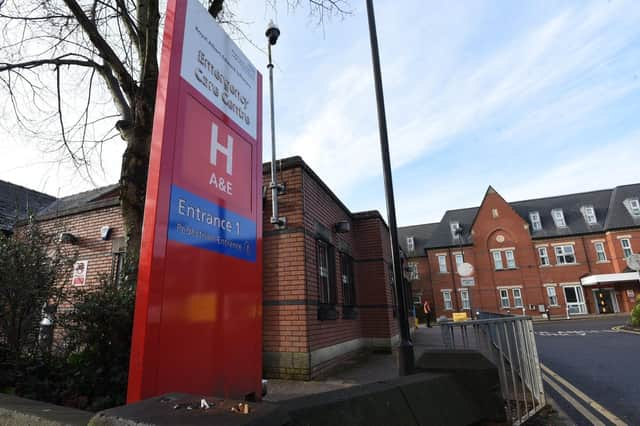

The hospital’s urgent and emergency care was downgraded to “requires improvement” by the Care Quality Commission (CQC) last month after an unannounced inspection took place.
Now monthly data published by NHS England reveals the proportion of patients seen within the national target time of four hours in the casualty department has fallen.
In September, 43.4 per cent of people were admitted, transferred or discharged within that time, which was down from 49.4 per cent in August and from 58.2 per cent in September last year.
Across Wrightington, Wigan and Leigh Teaching Hospitals NHS Foundation Trust (WWL), which includes urgent treatment centres (UTCs), 69.0 per cent of people were seen in four hours in September, compared to 71.1 per cent in August and 74.6 per cent in September 2025.
Some 74.4 per cent of patients in England were seen within four hours in casualty departments last month, which was down from 75.0 per cent in August.
The NHS data shows there was a total of 13,114 A&E attendances at WWL in September - 7,034 at A&E and 6,080 at UTCs - which was up from 12,229 in August and 12,330 in September last year.
There were 2,947 emergency admissions, the majority from accident and emergency compared to 3,193 in August and 2,898 in September 2025.
But once the decision to admit was made, 694 patients spent more than four hours waiting for a bed last month and 238 waited for more than 12 hours.
While the number of long waits increased from August, when there were 440 four-hour waits and 235 12-hour waits, there was a big drop from 12 months earlier, when 1,079 patients waited for more than four hours and 439 for 12 hours.
Nationally, the number waiting at least four hours rose, standing at 129,199 in September, up from 118,550 in August.
The number waiting for more than 12 hours was 50,582 in September, up from 44,951 in August.
The CQC’s recent inspection led to ratings for both urgent and emergency care and medical care being downgraded from “good” to “requires improvement”, as well as the overall rating for the hospital.
Concerns included sepsis targets not being met, a lack of dedicated spaces to safely accommodate high-risk young people with mental health needs, and physical limitations of the department meaning that staff were not always able to respect people’s dignity and privacy.
Transformation plans had been introduced and there were early signs of improvement in some areas, including the time taken to initially triage people and better ambulance handovers times.
WWL chief operating officer Sarah Brennan said:
“We recognise that some patients experienced longer waits in our Emergency Department (ED) during September, and we are sorry for the impact this may have had.
“During the month we experienced significant pressure across urgent and emergency care, with demand at particularly busy times of the day, patients presenting with increasingly complex needs, and pressures on patient flow through the wider hospital.
“Together, these factors can affect how quickly patients can be assessed, treated and, where necessary, admitted to a hospital bed.
“While we are encouraged that the number of patients experiencing very long waits for a bed has reduced considerably compared with the same period last year, we know there is much more to do and reducing waits further remains a priority.
“This year-on-year improvement reflects the continued work of our teams and partners to improve patient flow and help people receive the right care in the right place.
“We are continuing to build on this work, with further improvements under way across our urgent and emergency care services.
“These include developing a new pathway which will enable some patients with medical needs to be assessed directly by specialist medical teams without first going through the Emergency Department, helping patients receive the right assessment sooner while creating more capacity for people who require emergency care.
“Through our Better Lives programme, we continue to work closely with ambulance, community and care partners to support people to receive care in the most appropriate setting and, where possible, avoid unnecessary hospital admissions.
“This includes an approach for people aged over 65 where ambulance teams can discuss a patient’s needs with a specialist doctor before they are taken to hospital.
“Where clinically appropriate, this can help people receive care closer to home or through a more appropriate service.
“Alongside this, we continue to focus on improving the flow of patients through our hospitals, reducing unnecessary length of stay and supporting patients to leave hospital safely as soon as they are clinically ready.
“We remain focused on making further, sustained improvements to waiting times and the experience of patients using our urgent and emergency care services.
“As always, we are extremely grateful to our staff for their continued hard work and to our communities for their support.
“Choosing the right NHS service can help people get the care they need as quickly as possible, while ensuring our Emergency Department is available for those who need emergency care.
“NHS 111, pharmacies, urgent treatment centres and GP services can all support people with less urgent healthcare needs.”
Get Wigan Today's daily newsletter by clicking here