
Performance rating falls at Hindley Prison
Wigan’s jail has seen its performance rating fall since last year, new data shows.
Similarly, ratings across England and Wales have fallen, with more prisons awarded the worst score.
A prison reform charity said the fall across the two nations demonstrates how death and violence have become "the norm" in Britain's overcrowded prisons.
Each year every prison is assessed and given a rating from four (outstanding performance) to one (performance of serious concern).
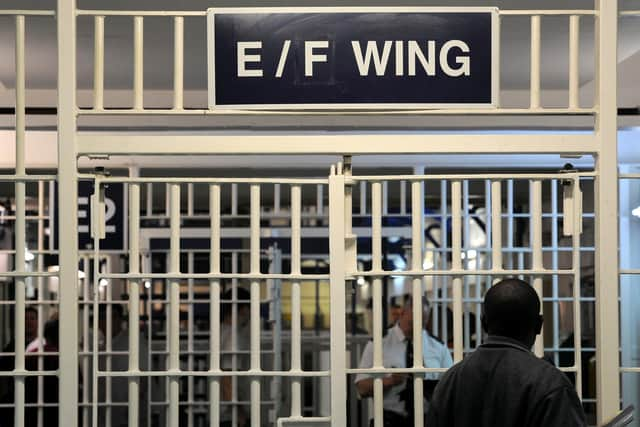

Data from the Ministry of Justice shows Hindley Prison received a score of 49 per cent, down from 52 per cent a year earlier.
This gave it a rating of one, down from two a year earlier.
It was one of 11 prisons where an urgent notification was invoked.
This allows His Majesty’s Chief Inspector of Prisons to directly alert the Lord Chancellor and secretary of state for justice if they have an urgent and significant concern about the performance of a prison.
The secretary of state will publish a plan of action within 28 days, with a longer-term plan for sustained improvement.
Overall, 22 prisons were rated as of serious concern, the highest number since current records began in 2011-12.
Twelve were rated outstanding, one fewer than in 2023-24, while 60 prisons (50 per cent) were rated as good or higher.
Separate MoJ figures show the prison population of England and Wales jumped to the highest number in nearly a year and is nearing record levels, despite the early release of tens of thousands of offenders.
Some 88,238 people were in jail as of Monday, August 11, up 231 on the previous week and a rise of more than 1,200 in the past two months.
There are just 283 fewer prisoners now than the record high of 88,521 in September last year during the aftermath of the summer riots.
The spike comes despite Government efforts to ease overcrowding by freeing 26,456 offenders early since last year.
The scheme was launched as an emergency measure in September, with eligible inmates serving more than five years released after 40 per cent of their fixed-term sentence, rather than the usual 50 per cent.
Andrew Neilson, director of campaigns at the Howard League for Penal Reform, said overcrowding was a key source of problems in prisons.
"The prison performance ratings reflect a system that has been asked to do too much, with too little, for too long," he said.
"What happens behind bars matters to all of us. Exposing people to failing institutions, where deaths, distress and violence are the norm, is no way to help them to move on from crime and prepare for safe release.
"Ultimately, the Government needs to ease overcrowding by taking sensible steps to reduce the prison population."
A MoJ spokesperson said £7bn will be invested to create extra prison spaces by 2031, with £40m spent on security enhancements this financial year, including window replacements, CCTV and control room upgrades, vehicle gates, biometrics and floodlighting.
They added: "This Government inherited a prison system in crisis, and this data shows the pressure they are under as a result.
"We’re building 14,000 extra prison places, with 2,400 already delivered.
"And we are reforming sentencing to ensure we never run out of space again, and prisons get back to creating better citizens, not better criminals."