
Victim of vicious homophobic attack 'doesn't feel safe in Wigan'
A young Wigan gay man today exposes a vile under-current of homophobia in his home town.
His shaming and heartbreaking account follows observation of frequent hate comments made on social media, not least after a recent Wigan Today article about a local man appearing in a queer reality show, and his own personal experiences of prejudice culminating in a vicious attack in the town centre last Boxing Day.
Speaking anonymously for fear of reprisal, this is his story:
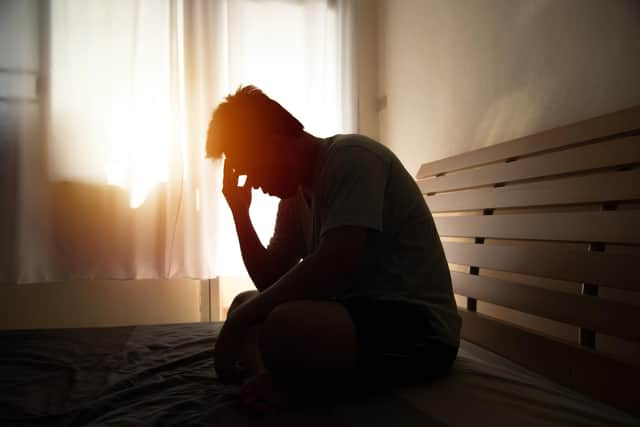

As a gay man, I can say this without hesitation: I do not feel safe in Wigan.
That might sound shocking to some, especially in a town that proudly hosts an annual Pride festival and likes to market itself as progressive and inclusive.
But behind the rainbow flags, corporate statements, and occasional diversity workshops lies a much colder truth.
The kind that people like me live with every single day.
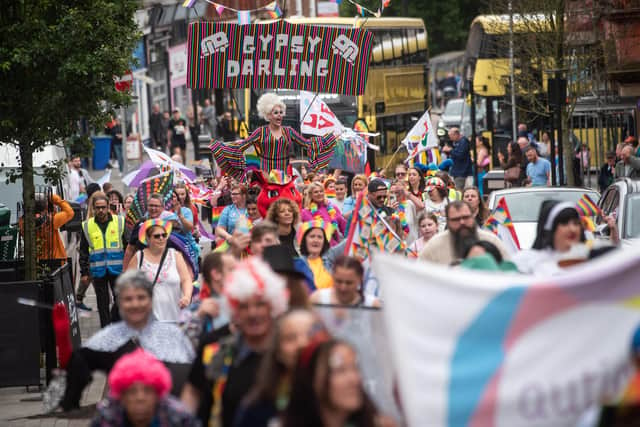
On Boxing Day 2024, I was violently assaulted on King Street. I was out, dressed as a lifeguard: nothing flamboyant, nothing that should’ve drawn attention.
In Wigan, it’s tradition for people to dress up on Boxing Day, so I wasn’t doing anything unusual.
And yet, I was targeted. A man approached me out of nowhere, picked a fight, and began to beat me.
He punched me repeatedly in the face, shouted that he was going to kill me, and kicked me to the ground.
As he landed a blow to my eye, he called me the f-slur. His reason? Unclear—but it became painfully obvious.
That night, someone tried to end my life, not because of anything I said or did, but simply because of how I looked. Because I dared to exist in public in a way that didn’t fit his narrow idea of masculinity.
Even on a night where everyone was in costume, somehow I was still too much.
But what stayed with me even more than the violence itself was the aftermath. I wandered through Wigan town centre bloodied, dazed, upset, clearly traumatised, and not a single person stopped to help.
Nobody asked if I was OK. Nobody offered a hand, a word, a second glance.
That silence hurt almost more than the blows. Because what it told me: loud and clear-is that people still see being gay as something that disqualifies you from basic empathy.
I want to be clear: I don’t have any personal grievance with the local government, nor do I believe that Wigan is institutionally homophobic.
There are plenty people here who care. People who try. I appreciate the efforts the town makes to host Pride and wave the flag, even if sometimes it veers into performative allyship.
I don’t mind the rainbow bunting and corporate slogans; it’s better than nothing, and maybe it reaches someone who needs it.
But still, does Wigan feel safe to me? No. Do I believe the next Pride event will be embraced without backlash? I wish I could say yes, but my gut says otherwise.
I’ve lived this reality all my life. I never liked football growing up, and by the age of five I was already being called gay as an insult.
As a child, I was slapped, pushed, spat on, and beaten – for a sexuality I hadn’t even come to terms with myself.
I didn’t come out until I was 18, and even then, walking through Wigan with someone I was dating, I was chased, threatened, and verbally abused.
That wasn’t in the 1980s. That was less than five years ago.
People love to say times have changed. That things are better now. But in 2025, it feels like we’ve gone backwards.
Just the other day, I scrolled through the comments on a Wigan Today Facebook article about one of my peers appearing on the LGBTQ+ dating show I Kissed a Boy.
The comment section was flooded with hate (quickly blocked or deleted soon after):
“Keep that off our screens.”
“Nobody wants to see men kissing.”
“Puffs.”
“Benders.”
It’s like clockwork. A gay person appears on TV. A same-sex couple kisses in an advert. A rainbow flag shows up in the background. And suddenly, the internet erupts.
The same complaints: “Why does everything have to be gay now?” “They’re shoving it in our faces.” “I don’t care what people do: just keep it private.”
But here’s the truth:
You don’t have to watch.
You don’t have to comment.
If you really don’t care about gay people being on TV or simply existing, why not just keep it moving? Scroll on. Walk away. Carry on with your life. But instead, you stop. You sneer. You post. You make sure everyone knows just how “unbothered” you are.
Funny how loud indifference can be.
And let’s be honest, it’s always the same types. Blank profile pictures. Avatars. Pets. Football badges. Always ready with a slur, never ready with a face. Insecure about gay people? Why? What is it that threatens you so much about someone else being themselves? Someone else being seen?
Because what you’re doing isn’t neutrality. It’s not a lack of interest. It’s not even mild annoyance. It’s a discomfort with visibility. A need to centre yourself by complaining that someone else is being seen.
Representation isn’t an agenda. It’s not a threat. It’s a mirror, so people who’ve been erased or stereotyped for decades can finally see themselves reflected. It’s the bare minimum. And if that feels like an attack, you really should ask yourself why.
The truth is, if you truly didn’t care, we wouldn’t hear from you at all. Because real indifference is quiet. It doesn’t comment. It doesn’t rant about “agendas” on Facebook comments about a gay dating show that is away from the prime time TV schedules.
You always have the option to scroll on. To change the channel. To walk away. But you don’t; and that says more than you think.
What struck me most reading the comments wasn’t just what was being said, but who was saying it. These weren’t trolls from halfway across the world. They were people from Wigan. People you pass in the supermarket. People raising children. People voting.
And when called out, they say it’s “just a joke,” or cite “freedom of speech.”
But let’s be clear: freedom of speech doesn’t mean freedom from consequence. Telling someone they should die, be “cured,” or that they’ll go to hell for simply existing isn’t free speech: it’s hate speech.
And having been kicked in the head and called a “queer,” I can personally tell you, your Facebook comment isn’t “just an opinion.”
I’ve seen grown men post online that gay people are mentally ill, despite not being able to spell their own names correctly on Facebook.
These are the same people who claim Pride is being shoved down their throats.
But I must ask: where is it, exactly? Look around this June: how many brands are actually celebrating Pride this year?
You’re not being overwhelmed by “gay propaganda.” You’re just uncomfortable that we exist.
And yet we always have. LGBTQ+ people have been part of every culture, every generation, since the beginning of time. We’re not new. We’re not going away.
The irony is, many of the people who are loudest about their outrage over a rainbow logo are the same ones who scroll past (or even share) racism, misogyny, or far-right extremism without a second thought.
But Tesco adding rainbow colours into its Facebook profile picture for a few weeks? That’s apparently the final straw.
Society feels like it’s sliding backwards.
The rise in open homophobia, the casual cruelty online and in real life, it’s not subtle anymore. It’s bolder, nastier, and louder.
And that’s why Pride still matters in 2025. Because Pride is not just a party. It’s a protest. It’s survival. It’s a refusal to go back into the shadows to make someone else feel more comfortable. It’s a reminder that we are still here, and we will not be erased.
To those in Wigan who post their hatred and think it makes them clever or righteous I ask: what exactly do you want from people like me? Do you want us to disappear? To pretend to be straight? To walk a little smaller, speak a little softer, love a little quieter so you don’t have to be reminded we exist? Or would you really rather we didn’t exist at all?
Because I’m not here to debate my existence. I live in Manchester now, not because I was chased out, but because life moved me here.
And here, things feel different. I can walk down Canal Street without fear of attack. I can be on a night out and feel seen, not judged. People are far from perfect, but they’re more open-minded, more used to difference, more willing to let people be.
That shouldn’t feel rare, but coming from Wigan, it still does.
And that’s what stings. Because Wigan is still my hometown. It’s where I grew up, where I went to school, where I have memories, both good and bad.
I still queue in traffic by Scholeshenge. I still keep Uncle Joe’s Mint Balls in my car. I get the train from North Western like I’m Jeffrey Starr. This place shaped me. I still care about it. And I want better for it.
To any parent in Wigan (or afar) reading this: if your child is gay – or might be someday – please love them. Back them. Protect them. Teach them that they don’t need to shrink to be safe. We’re not corrupting your kids or threatening your values. We just want what you want for your children too: to live, to love, to feel safe and celebrated in the place we call home.
And to anyone here who’s ever been called a name in school, laughed at on the street, stared at on the bus, or felt like they had to tone themselves down just to survive, please know this: you’re not alone. You matter. You’re not wrong. You’re not too much. And there are people in Wigan who see you and stand with you, even if they’re quieter than the ones shouting.
That’s why Pride remains important. Especially here. Because the truth is, being out in Wigan still comes at a cost. But we show up anyway. We keep walking through town. We keep dancing. We keep loving. And we keep hoping. Because no matter how loud the hate gets, we’re louder still when we do it together.
No, my name isn’t on this piece. Not because I’m ashamed, but because I know exactly what comes with being visibly out to trolls online. And that, in itself, says everything.
But one day, I want to be able to put my name to it, and I hope that by then, everyone will be just a little kinder.