
Barriers to working class actors could stop next Sir Ian McKellen, Nandy says
Labour's Culture Secretary Lisa Nandy has spoken of a 'glass ceiling' for working-class people in the arts, warning it is an 'existential' threat to the entertainment industry.
Actors like Sir Ian McKellen would struggle to break into acting today, Lisa Nandy has said, as she spoke of a “glass ceiling” for working class people in the arts.
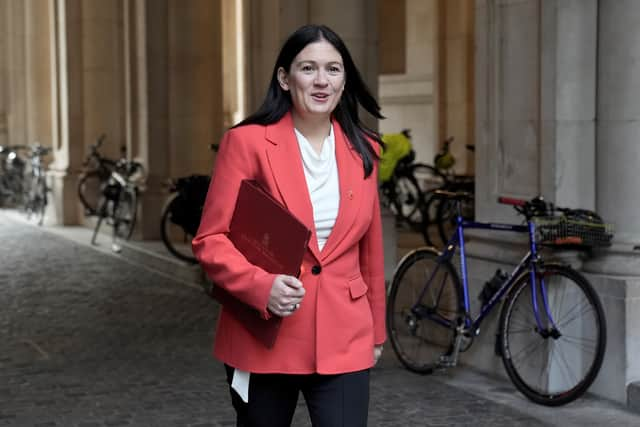

The Culture Secretary said it is an “existential” threat to the entertainment industry, and as she urged bosses to recruit from a wider background.

Ms Nandy represents Wigan in north west England, where Sir Ian grew up.
The actor has previously spoken about how his Lancastrian accent was mocked when he went to study English Literature at Cambridge University.
Meanwhile the late actor Sir Patrick Stewart, who died at the end of October, wrote about his experience growing up in a working-class home in Yorkshire.
Others in the arts, including Booker Prize winning author Douglas Stuart have raised concerns about how difficult it is for working-class people to get into their industries.
Labour MP Elsie Blundell (Heywood and Middleton North) said: “From Caroline Ahern to Peter Kay to the Gallagher brothers, in the past in Greater Manchester we’ve shown that coming from a working-class background has no bearing on a person’s ability to make a cultural impact.
“Therefore, what further steps have been taken to remove barriers to entry into the creative industries and make sure that talented people from all backgrounds are given the opportunity to shine?”
Ms Nandy said: “Through the work that we’ve done with the TV historian David Olusoga and others, we’ve identified that there isn’t just a challenge at entry level.
“There’s actually a challenge where young people from diverse backgrounds hit a glass ceiling at a certain level and simply can’t progress.
“I’m very proud that in Wigan we are the home of Ian McKellen, one of the greatest actors this country has ever produced. But you know, frankly, it is hard to see how a working-class lad from Wigan nowadays could go on to become one of the greatest actors in this country.
“I say to the creative industries, this is existential. Any country can make series about posh boys playing gangsters in the East End. Very few countries can meet the genius of Derry Girls. And in order to continue to make those incredible moments and create the best output, we need a far more diverse workforce.”