
Ted Dakin column: what it's like to live in true poverty
We live in a strange world, don’t we?
I shall refrain from making any personal judgement, but just look around you: the daily newspapers, the television, the conversations with strangers.
It’s all there staring you in the face: “Hubble, bubble, toil and trouble.” There’s no escape.
But when all is said and done, the indomitable spirit of ordinary people is unbelievable.
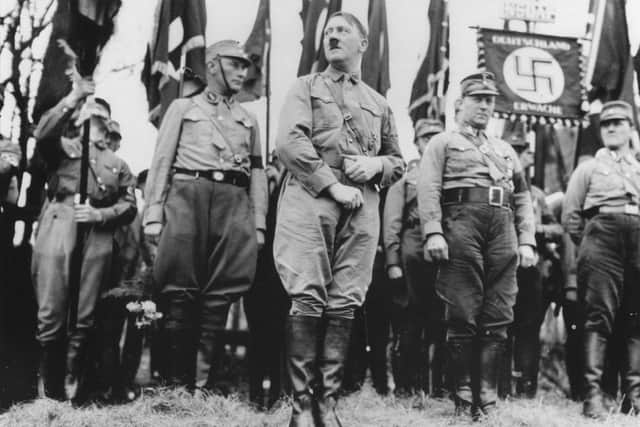

And it is there for all to see: The truth, and the indelible memories. Those lockdown days. And the war years of 1939 to 1945 that brought out the best in a nation beleaguered by the initial fear of conflict and another repeat of the 1914-18 World War.
But who would have thought, that after six long years of conflict against Adolf Hitler’s jackbooted fanatics that, (as Vera Lynn and Judy Garland aptly put it), Somewhere over the rainbow, blue skies shine.
And shine they did. But it’s still a mad, mad world.
But like I’ve just said, survival comes right down to the human spirit.
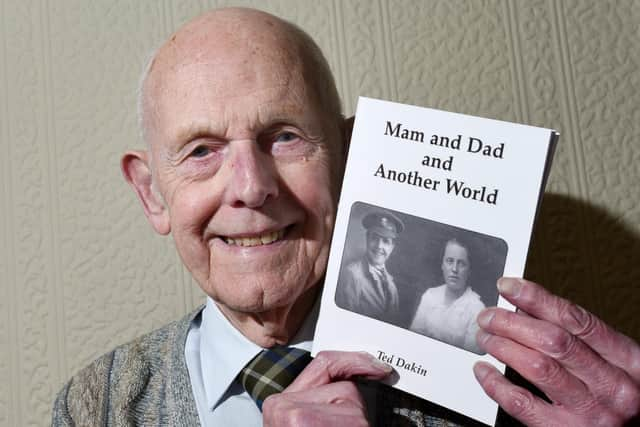
Even in these modern, uncertain times, the human spirit prevails.
We can all remember the uncertainty of those fearsome Covid lockdown days and their many casualties.
Almost everyone knows someone who has been devastatingly affected by that modern scourge.
And so too, many people can relate to those who lived through the poverty years of the 1930s and 1940s. What is meant by poverty?
Well, for me, true poverty means having nowt.
When I left school at 14, my parents, Tom and Frances, couldn’t get rid of me fast enough. I mean, work meant cash in mam’s purse and food on the table, and that was the crux of the matter. Bugger the apprenticeships.
And who could blame them?
One Friday night, Dad was reading the jobs section in the Wigan Examiner and came across an advert by a firm called Robinson’s, a saddlery and leather business close to the LMS station on Wallgate.
Now, this was a time when the sale of leather goods and all things horsey was really struggling.
The reason being was the popularity of modern, artificial plastics. Anyroad, to cut a long and boring story short, I applied for the job and got it, simply because, no other mughad put in for it.
I can’t remember what my weekly wage was, but, being the one and only gormless young fool in their employ, I was as miserable as sin.
Owd Robinson, the owner was an unsmiling disciplinarian and a deeply religious man who stuck up leaflets all over the place, demanding everyone, who bothered to read them, to "FLEE FROM THE WRATH TO COME.”
His way of life and work was dying a slow death. In fact, it has never regained the popularity it once enjoyed has in those faraway days of my developing years.
Even in today’s plastic world, I swear that on rare nostalgic occasions, I can still smell the aroma of leather wafting through the still air.
Robinson’s was a family business and the old man and his only son Jim, ran it between them. I got on very well with Jim.
At that time the trade in all things relating to the black market business was also at its peak and Jim was cashing in while he had the chance.
Jim had another weakness, too, he enjoyed sniffing snuff, and Singleton’s snuff was his favourite. His handkerchief, chin and nostrils were forever streaked in a brownish colour from his constant snuffing and sniffing.
Three times a week he sent me just around the corner onto Wallgate, to a little tobacconist for little packets of Singleton’s Best.
When the Preston Guild time came around, Owd Robinson would hire a removal van from Stringfellow’s Removals in Millgate, load it full to bursting with saddles, harness, bridles, handbags, leather cases, horse brasses, leather belts and all things relating to the horsey world, put me in the back amongst the chaos and drove slowly along the old roads to Preston (there was no M6 motorway in those days).
For me, those long-gone days, were exciting days of haggling, crafty farmers, with rolls of banknotes so thick they could choke a pig.
Land-owning farmers of every description gathered and argued away like mad, trying their very utmost to get the best deals going.
For me, a peasant lad, it was a kind of education and I lapped it up.
But those visits were far between and the rest of my working days were boringly long, and what made things worse was listening to my mates talking about their workmates and how much money they earned and it began to get at me.
One Sunday teatime, I informed Mam that my days at Robinson’s were numbered, and a week later, I handed in my notice.
Problem was I was out of a job. I walked the streets for weeks on end, knocking on doors, almost begging for work, but no-one wanted a gawky lad of 16 with not one qualification to his name.
I finally found work at the Co-op dairy in Spring Gardens, just off Frog Lane, but those very early mornings were wicked, and after an argument with my foreman I jacked it in and managed to find work at Trencherfield cotton mill as a “beam dropper” in the winding room.
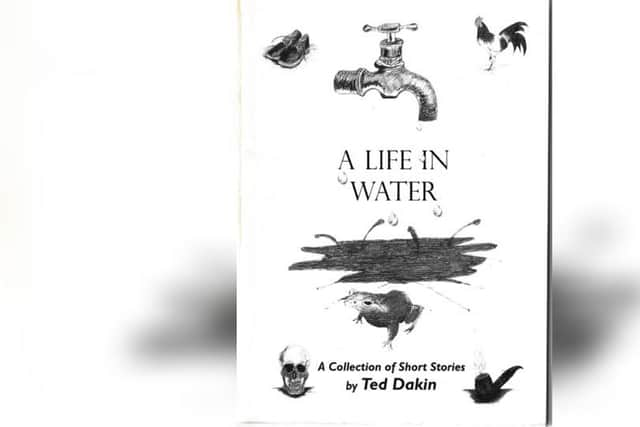
Just me, the only lad amongst hundreds of women, Whew! Then, after a spell in the armed forces, I found work as a labourer on the then Wigan Corporation Water Department, and made my way onto the ladder of promotion, became an inspector which meant “a Life in Water”’ that lasted for 35 years.
In that time I saw many changes, changes that were devastatingly wrong, inefficiency, lack of morale and changes loaded with devious moves, from certain hopeless individuals who lacked the grass roots knowledge of the water industry, and I became fearful that if I lost my conscientious ways, ways that I had learned from previous workmates and intelligent, dedicated bosses like Fred Radcliffe and Charlie Haslam, I too would go down that very same road: the road of no return.
And that’s when I knew without a doubt it was time to get out.
And I didn’t shed one tear, because, when you know you have tried your very best, what is there to cry about?