
A Leigh woman who survived a stroke at the age of 20 has helped with a new storyline in Coronation Street
A Wigan borough woman who had a stroke at the age of just 20 has spoken about her experience after helping to shape a new storyline on a popular TV soap.
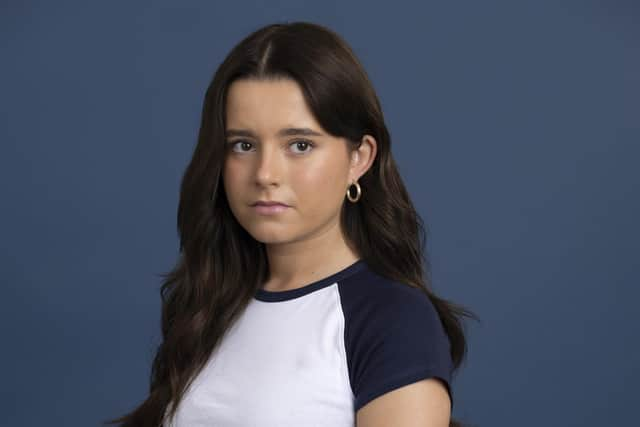
Coronation Street viewers saw Betsy Swain, 19, played by Sydney Martin, have a stroke in Wednesday evening’s episode.

They will now follow her recovery journey as she navigates the impact of the stroke on her movement, speech and relationships with friends and family.
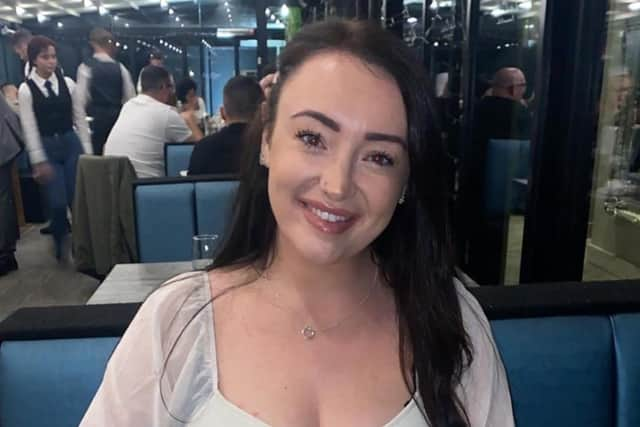
Louise Hindley, from Leigh, had a stroke when she was just 20 and spoke with the ITV show’s writers, producers, directors and actors to ensure lived experience of stroke was at the core of the storyline.
This included meetings with her family to authentically show the effect on stroke survivors’ loved ones.
Louise was not diagnosed with a stroke until three days after it happened, as she was initially dismissed by both GPs and paramedics.
She said: “That night, I genuinely thought I was going to die. I had the most severe pain in my head. I felt like my head was going to explode.
"I remember trying to get down the stairs and I was crashing into the walls so an ambulance was called.”
While that should have meant Louise was taken seriously, paramedics instead suspected Louise was under the influence of alcohol or drugs, even though she was unable to see, speak or walk.
Thankfully, her sister called 999 again and another ambulance attended, which then took her to hospital.
There she was initially misdiagnosed as having an ear infection, until she had an MRI scan which confirmed she had had a stroke three days later.
Louise said: “I feel like, because I was so young, I wasn’t taken seriously at all.”
She spent three weeks at Wigan Infirmary, where she received physiotherapy.
Doctors determined her stroke was caused by a hole in her heart, which was discovered after the stroke and has since been operated on.
The stroke has had a huge impact on Louise’s life.
Before, she loved socialising and nights out with her friends, and she was looking forward to the adventure of starting a new life in Ireland.
She said: “Before my stroke I had a very active social life. I was always out with my friends, but after my stroke I couldn’t, and I still can’t stand being in crowds of people. My co-ordination and balance have never been the same and I do still suffer with fatigue.
“I still get emotional sometimes now about what happened almost 10 years later. It was a massive trauma in my life, and I’ve had counselling over the years to help me come to terms with it."
Now 30, Louise is married with two children and has started a new career in adult social care.
Louise said: “My biggest achievement since my stroke is having my beautiful children. Back when I was really poorly, I didn’t know whether this would ever be a possibility for me so I’m so thankful.
"I also completely changed my career. I feel really positive now and feel like I’ve got my ambition back.”
The Stroke Association began working closely with the show’s writers, producers and actors earlier this year.
The charity has connected the production team with stroke specialist clinicians, who reviewed scripts and dialogue and went to the set during filming, while also introducing young stroke survivors like Louise.
Louise said: “I feel grateful to have been involved in the Corrie storyline, I think it’s amazing that it’s being brought to so many people’s attention that young people can suffer strokes. It’s been good to share my story and what it was like in the time after my stroke.
"The team at Corrie has been so passionate about getting it right and I think that’s vital.
“I think it’s important for viewers to understand that strokes aren’t just something that happen to elderly people. The recovery is long and tough, and it really changes you as a person. I think other young stroke survivors will watch it and feel seen.”
Juliet Bouverie, CEO at the Stroke Association, said: “As one of the most iconic and longest-running soap operas in the world, we commend Coronation Street for taking on this stroke storyline. While the cause of Betsy’s stroke is rare, her experience powerfully shows that a stroke can happen at any age and its impact can be devastating.
“From the beginning, the team has shown real commitment to understanding not just the medical emergency of stroke, but what comes afterwards: the physical, emotional and psychological challenges of recovery, and the impact on someone’s identity, independence, relationships and future.
“We have worked closely with Sydney Martin and the Coronation Street production team to offer our guidance and direction on Betsy’s stroke and recovery journey. Stroke clinicians, stroke survivors and teams from across the Stroke Association have helped to support a realistic and authentic depiction of Betsy’s stroke and recovery on screen.
“Every year, around 85,000 people survive a stroke in the UK, but recovery can be long, complex and life-changing. We hope that Betsy’s story will help raise awareness of stroke among viewers, including younger audiences, and encourage people to recognise the signs.
“If you think you or someone you know is having a stroke, you should Act FAST and call 999. Stroke is a medical emergency. For anyone who’d like to find out more about stroke and the support available, please visit www.stroke.org.uk.”