
Veteran columnist Ted Dakin looks back at his family's lives and how they came to settle in Wigan
This week Ted Dakin looks back on his grandparents’ deaths, his family’s move to Wigan, how his parents met and his early schooldays.
In my last article Friends and Neighbours, I made a brief mention about my grandparents Margaret and Richard Dakin.

On the day Grandad passed away, my dad and one of his brothers Dick stripped and washed his mortal remains and fitted him out with a reasonable suit for his final journey to Newburgh Village.
When Grandma died in 1955, she too was taken on that very same, long, final journey, over Parbold Hill and down to the Back Lane church yard.
I remember that day very well. It was a bitterly cold, January day and it was snowing.
The funeral service in that freezing, tiny village church was very brief indeed and the occasion will stay with me always.
There were no wakes organised, so when the mourners arrived back in Wigan, me and my brothers Tom and John and our cousin Joe Kelleher made a beeline for the Conservative club in Upper Dicconson Street for a few jars of Best Bitter.
Why am I telling you this?
Apart from reliving that sad winter’s day, it is a part of my history.
This was another world and because of this, I cannot for one minute imagine any relative of mine recording any such event ever again.
But why not? Dying is part of living, so why not record every mortal moment?
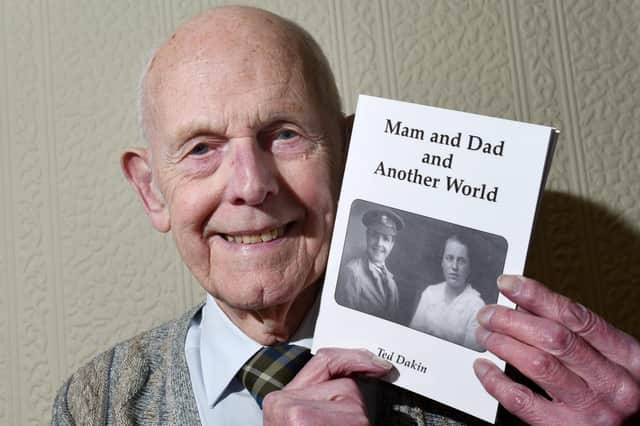
A few years ago, I wrote a brief memoir entitled Mam and Dad and Another World.
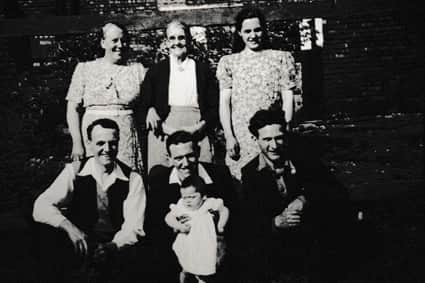
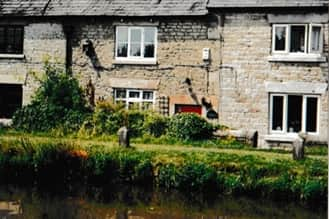
My dad Thomas Dakin was born on March 24, 1899 in a canal cottage in Newburgh.
His parents Richard and Margaret were illiterate “water gypsies” who had worked a horse-drawn canal boat on the Leeds-Liverpool canal.
Both of my grandparents came from long-established boating families, indeed, Grandad was born on a canal boat at Top Lock, Runcorn, in 1865.
With the advent of rail and road transportation, life and work on the canals fell on desperate times, so Richard packed up their meagre belongings and the family came to live in Wigan, at 21 Horsfield Street.
Dad was 10 years old. One can only imagine the dramatic change, from a rural environment to an urban one.
However, a place at St Thomas’s Junior School, at the bottom of Clayton Street, was found for him.
After leaving school and having no qualifications, Dad struggled to find work, but he finally found a labouring job at a brick-works in Hindley and it was here he met Frances Leach, an office worker.
Frances was Roman Catholic and Thomas was C of E, and Frances became pregnant.
Thomas never hesitated, he became a church-going Catholic which was followed by their sacred marriage vows in a tiny Catholic church on Market Street, Hindley.
The wedding ring cost Thomas £5 and when they got married Frances was seven months pregnant, which in those days many people classed as convenient but irreligious.
They moved into a rented house, 102 Miry Lane, Wigan.
After their firstborn, my sister Kathleen, came into the world, she was followed by four more children.
The first was Mary but she sadly died of bronchial pneumonia when she was five months old.
So, from then on, our family history actually began with my sister Kathleen, then Mary then my brothers Thomas and John, and finally me Edward.
It is patently obvious that my parents’ marriage was a marriage of convenience, because I have never seen any photographic evidence of their union.
However, the marriage did endure and in those early days of poverty, tears, illness and even death, it never faltered, right through to old age and better times, they stayed together.
But as in all family histories, there is no holding back the march of time.
I was the “baby” of the family and our house was a landlord-owned house close to Gallagher’s boneworks, where Dad worked as a “ropper”, cleaning animal guts, that in those days became sausage skins.
I was always an ailing child, a puny short, lad with very blonde hair, in fact, black and white photographs show me as a not so very tall, thin, sickly, white-haired lad with a fringe, that prompted many people to call me “Blondie”.
My paternal grandma, who lived around the corner in Horsfield Street, was forever giving mam regular forebodings - “Thall never raise that lad, Frances”.
What I do remember of my early life was my first day at school, I was five years old and it was a warm sunny morning.
I can’t remember Mam ever mentioning school that day, but I do remember the special care she took in dressing me and the long (for me anyway) walk to St Joseph’s Catholic School, just off Caroline Street.
And the narrow corridor leading to Sister Veronica’s office, the smell of sawdust, and being seated on Sister Veronica’s desk and kicking her in the stomach, and being shown to my desk in Fanny Adams’s class.
Here, my memory becomes a little misty, but I do remember most vividly a poor education at a Dickensian-type school, with Dickensian-type, cane-wielding teachers and a sadistic headmaster, who every pupil feared and hated.
The school didn’t have mixed classes, so the girls were spared the sight of thrashings and boxing matches between misbehaving boys.
Many times I was witness to his twisted enthusiasm as he produced from a cupboard two pairs of boxing gloves, and his morbid delight as two unfortunate victims battered each other till blood ran free.
Absenteeism, for whatever reason, was frowned upon and punishment followed. No-one escaped his wrath. Even the wearing of long trousers was forbidden.
I left school aged 14, still in short pants.
But my escape meant another life, another world and my first pair of long pants, and that was good enough for me.
One final thought: the Middleton Wood’s bill for Grandma’s funeral in 1955 came to a grand total of 35 pounds 7 shillings and 0 pence. I wonder what the cost would be in today’s world of greed?