
Tributes after the death of a retired Wigan teacher who became a well-known local historian and author
A well-known local historian who was honoured by the Pope has died at the age of 84.
Dr John Anthony Hilton, known as Tony, was a retired teacher, a lecturer in local history, editor of a journal and the author of around 150 books and journal articles.
He was especially interested in Catholic history – having been a practising Catholic since his university days – with a particular focus on the periods when Lancashire stood as a stronghold for the faith while it was officially suppressed in Britain.
He died on November 29 at Wigan Infirmary after a short illness.
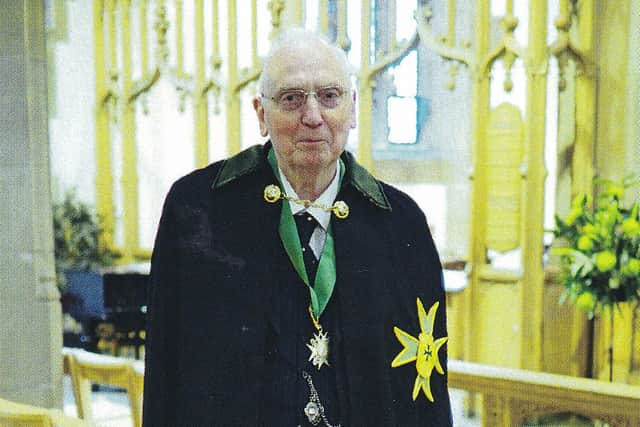

His friend and former student Brian Farrimond described him as “an eccentric, in the best sense of the word”, who always wore very smart clothes.
He said: “He was a brilliant person to listen to. He could tell excellent stories. Unfortunately, he had this principle that when people are giving talks, they should be as brief as possible on the grounds that he thought people would get bored after too many minutes. But that meant when he talked, you thought it was really good and suddenly it stopped.”
Dr Hilton hailed from Hindley, where his father owned a tobacconist shop on Market Street, and he was educated at St Peter’s CE School and Hindley and Abram Grammar School.
He studied at Leeds University, obtaining an honours degree and then an MPhil in history.
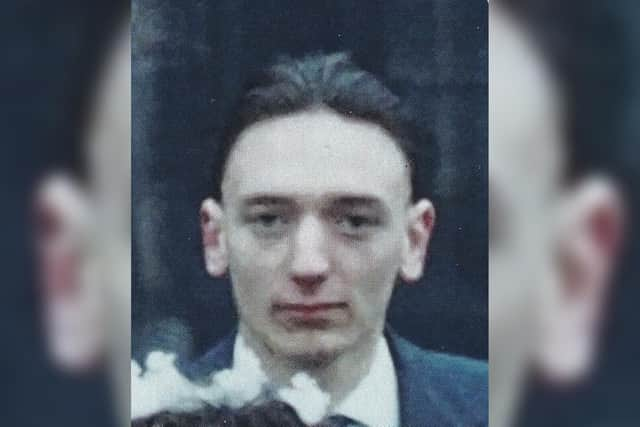
Giving the eulogy at his funeral, Mr Farrimond said Dr Hilton’s first teaching job was lecturing at Christ’s Catholic teacher training college in Liverpool – but his mother decided he could not look after himself properly so insisted that he returned to Wigan.
He took up a teaching post at what was then Blessed John Rigby RC Grammar School in Orrell in 1964, before moving to Notre Dame Convent School in Wigan a few years later.
Dr Hilton returned to John Rigby in 1972 as the head of the history department when the grammar school transitioned into the first Catholic sixth-form college in the UK, remaining there until he retired at the age of 50.
Mr Farrimond said: “Retirement enabled Tony to become, effectively, a full-time historian.
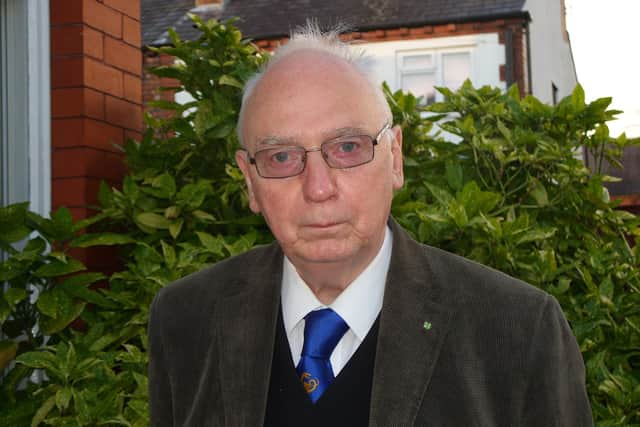
“Tony’s first love was researching and publishing history. The day job of teaching seemed to be there just to pay the bills. However, those who were taught by him could testify that he was pretty good at the day job. He brought deep knowledge, enthusiasm, wisdom and a brilliant sense of humour to the classroom.
“Tony was a prolific academic historian. We are very fortunate that he was persuaded to convert his output over many years into a doctoral thesis. He successfully defended his thesis in 2015 and was awarded a PhD by Manchester Metropolitan University.”
Dr Hilton, who lived in Whelley and was unmarried, wrote many articles and books, with his most popular work entitled Catholic Lancashire from Reformation to Renewal 1559-1991.
He also covered topics including Byzantine-Romanesque architecture in Catholic Lancashire, art critic and philosopher John Ruskin and Wigan’s missing Boer War memorial.
He became editor of the annual journal of the North West Catholic History Society in 1978 and, despite attempting to resign when he turned 70, he continued as editor emeritus until his death.
In a short statement announcing his death on its website, the society said Dr Hilton was “the main driving force for our society since its foundation”.
In addition to his writing, he became well-known in universities around the country, speaking about his research at seminars and conferences hosted by higher learning institutions from Lancaster and Salford to Venice.
Dr Hilton was a knight of the Military and Hospitaller Order of St Lazarus of Jerusalem, which is heavily involved with caring for leprosy patients, and belonged to the Guild of St George, a charity originally set up by John Ruskin.
He was appointed a knight of the order of St Gregory the Great by the Holy See in Vatican City in 2013 to mark his achievements as a historian of the Catholic church.
A mass was held at Holy Family Church, in New Springs, to install him to the order, which was founded in 1831 and included boxing champion Henry Cooper, comedian Frank Carson and Polish musician Henryk Gorecki, one of the 20th Century’s most successful classical composers.
At the time, Dr Hilton told the Wigan Observer: “It was a great surprise when I found out. I knew about the order but never imagined I would one day be a member of it myself.
“I was recommended by the committee of the history society and they had to send letters through to the Pope’s nuncio, who is his representative here in Britain, before it was passed right to the Vatican.”
Dr Hilton was also interested in wars during the 19th Century, including the Napoleonic wars, American Civil War and Franco-Prussian War, and enjoyed playing war games using the rules that he created.
He was keen to preserve the history of Wigan and was secretary of the Friends of Wigan’s Boer War Memorial group, which successfully campaigned to replace the lost Boer War memorial at Mesnes Park.
The previous statue was removed in 1968 and only the original stone plinth remained in place for years, until a new monument was unveiled in 2013.
He was then involved in the renovation of the Waterloo Monument in Billinge, which had fallen into disrepair. It was spruced up and a ceremony held to unveil it in 2017.
A funeral was held at St John's Church, Standishgate, followed by interment at Hindley Cemetery.