
Wigan 3rd worst in GM for home-wrecking Japanese knotweed
The Japanese knotweed growing season is now well under way and Wigan is proving to be a particular hotspot for this potentially nightmarish green menace.
Invasive plant specialist Environet has revealed Greater Manchester’s knotweed hotspots for 2025 using the latest data from its online tracker, Exposed: The Japanese Knotweed Heatmap.
With a total of 3,558 verified knotweed sightings across the city region, or 7.22 incidences in every 1m sq, it’s the fifth worst affected county in England, with the adjoining counties of Lancashire and Merseyside also ranking in the top five.
Wigan sits third in GM with 233 sightings; Manchester is second with 261 and then our near neighbours Bolton top the table by far with 1,494!

Now populated with over 100,000 known incidences of the UK’s most invasive plant, the map is updated with new verified sightings throughout the year, providing the most comprehensive online record of Japanese knotweed in the country.
Members of the public can enter their postcode to discover the number of sightings nearby, with hotspots highlighted in yellow, orange or in the worst cases red, helping them understand the level of risk posed to their home or one they wish to buy.
They can also help populate the heatmap by reporting knotweed infestations using the ‘Add Sighting’ feature and attaching a photograph of the plant so it can be verified by experts.
Japanese knotweed first arrived in UK in the Victorian times in a box of plant specimens delivered to Kew Gardens and was quickly adopted by gardeners and horticulturalists, who were unaware of its invasive nature. Since then it has spread widely, with an average of 1.1 occurrences in every square mile of England.
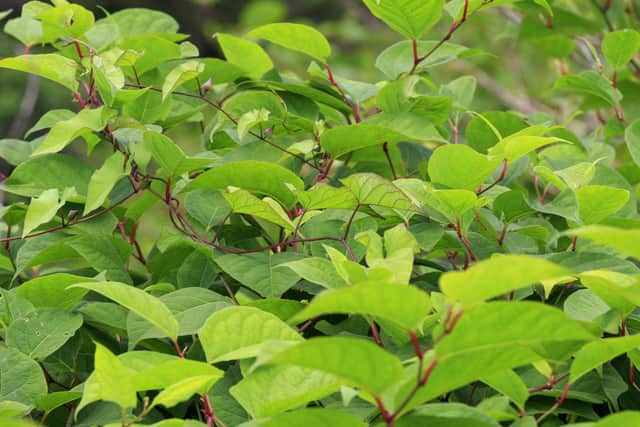
Knotweed begins to emerge in early spring, quickly growing into lush green shrubs with pink-flecked stems, heart-shaped leaves and bamboo-like canes. It can pose serious problems for homeowners, with underground rhizomes growing up to 3m deep and spread up to 7m horizontally, emerging through cracks in concrete, tarmac driveways, pathways, drains and cavity walls. While serious damage to property is rare, since mortgage lenders require knotweed to be dealt with when a property is sold, it can cause legal disputes between neighbours and reduce a property’s value by approximately five per cent.
A 2023 DEFRA report put the cost of tackling knotweed to the UK economy at nearly £250m a year.
Environet Director Emily Grant said: “By mapping verified sightings, we’re helping people understand the level of risk in their local area and encouraging early identification and treatment.
“Vigilance is the best way to protect your property from Japanese knotweed, making sure you tackle it as early as possible before it becomes well established. At this time of year, knotweed is in full growth mode and easy to spot with its bright green heart-shaped leaves which grow in a zigzag pattern up the stems. Mature plants flower around August, when they produce clusters of tiny white blooms.
“If you do suspect you have knotweed on or near your property, you can email a photo to us at [email protected] and we’ll identify it for free. If it is knotweed, a survey will determine the extent of the infestation and the best way to treat it, whether that’s digging it out of the ground, herbicide treating it or a combination of both.