
Millions of pounds spent buying back council housing in Wigan
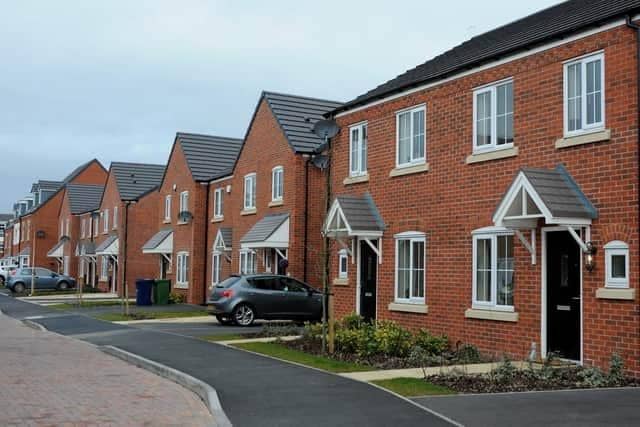

Wigan Council has spent millions of pounds repurchasing former Right to Buy properties, new figures reveal.
Right to Buy legislation allows people renting local authority-owned homes to buy them at a discounted rate.
But analysis of freedom of information requests shows many councils have ended up buying back properties they had previously sold at a discount through the scheme – with £1.7bn spent across England.
More than a billion of this has been spent since the start of 2020. It is difficult to say whether home-buying has intensified over this time period, as many councils did not provide figures from more than five or 10 years ago.
The figures show Wigan Council has spent £7.3m on 76 Right to Buy properties, including £6.5m on 59 homes since the start of 2020.
Across England, 8,600 homes sold under Right to Buy have been subsequently purchased by local authorities, 5,900 of them since 2020.
A Wigan Council spokesperson said: “We are committed to providing high-quality housing to give residents a safe and secure home and to have sufficient housing in the borough.
“As part of this commitment, Wigan Council has made a number of acquisitions in order to boost our housing stock which can be used to provide long-term accommodation as well as high-quality temporary move-on homes that help reduce homelessness in the borough.
“These acquisitions are focused on properties that were previously sold under the Right To Buy scheme for a number of reasons, including the ease of housing management and because it would enable standardisation of works and repairs.
“Under the Housing Right of First Refusal Regulations which came into force in 2005, homeowners wanting to sell or dispose of a property purchased through Right to Buy have a legal obligation to offer the council the opportunity to buy the property back at full market value for a period of 10 years after the sale.”
Harry Quilter-Pinner, executive director at the Institute of Public Policy Research think tank, said: "The scale of councils selling off properties, only to buy them back a few years later, highlights the absurdity of the austerity years – selling low, buying high, short-term savings at the expense of long-term costs, penny-wise but pound-foolish."
"As the consequences now come to bear, and councils struggle with related symptoms of the housing crisis like rising homelessness, it is crucial that the Westminster Government thinks long-term and provides sustainable funding settlements for local authorities so they can avoid this situation happening again," he added.
The data comprises freedom of information responses from 117 councils, 111 of which were able to provide data on how much they had spent.
Many of the biggest spenders were in London. Islington Council had spent the most, at a total cost of £146m.
It was followed by Lambeth, which spent £112m, while Barnet, Haringey and Brighton and Hove have each spent more than £80m.
Across England, 23 councils have spent more than £10m each since 2020.
Coun Claire Holland, housing spokesperson for the Local Government Association, explained that councils legally have to sell housing stock at a significantly discounted price – starting at 35 per cent for houses and 50 per cent for flats. Councils have a right of first refusal if the buyer wants to sell, but this is "invariably more than what they originally sold it for".