
Wigan borough HMO plan thwarted as planning inspector backs council refusal
A property developer has lost his appeal against the refusal by Wigan’s planning authority to allow the conversion of a vacant commercial building into a 16-bed house of multiple occupation (HMO).
Planning inspector David Cross also dismissed an application by ther appellant Adam Rowland for costs to be awarded against Wigan Council following his decision over the two-storey Astley House, on Johnson Street in Tyldesley.
A total of 48 objections to the proposal from nearby residents had been submitted to the local authority which then turned down the planning application.
In the report detailing his reasons for dismissing the appeal, Mr Cross cited the effect on the living conditions of nearby residents regarding noise, disturbance, and privacy, as well as similar concerns for future occupants of the building.
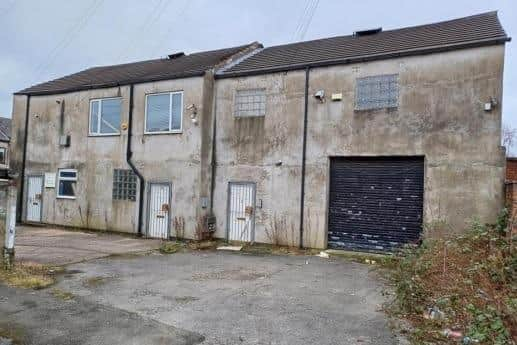

The appeal site is a vacant commercial building on a backland site at the rear of terraced houses on Johnson Street and adjacent to a public car park accessed from Primrose Street.
Mr Cross said: “The proposal would introduce a significant number of residents who would live independently from each other.
“Residents are therefore likely to arrive and leave at differing times, and due to the independent circumstances of each resident then this would also be likely to generate further social visits from friends and family.
“The resultant comings and goings would therefore be more intense compared to nearby residential properties.”
He said that proposal includes an open area between the building and the rear of the terraced houses, and although this may represent a suitable amenity area for the HMO, due to the number of proposed residents, activity within this open area would also be “relatively intense.”
The movements and activity generated by the HMO would be in an enclosed area to the side and rear of houses on Johnson Street, and these activities “would be readily apparent and unduly intrusive to nearby residents.”
Mr Cross said: “The activities arising from the proposed number of residents would lead to an overly intrusive level of noise and disturbance to nearby residents.
"A tenant management plan as suggested [by the appellant] would not mitigate this harm, given the number of proposed residents as well as the location and arrangement of the proposal.”
He said that he was mindful of the potential benefits of bringing a vacant building back into “productive use,” and that it would “refurbish and enhance the appearance of the site” and may deter anti-social behaviour sometimes associated with such properties.
“But this may also be achieved by a more suitable use or development compared to the appeal proposal,” he added.
HMOs have become a hot potato in the Wigan borough over recent years as some have led to complaints about rises in crime and anti-social behaviour because of the backgrounds of some of those living in them.
However HMO covers a broad range of properties and “higher end” establishments are also being proposed, not least to solve Wigan’s accommodation crisis but also to re-populate town centres to help boost the economy and bring disused buildings back into use.