
Jo Platt MP: how community ownership is reviving our towns
For too long, conversations about post-industrial towns like ours have centred around decline, deprivation and industries lost.
There is truth in that. Many people are still living with the legacy of deindustrialisation, which has shaped the social and economic fabric of our communities.

Too often, local economies rely on nearby cities rather than thriving locally.
But that is not the full picture, and it never has been.
Look closer, and you’ll often see communities stepping in, taking ownership, and revitalising the places we call home.
You’ll see the resilience of our communities: the creativity, determination, and people who haven’t given up on their towns and are actively rebuilding them.
That’s where social enterprises and community-owned businesses come in.
If we want to revive the towns left behind by deindustrialisation, we must start by supporting people in our communities: giving them the tools, opportunities and backing to drive change locally.
These are organisations run by local people, for local people. They do not simply chase profit; they reinvest it back into the community.
And they work. Across the UK, social enterprises employ millions of people and contribute billions to the economy. Community businesses, in particular, keep money circulating locally, with more than half of every pound spent staying in the area.
You do not have to look far to see this in action.
In Tyldesley, the community-led initiative For Tyldesley is restoring heritage buildings and breathing new life into the town centre.
Just down the road, The Pelican Centre — one of the first swimming pools in the country to become community-owned — is still thriving 14 years on.
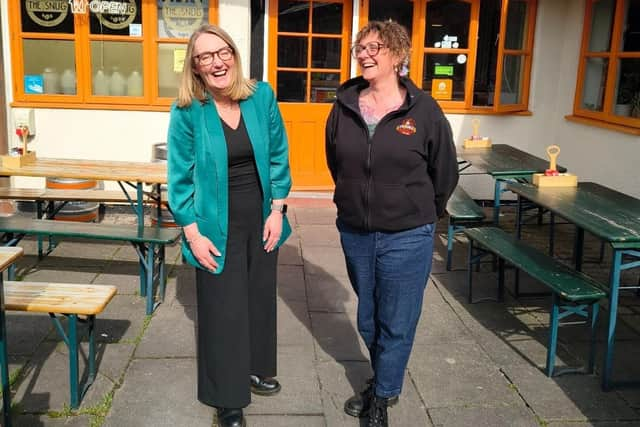
In Atherton, The Snug, led by grassroots champion Rachael McEntee and supported by the Music Venue Trust, is building a vibrant cultural scene locally.
In Leigh, Leigh Works is creating space for small businesses and digital innovation, inspiring the next generation of local talent.
And Leigh Spinners Mill — once a disused red-brick giant of our industrial past — has been transformed into a thriving hub of creativity and enterprise, home to dozens of community organisations and local businesses.
These are not one-off success stories.
They show what is possible when local people are given the tools to shape their own future.
If the aim is inclusive, place-based growth, then supporting social enterprise and community ownership must be a central part of our economic strategy.
This Labour Government has already made important progress.
The English Devolution and Community Empowerment Bill introduces a landmark Community Right to Buy, giving local people the opportunity to protect and take ownership of the spaces that matter most to them. Programmes such as Pride in Place, alongside wider investment in town regeneration, are already helping communities begin to rebuild.
While the Government’s Industrial Strategy rightly focuses on driving growth across the country, we must now ensure that this growth reaches smaller Northern towns like ours, where the backbone of the economy is not large corporations but small, locally rooted businesses.
This is where social enterprise and community ownership play a vital role: keeping wealth local, creating opportunity locally, and ensuring growth is rooted in the places that need it most.
The evidence is clear that this approach works.
The priority now is to support and expand it.
That is the fair future our towns deserve.