
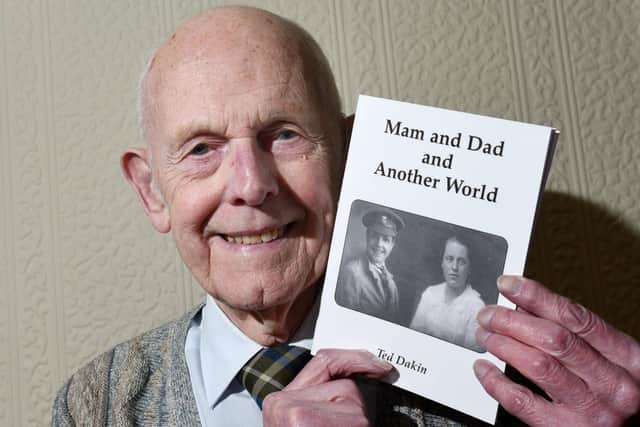
Veteran columnist Ted Dakin remembers Sir Billy Boston and life in Wigan during the Second World War
Ted Dakin reflects on Sir Billy Boston, supporting Wigan Warriors in his younger years and life during the Second World War.
Like it or lump it, and say what you will, but you must admit, nowt’s like it used to be.

The recent sad passing of Wigan’s all-time favourite person, rugby league icon Sir Billy Boston, brought a tear to my eye.
In Billy’s playing days and being an avid rugby league fan, me and my mates Bill Halliwell and Joe Pidgeon never missed a match and never failed to join the shouts of other fans when Wigan was just yards away from scoring a try.
“Give it to Billy!” we would yell, and sure enough, Billy “B” took the pass, and off he went like a rocket, weaving and swerving and nudging his way towards that whitewashed scoring line.
What a player! And he was modest with it too.
I remember once, after a game, showered and spruced up, and modest as usual, he joined us, his fans, on the coach back to Wigan.
One of his acolytes gave up his seat and sat on an upturned box of beer bottles.
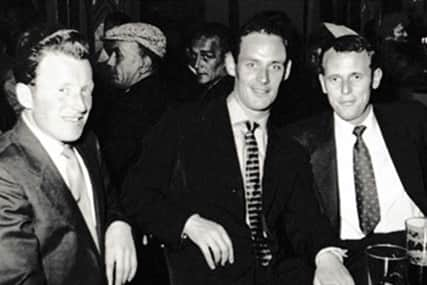
Well after his retirement, I and a few mates visited his pub, the Griffin at the bottom of Standishgate, and while I was at the bar, I witnessed a Leigh rugby fan introduce his wife to our Billy, and she shook his hand purely out of respect and admiration.
Like I said, me, Bill and Joe seldom missed a match, and one Saturday when Wigan were playing away against Wakefield Trinity, Joe, who was as daft as brush and worked at the Heinz canning factory at Kit Green as a forklift truck driver, borrowed a battered, two-seater, unlicensed van and drove us “precariously” to watch Wigan beat Wakefield Trinity by a mile.
On the way back, it was my turn to sprawl down in the back of the van on an old bedsheet.
The van broke down and after some guess work and good luck, Joe managed to get it started again.
About 10 minutes after, driving against a strong wind, the passenger door’s top hinge became loose and me and Bill had to take turns holding the door closed all the way back to Wigan.
After that fiasco we decided to give Joe the boot and from then on, we travelled to away matches by coach.
What a carry on. But what memories.
In my last article, I wrote about the war years, the threat of bombing raids, the enforced blackouts and the life and times of growing up in our dead-end paradise.
As I keep mentioning, the centre of our run-down dump was Gallagher’s glue and hide factory that we called “the bone works” and was a sanctuary for rats as big as cats and a pong that, unless you were a seasoned native, could ruin your sense of smell for ever.
Dad worked as a “rop man” for Gallaghers, cleaning the “rops” (the guts) of dead farm animals, in continuous running water, that in those days were used to make sausage skins, well before this present, wellness and health-obsessed world of today.
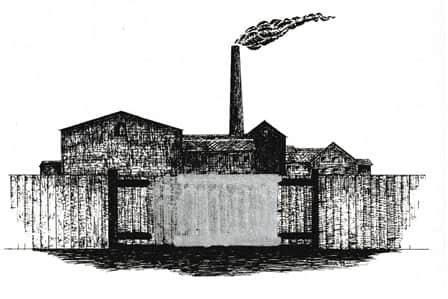
When Dad went out on a Saturday night for a gill, the smell of Gallaghers was still in his pores and when his hands began to warm up, the stink began to leak and rise and drift around and would send other drinkers moving gradually away from him.
By the side of Gallagher’s factory lay Owd Nick’s pond, where the residing rats slaked their thirst and bred relentlessly.
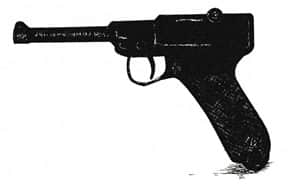
One summers day about 1941, during the war years, my big brother Tom was paddling in the shallows of Owd Nick’s when he came across a bulky, brown paper parcel tied with string and he took it home to Dad who unwrapped it to find a German Luger, spotlessly clean but devoid of bullets.
Dad took it to the police station at the bottom of King Street and we never saw it again.
During those war years, apart from the blackout restrictions, curfews were put in force.
One Saturday afternoon me and my mate Peter “P” Clark left home to do some bird-nesting and because of the curfew realized we were running out of time and made a desperate dash for home.
A home-guard chap was on duty patrolling the perimeter fence of Walkers Iron Foundry, just in case of an enemy attack.
As we approached the fence he shouted “Halt! Declare yourselves and put up your hands.”
I nearly wet mi britches and was just about to make a run for it when P grabbed my coat sleeve and pulled me back.
After a little chat and a laugh, he admitted he had no bullets for this battered rifle, otherwise we could both have ended up dead as doornails.
When I arrived home, Mam gave me a clout across the earhole and warned me never to be late again.
But I was. How can you keep two inquisitive lads like P and me, caught up in a world war, out of trouble?
In my later years I used to wonder what Churchill would have thought about that incident, eh?
I often think back about those uncertain times of long ago.
About the brick air raid shelter that was built on our potholed “back field” that no-one ever used, and where one Saturday afternoon I fell off the roof and broke my right arm.
Our neighbour Bert Connor made a sling for it until Mam could walk me to the Wigan Infirmary.
I always reckon I came into this world at the right time, because after the initial fears of bombing raids and enemy attacks from the canal, and the drone of enemy bombers heading for Liverpool and other vital cities, and the worry of a never-ending war, our survival instincts kicked in and life just went on as usual.
But thank the good Lord for our lasting peace, because some people really did suffer, and some of those souls who still walk this planet can recollect the true horror of conflict and will never forget a war that changed the world for ever.