
In his latest Nature Notes column, Graham Workman discusses efforts to bring back the Eurasian lynx to the UK
In his latest Nature Notes column, Graham Workman discusses plans to reintroduce the Eurasian lynx in the Scottish Highlands, with a focus on sustainable habitat support and public consultation.
The native Eurasian lynx was made extinct in Scotland through hunting and habitat loss more than 500 years ago.
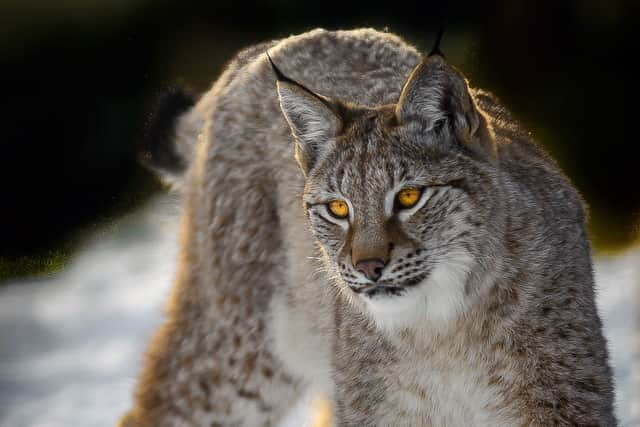

Lynx are ”keystone species” which play a vital role in maintaining healthy living systems, and biodiversity is negatively affected by their absence.
Lynx are shy and elusive woodland hunters and pose no danger to people.
They have successfully returned to European countries such as Germany, France and Switzerland.
Research suggests the Highlands has the habitat to sustainably support around 400 lynx.
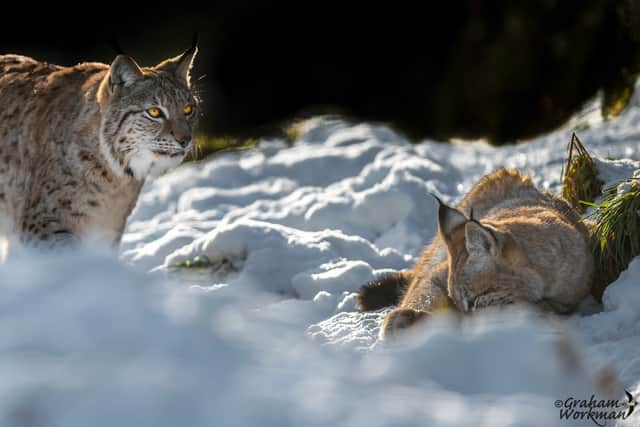
Across mainland Europe, the Eurasian lynx is staging a comeback, benefiting from increasing public interest and reduced hunting pressure.
Lynx continue to face localised threats from poaching, fragmented habitats and the isolation of some smaller populations.
Overall, though, the population is growing and expanding its range, helped by a growing number of successful reintroduction programmes across western Europe.
The Times had a very interesting article a while ago which brought to light a long forgotten relic: one that I had actually seen many many years ago.
On the site of an early medieval monastery on the island of Eigg is a carved stone that depicts a hunting scene from before the Norman conquest of Britain.
Prominent among the deer and the boar is the big speckled cat with pointed, tufty ears.
To some historians the ninth-century carving is a biblical depiction of a lion, to others it is proof that the Eurasian lynx was once native to Scotland before being wiped out for its fur 1,300 years ago.
Sadly, it looks like the reintroduction of Eurasian Lynx in England has hit too many problems and it is been shelved while further work is carried out on the feasibility.
There's much better news for a similar lynx release programme for the far north of Scotland.
The Lynx to Scotland partnership is working to return lynx to northern Scotland through a carefully managed reintroduction.
This would be the first time that a large mammalian predator has been returned to any part of the UK.
It would require approval by the Scottish Government, following habitat assessments and full public consultation.
2024 saw Lynx to Scotland convene a cross-sectoral group of national stakeholders to assess objectively the concerns that were identified by a Vincent Wildlife Trust (VWT) study in 2021, and to discuss the potential benefits and challenges of a lynx reintroduction to the Scottish Highlands.
A total of 53 institutional representatives participated in Scotland’s National Lynx Discussion, facilitated by the IUCN SSC Conservation Planning Specialist Group (CPSG).
Using European evidence and local expertise, these stakeholders agreed a set of statements and recommendations on the questions set out by the VWT study.
These statements are not endorsements of a lynx reintroduction.
Rather, they highlight areas of agreement on potential impacts and the kinds of management that might be needed if lynx were to return.
The Lynx to Scotland partnership is carrying out further consultation with stakeholders in 2026, to increase public understanding and collaborate on solutions to the potential challenges of coexistence.
Fingers crossed it is successful. To see lynx back in the UK would be fantastic and save me having to venture into mainland Europe to catch up with them again