
Nature Notes with Graham Workman: Avian flu
Sadly 'Bird Flu' is here again and could have a catastrophic impact on our bird populations
Avian Flu
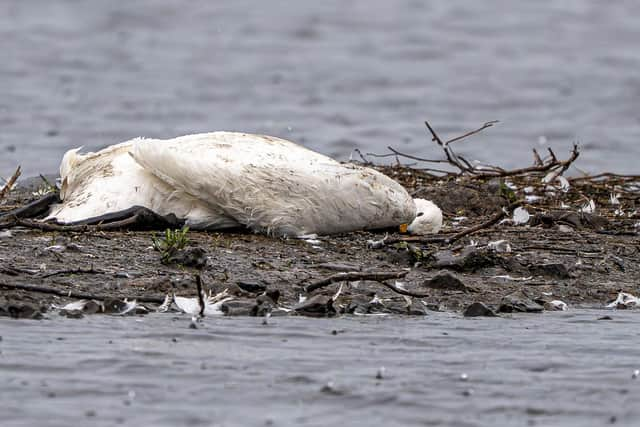

Sadly, this dead whooper swan may well be the victim of the deadly ‘Bird Flu’ virus. I took this shot today at our local Wildfowl and Wetlands Trust Reserve in Lancashire, UK.
We did report it to the wardens, and they will go and retrieve the bird later and send it for analysis to confirm if it was Avian Flu.
Among those worst affected so far are waterbirds such as mute swans, whooper swans (like this one), geese and various gull species.
These are often highly social species, which gather in large flocks at wetlands and coastal roosts – conditions that can accelerate the spread of disease.
There are growing fears that the UK could experience similar losses to those seen recently in mainland Europe.
In Germany, for instance, more than 2,000 common cranes have died of bird flu in recent weeks, signalling how quickly outbreaks can escalate among migrating birds.
The British Trust for Ornithology (BTO) has issued an urgent appeal to the public to report sightings of dead birds following a marked increase in confirmed cases of Highly Pathogenic Avian Influenza (HPAI) – commonly known as bird flu – among wild birds across the UK.
Recent weeks have seen the virus detected in several species, including swans, geese and gulls, as migratory flocks arrive for the winter months.
With large numbers of birds arriving from northern Europe and beyond, scientists warn that the disease could again have devastating impacts on wild populations.
Birdwatchers and conservationists have already noticed worrying signs of increased mortality, suggesting a period of high infection may be under way.
Prof James Pearce-Higgins, BTO Director of Science, highlighted the severity of the threat: “The disease killed hundreds of thousands of wild birds across more than 150 species in the UK in 2021–2023 alone.
"We were on a family holiday on the coast of North Western Scotland and we saw literally hundreds of dead sea birds washed up on the beach of the bay we were staying in.
"It actually made us realise the catastrophic effect the disease was having on our bird populations.
"Another similar event this winter could kill tens of thousands more wild birds in the UK, particularly wildfowl like the whooper swan which we know are highly vulnerable, and winter here in internationally important numbers.”
All dead and sick birds should be reported to Defra (online or by calling 03459 33 55 77) or to DAERA in Northern Ireland.
Records can also be submitted via BirdTrack, either through the website or the free mobile app. Defra and DAERA will determine whether carcasses are collected for testing.
But do not for any reason touch dead or visibly sick birds under any circumstances, and to keep your dogs on leads near affected sites to avoid the further spread of the virus.
So what is avian influenza? Simply put it’s an infectious disease that primarily affects birds but can spread to humans through close contact with infected birds or their droppings.
Don't panic! While it can be fatal, human infections are rare and the risk to the public is considered very low, as the virus does not easily spread from person to person.