
Jo Platt MP: The politics of populist algorithms ahead of the Makerfield by-election
Leigh and Atherton MP Jo Platt considers how political candidates are chosen ahead of the Makerfield by-election.
As the Makerfield by-election unfolds, one of the most revealing aspects of the contest may not ultimately be the result itself, but the process by which candidates were selected.
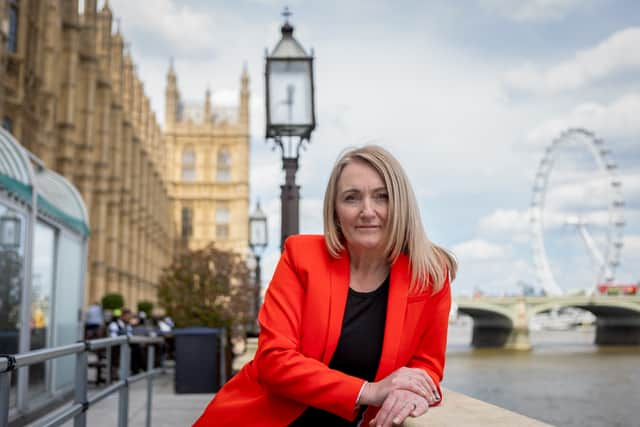

What has drawn my attention is how some of the smaller or insurgent political parties have approached candidate selection.
During the Makerfield by-election, both the Greens and Reform UK selected candidates whose histories of social media activity quickly became public.
These controversies raise questions about the kind of political culture emerging around newer populist movements and, more importantly, why these parties are attracting support in the first place.
Politics has always attracted people who are angry at governments, with institutions, and at parties that seem distant from everyday life. But the route by which people arrive in politics appears to be changing.
In this social media age where algorithms increasingly shape the political environment around anger, distrust and online reinforcement, political parties are selecting candidates.
Online platforms favour outrage, fear and emotionally charged content far more effectively than thoughtful debate or policy discussion. The result is a political culture in which hostility spreads rapidly, while nuance struggles to compete.
The hostility generated online, we hear on the doorsteps.
Political disagreement is nothing new, particularly when a party is in government. What is striking, however, is that many people struggle to explain precisely why they feel that way beyond what they have repeatedly encountered online.
That does not mean people are uninformed or incapable of forming their own opinions.
The frustrations people express are often entirely legitimate - the cost of living, strained public services, distrust in institutions and the feeling of being left behind or ignored.
But the reasoning as to why Labour, or minority groups, are to blame for these struggles is not backed by a clear explanation.
Previous generations argued politics face-to-face; whether that be in workplaces, pubs, trade unions, churches, community groups and around kitchen tables. People had to explain and defend their views.
Today, algorithms do not reward reflection or complexity. They reward engagement. Anger spreads faster than nuance. Fear spreads faster than hope. Outrage keeps people scrolling, and in doing so, reinforces existing beliefs.
These online environments are not experienced equally. We are all increasingly living inside separate information worlds, and within some of those echo chambers grievance is rewarded more than understanding.
I dislike the tendency to mock or ridicule candidates personally online. I do not believe in looking down on people who choose to stand for public office as most people enter politics because they care about something.
Dismissing people outright is lazy politics, but taking people seriously also means asking serious questions.
One concern about the current political climate is that some candidates gain traction not because of carefully developed ideas or coherent policies, but because they are amplified by the reactionary politics and outrage economy created online.
I did not go to university. I completed an apprenticeship, built a career in marketing and found my own route into public life. Many parliamentary colleagues took very different paths.
What connected us was not education or background, but a shared understanding of why public service mattered and a determination for collective change.
Candidate selection is where those values are tested.
In Makerfield, both Reform UK and the Greens have reportedly faced difficulties surrounding candidate recruitment and vetting.
Reports on Reform UK candidate Robert Kenyon highlighted a history of inflammatory comments on immigration, as well as misogynistic claims, including the assertion that abortions are carried out for “vanity purposes”.
Reform dismissed some of these remarks as “locker room banter”, but that raises an obvious question - is this really the standard expected of people seeking public office?
Meanwhile, the Green Party selected Chris Kennedy, who later withdrew for family reasons. Reports later emerged alleging that Kennedy had shared conspiracy theories online relating to attacks on Jewish community ambulances, including references to “false flag” narratives.
The central concern in both cases is how these issues were missed during candidate vetting. If journalists can uncover problematic material within hours of a candidate being announced, how are political parties failing to identify it beforehand?
It raises two important questions: why are some political movements attracting individuals with records of this kind of behaviour, and how can vetting processes be strengthened to prevent people with histories of racism, antisemitism or misogyny from standing for public office in the first place?
None of this is unique to newer parties. Labour, the Conservatives and the Liberal Democrats have all, at various times, selected candidates who later proved unsuitable. No major party is immune from mistakes in judgement.
Makerfield may ultimately tell us less about who wins a by-election and more about the kind of political culture Britain is now producing.