
A clergyman who is one of new PM Andy Burnham's constituents calls on him to help fix divisive politics
Unitarian minister Rev Rob Foreman, of Park Lane Chapel, Ashton-in-Makerfield, highlights the need for constructive dialogue in politics, urging the new Prime Minister to address divisive politics through example and hope.
Behind the most famous black door in the country, Andy Burnham will be settling in with his red box and a gaggle of advisors, trying to work out what the next 100 days should have in store.
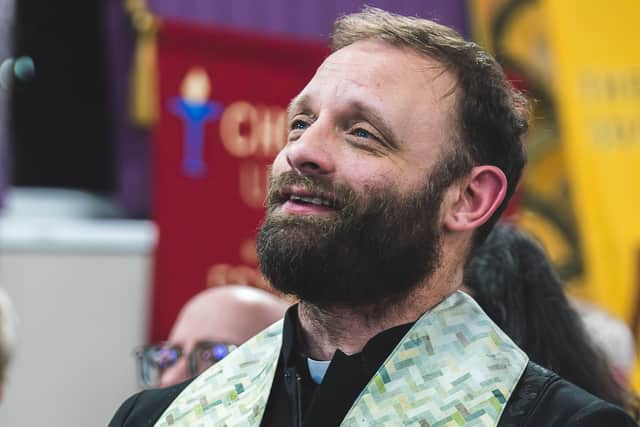

He’s already making big gestures - cuts to electricity bills, caps on bus fares - and we’re beginning to see what a Burnham premiership will look like. It’s exciting, and it’s hopeful.
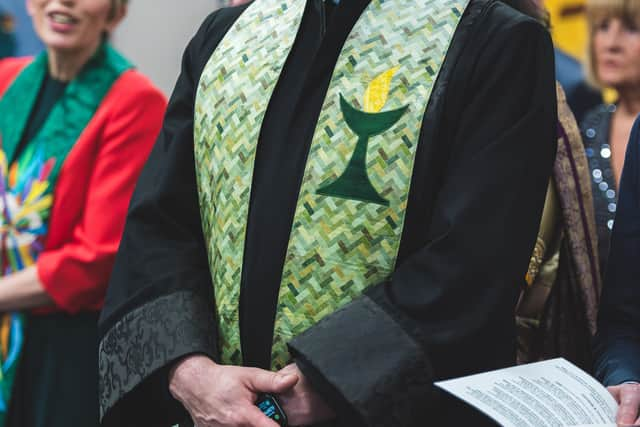
But for me, as a Unitarian minister here in Makerfield constituency, right on his doorstep, there’s another priority that has been deeply overlooked. Handled well, it could transform the way this country thinks and feels about itself. That is the ability to argue, to disagree well, to hold space for other views while still holding firm on your own.
On Thursdays in the chapel, it’s coffee morning, and it’s where all the locals spill the tea. Across a plate of biscuits and a warm brew, I hear all the local gossip - who has fallen out with whom, what people are worried about, what’s keeping people awake at night.
But what I’ve noticed in those conversations is how hard it is for people to talk to each other out there on the streets of Wigan, how to change minds, how to argue well, how to disagree with each other. This new frontier didn’t open with the by-election, of course. Things have been getting worse for some time. But the by-election stripped the wallpaper off and showed us the damp underneath, in a way that was impossible to ignore.
It strikes me that we were not experiencing an argument. What we had was two groups who had each privately concluded that the other was thick, and who then spent six weeks finding new ways to say so. I heard it from both sides, in almost identical words. I can't believe people could be so thick. They were talking about their neighbours, their colleagues, their friends.
This is a coalfield town. Almost everyone in my chapel has a pit somewhere behind them. A father, a grandfather, an uncle who went down at fourteen. It’s easy to romanticise it, and I will not. People down the pits had their fair share of arguments too, and some of those feuds outlived the men who started them. But there was one thing you could not do underground, and that was to believe the man next to you was an idiot. Your life was in his hands and his was in yours. Disagreement had to be survivable, because the alternative was unthinkable. The industry has long gone now and so, I think, has the assumption underneath it.
What has replaced it is not more anger. People here are no angrier than they ever were. What has gone is the practice - the ordinary, daily, low-stakes repetition of being contradicted and surviving it. Families used to eat together and argue about nothing much: the football, the neighbours, Thatcher. Now the nuclear family has been replaced by the nuclear tablet. Everyone is in the same house, on separate screens, being agreed with by algorithms that show them what they want to see, and bait them with posts designed to harness their anger and outrage.
And an argument you never lose is an argument you never learn from. I sit with people who cannot let a conversation end until the other person concedes, because in their experience being heard and being agreed with are the same thing. If you do not come round, they do not feel listened to. They feel beaten. So they escalate, and the words get bigger. People tell me their town is being invaded. I do not think they have weighed that word. I do not think they have asked themselves what they are picturing when they say it, or who is listening when they do.
As a minister, and a man of faith, you might expect me to appeal to civility here, but that’s not my argument.
I am the thirty-first minister of this chapel, and I’m a Unitarian. Unitarians were some of the first dissenters, kicked out of the established Church of England in 1662, along with two thousand others, because they would not sign up to a form of words they did not believe. They lost their livings and their legal protection, and their congregations met in barns and back rooms for generations before they had the freedom to form chapels like Park Lane.
We’ve been a free and inquiring religion ever since. We ask questions. We believe in science and rational thought, and we think about how those values match those of God. And what that history taught us is that you can hold a position without needing the person opposite you destroyed. Disagreement is not fatal.
That is not the same as softness. It is considerably harder than softness. Unitarianism is a discipline, a way of approaching a question that assumes you might be wrong, that the person across the table is arguing in good faith, and that the point of the conversation is to get closer to something true, rather than to win. We have been practising that for three hundred and fifty years.
That discipline needs something underneath it. You cannot hear a thing you find repellent and stay in the room unless there is some ballast in you, some habit of reflection, something that is not the argument. Call it prayer if you pray. Call it whatever you like if you do not. Our public life has almost none of it, which is why every disagreement now arrives at annihilation within a day and a half.
So my one request of the new Prime Minister is not a policy. He will have a hundred people in the building with policies, most of them better informed than me.
It is this: treat the way we argue as the thing that needs fixing, and lead by doing it. Let yourself be publicly persuaded of something. Let an opponent be right in front of a camera. Refuse, out loud, the version of politics that requires a stupid enemy.
Because there is a market for someone to blame, and it grows in the places where people have been given very little else. It has grown here. I watch it grow at the coffee morning. And the only thing I have ever seen kill it is hope.
But we can fight back. Hope is the weedkiller for divisive politics, and it is the one thing a government can still choose to plant.
Andy Burnham knows this town. He won it, and now he’s in charge of the country. Let him have some hope that we can argue again, and argue well.