
Nature Notes with Graham Workman: Plan Bee
Just like the first swallow, the buzzing of bumblebees is a sound that summer's on its way.
The couple of hours of sunshine yesterday had some bumblebee activity along our stone garden wall.
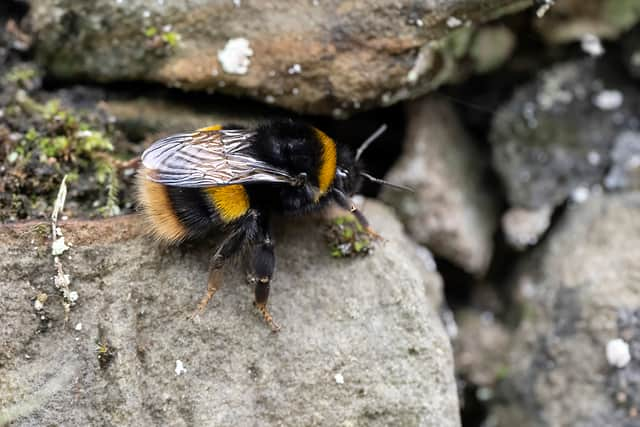

I watched two different queen buff-tailed bumblebees on the hunt for a 2026 home.
They are usually the earliest bee we see and definitely the largest to visit our garden.
The queen is 2cm or more, the workers and drones are of a more common bumblebee size: 14 to 17mm in length.
The wall is over 200 years old so as you can imagine there are literally hundreds of cracks, gaps, hole and fissures to chose from.
In parts it has actually become a dry stone wall with the loss of old mortar.
The buff-tailed usually nests in the ground, regularly taking over old empty mouse or vole nests.
In western Europe a 100 bees occupying one nest may be considered the minimum and bigger nests may consist of no fewer than 600 bees.
The younger queens are the only ones to hibernate through the winter.
Forgetting for the moment probably the most famous bee, the honey bee (Apis mellifera), there are the “true bumblebees, cuckoo bumblebees that parasitise “true” bumblebee nests, and solitary species including leaf-cutter and mining bees.
One of the most widespread bumblebee species is our buff-tailed bumblebee.
As mentioned, queen buff-tailed bumblebees hibernate and then in early spring, when the days start to get warmer and longer, they will come out of hibernation.
The most urgent and important task is then to start foraging to replenish their energy reserves, which have been emptied over the winter.
Next she will need to find nesting sites often in old small rodent nests and start building the new colony structure.
Using special wax produced from her abdomen she lays the first eggs that will become her colony.
The new worker buff-tailed bumblebees that hatch in spring have a choice to make.
They can either stay within the colony looking after the young brood, take on the maintenance duties in the hive and of course looking after Her Majesty the Queen.
Their other option is to leave the colony to forage for nectar and pollen.
During the season colonies can easily grow to several hundred workers, then in late summer males and, if the colony is large enough, new queen buff-tailed bumblebees hatch from the brood and mate.
The males then sadly die and the new queens start to forage to provide them with enough stored energy to find hibernation sites in which to spend the winter.
In Southern Britain, where winter temperatures are not too low, the buff-tailed bumblebee may have a second-generation during winter. New queens at the end of summer start new colonies instead of hibernating.
As bumblebees go, buff-tailed bumblebee’s have short tongues, so they usually search for pollen in short open flowering plants such as foxglove, comfrey, lavender and many of our farmed food plants.
Clever little critters that they are, they will also bite small holes through the base of longer flowers which their short tongues can’t reach to “steal” nectar without pollinating them!