
Common Cranes - possibly getting more common
2023 was the best breeding year for Cranes for centuries!
Well hopefully 2024 will surpass 2023 and add to the growing population of these magnificent birds! Since going extinct through hunting in the 16th Century we had centuries without any birds. Now they have hit a record high according to the latest breeding survey results. Survey results show 2023 was another successful year for the Common Crane, with a record 80 pairs confirmed in the UK and 36 young known to have fledged.
So now the UK population is believed to be in excess of 250 birds!!!
A bit further away a couple of months ago we Just returned from another ‘Dad and Lad Adventure’ this time we left the scorching heat of the Kalahari and headed north to the cold forests of Estonia. We went in search of owls, sea ducks and any mammals we ‘bump into’ during our woodland wanderings.
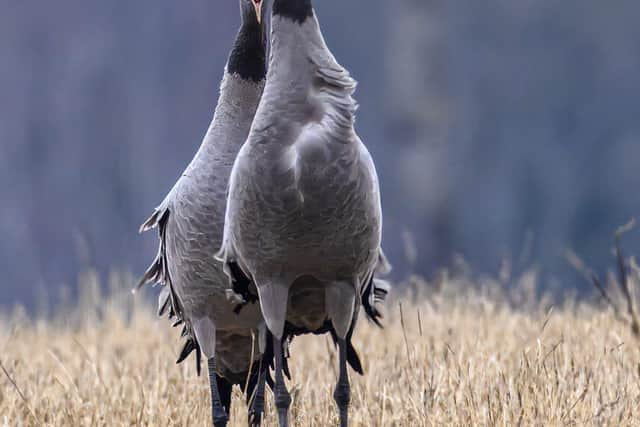

One of the many highlights for me was the chance of cranes – especially in March when their mating dances would be in full swing!
Breeding pairs are monogamous and both sexes engage in ‘dancing’, which is made up of a variety of bows, bobs, and leaps. These are most commonly used in courtship which we were lucky enough to see. They also have a fair ‘voice’ which broadcasts their calls a good distance.
To be honest they are quite comical with the jumping, hopping, bowing and fluttering their large wings! Hopefully one day they’ll move north from the small but increasing breeding population in the south west and Norfolk. I remember years ago in the early 19680’s when commenting that soon Buzzards would be a common sight around Wigan – and now I see them every time I go into the garden with my binoculars to do some ‘local’ birding!
Getting back to the cranes they became extinct in the UK in the 1500s with the last recorded nest in 1542. Then a small group turned up in the Norfolk Broads in 1979.
Before this they often featured on the menus of medieval feasts; for example, a banquet to celebrate George Neville’s enthronement as Archbishop of York in September 1465 supposedly included 204 Cranes. Now that’s just stupid and its very obvious why they went extinct! Add to that the massive drainage works that were occurring at the same time in areas which had once been Crane stongholds. These wetlands soon became ‘drylands’ and the Cranes moved on.
Adult cranes stand at about 1.2m (4ft) tall and are known for their complex "display" behaviour where they perform bows, pirouettes and bobs.
The "naturally secretive" birds can be seen at RSPB nature reserves including Lakenheath Fen, Nene Washes and Willow Tree Fen in Lincolnshire.
The birds are making a comeback thanks to restoration and protection of their wetland habitats. The RSPB said peatland restoration and wetland protection had significantly contributed to the recovery with more than 80% of the breeding population found on protected sites, and 21 pairs on RSPB nature reserves alone.