
Health Hub already helping to save lives
Wigan’s newly established Physical Health Hub for people living with mental health conditions is already making a positive impact – and in some cases has helped save lives.
The initiative, set up earlier this year, is also helping to redress health inequalities – an issue highlighted by NHS England over the past decade. Regrettably, people living with mental health conditions experience significant inequalities when it comes to their physical health care compared to those without mental health needs.
Greater Manchester Mental Health NHS Foundation Trust, the provider of these services across Wigan, believes that the two should be given equal value as mental health and physical health directly impact each other.
We are really pleased with the progress the hub has already made. In the last few months alone, the team has identified three serious undiagnosed heart conditions and numerous cases of undiagnosed diabetes and anaemia. These cases have been referred on for the correct treatment, allowing service users to maintain their physical wellbeing. Without the hub’s support, these conditions may otherwise have gone unnoticed.
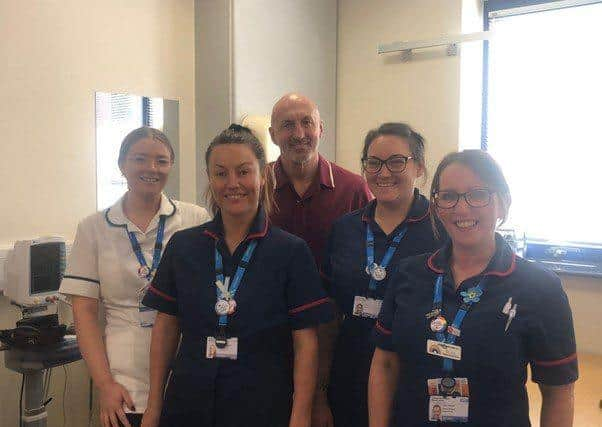

The team is now fully staffed and have expertise in both physical and mental health. They support service users, with our care teams, to look after their physical wellbeing, particularly adults and older adults who are living with serious mental health conditions.
Studies show people in contact with specialist mental health services have a mortality rate 3.6 times higher than the general population. For example, they are four times more at risk of dying from respiratory, digestive and circulatory diseases – all of which are lifestyle-related diseases.
The Physical Health team offers specialist advice, guidance and education to the in-patient and community mental health teams on how to safely support people with long term conditions such as diabetes, Chronic Obstructive Pulmonary Disease (COPD) and delirium. Delirium is an urgent medical condition that comes on suddenly and is usually caused by a physical health problem such as an infection.
Delirium affects people in different ways but can often be characterised by increased confusion and disorientation. It can also cause mood swings and sometimes hallucinations. Delirium is common in people living with dementia and so it is imperative the condition is diagnosed and treated as quickly as possible.
The Physical Health team has worked closely with older adult mental health services in Wigan to create a delirium pathway. This enables blood tests and the prescription of medication for those suffering from delirium can be treated without delay or the need to attend acute hospitals.
For the remainder of the year, there are plans to expand the Physical Health Team further and add the ability to offer community treatments that would usually need a hospital admission, which will be great for the people of Wigan.