
Oystercatchers: Do they really catch oysters?
Do they really catch Oysters? Mussel catchers would be a better name!
Oystercatcher. Haematopus ostralegus
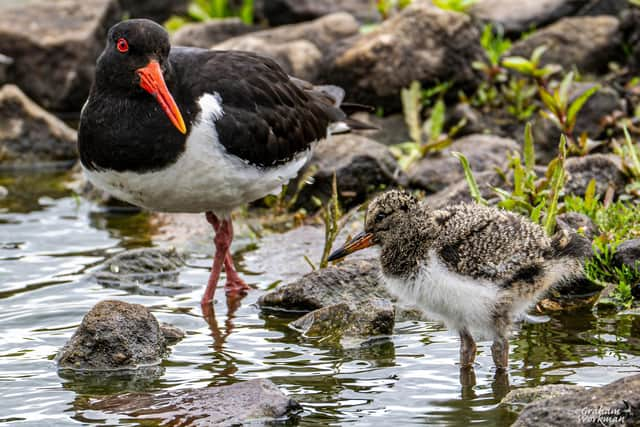
This recently fledged youngster is out on his first adventure with 'Dad' keeping an eye on him and hopefully keeping him safe and sound. The wetland they're in has a couple of Greater black backed Gulls who patrol all areas looking for an easy meal - and this youngster would be perfect. Luckily parent Oystercatchers are good at seeing off any unwanted attention from bullying gulls!!
Originally a coastal species, the oystercatcher has moved further inland over the last 50 years to breed on waterways and lakes. Most UK birds still spend their winters by the sea, however, and are joined by birds from Norway and Iceland.

When in coastal habitats oystercatchers specialise in eating shellfish, strangely enough not oysters but cockles and mussels, which they either prise or hammer open with their strong, flattened bills.
Noisy blighters too with their loud and shrill ‘peep-ing’ call.
A couple of years ago we were doing some bat surveys on the old school buildings that were being demolished over in Pemberton. Luckily we found the Oystercatchers that were nesting on one of the roofs on a building due for demolition – so instead of being the first building to be demolished it was put on hold till the chicks had hatched and flown.
Oystercatcher parents are very unusual in the birds known as waders as they actually feed their chicks. This means that unlike other waders they can nest far away from the usual wader sites such as shorelines, rocky beaches, muddy estuaries etc. Other wader chicks, straight after hatching are off looking for food and pretty much are self sufficient food wise immediately.
Oystercatchers collect food and fly it back to wherever the nest is. They primarily feed their young on earthworms and other insects, but if they are near to the coast they’ll also provide scraps from opened shellfish like mussels. The chicks rely on their parents for food for several months, unlike other waders who can feed themselves soon after hatching.
Some factoids about Oystercatchers –
- Oystercatchers typically have a life expectancy of around 12 years, but individuals have been recorded living into their 20s and 30s, according to the RSPB and the BBC. Some birds have even lived for over 40 years – now that’s impressive!!
- Oystercatchers can fly at speeds of up to 40 mph. They lay 2-3 eggs, which are camouflaged to blend in with the ground. During the breeding season, they perform dramatic aerial displays. Oystercatchers' chicks can walk and feed themselves shortly after hatching.
- Two or three chicks are raised each year, and the chicks rely on their parents for food for several months. Throughout that lengthy breeding period from early spring to mid-summer, birds breeding on the shore are particularly vulnerable to disturbance.
- During winter you can see large numbers of oystercatchers around estuaries, as migrating populations from other countries join resident oystercatchers here in the UK. They can be seen searching in the ground with their long bills for food, which is usually worms, cockles and mussels.