
The Alien Invaders
No not little green men!
No one to blame but ourselves when it comes to this species. Which as caused havoc with our own native one!! Recent work on population estimates puts the numbers now of grey squirrels in the UK at around nearly 3million!!! Prior to the 1800’s guess how many were here in the UK - zero!!!! But as we humans like to meddle it became quite fashionable to have grey squirrels around your stately home and estate so the ‘aristocrats’ imported them in from the US and Canada. On the other hand Red squirrels our native species have lived in the UK for around 10,000 years, !!!
A small number of grey squirrels were first introduced at Henbury in Cheshire in 1870. Then more were released at several sites through England. Given the small numbers of squirrels released, it did incredibly well. They started to colonise other woodlands over the years, venturing further east, west and north.
It soon became very evident that as the Grey Squirrel spread and increased in numbers, the Red Squirrel retreated, and the population began a gradual decline. That retreat has continued, and many believe will continue until the threat of the grey squirrel is removed. It could be that in 20 years or less the red squirrel becomes extinct in England.
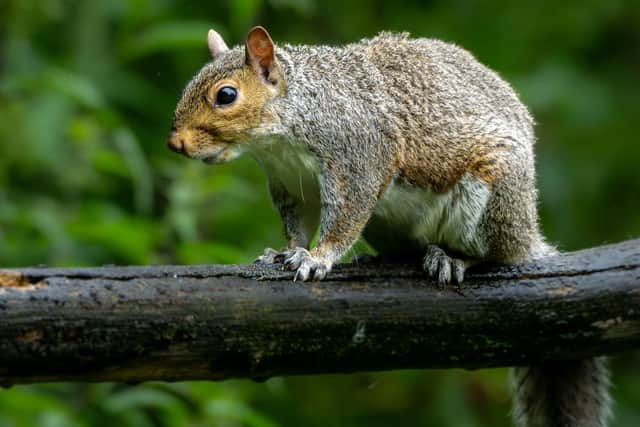

Another significant problem is that Grey squirrels transmit a squirrelpox virus which can normally kill red squirrels. Once infected, red squirrels often die of starvation or dehydration.
The conservation project for the complete removal of Grey Squirrels on Anglesey has allowed the Red Squirrels to breed and the young to survive, emphasizing that it is the presence of Grey squirrels that is the real problem for Red Squirrels.
Research has shown that the answer could well lie in the way each species uses the food available to them. Grey squirrels carry a lot more body fat than red squirrels, which gives them a better chance of surviving. Greys are roughly twice as heavy as red squirrels and are happy living in much denser populations than red squirrels in mixed and broadleaf woodlands; with greys achieving up to 15 individuals per hectare (the size of a large football pitch) and reds achieving up to 2-3 per hectare.
Grey squirrels evolved on the eastern seaboard of America in oak and hickory forests. As a result, they have developed a resistance to a chemical called tannin, which is found in seeds such as acorns. Unripe acorns are particularly rich in tannins but are a high-energy food source. Red squirrels find tannins unpalatable, so grey squirrels can decimate crops of acorns before they ripen and become a viable food source for reds. Greys also raid caches (stores) of seeds that red squirrels have buried.
There are a few research projects on the go – contraception measures in food to stop the greys breeding, introducing the Pine Marten to predate on the greys - Research has shown that the presence of pine martens helps control grey squirrel numbers. In north Scotland, red squirrels have coexisted with pine martens since the early 1980s in large areas of native species and mixed plantations. The exact process of how pine martens control grey numbers is not fully understood. Fingers crossed a solution is found soon!