
How a 75-year-old cancer sufferer had to spend the night in a car outside Wigan Infimary in sub-zero temperatures because A&E was full
A Wigan grandma battling cancer was forced to spend the night sitting in a car outside Wigan Infirmary, as temperatures fell below zero, because A&E was full to overflowing.
The Springfield 75-year-old, who doesn't want to be identified because only close family know of her illness at present, spent in total more than 50 hours waiting for a ward bed.
Family today described her plight as “not only unacceptable but dangerous, undignified, and deeply neglectful.”
Hospital chiefs have since apologised, describing the situation as “extremely disappointing” but pointing out that the day in question was one of the busiest ever encountered at A&E.
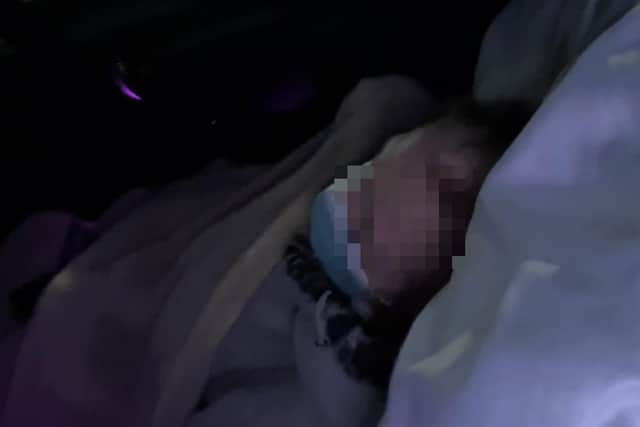

Because of the chemotherapy she is currently receiving, which lowers a patient’s immune system, realtives say that a nurse suggested that the pensioner would be better off isolating in a car, wrapped in blankets with the engine running, rather than crammed into the casualty department surrounded by people who might be carrying infections.
She was eventually found a bed and received treatment for chest and stomach infections.
But her granddaughter said today that the situation was “completely unacceptable” and dreaded the same scenario recurring should her grandmother face another health emergency.
She picks up the story: “On November 24, a GP visited my nan at home and was so concerned that she may be developing sepsis that she instructed us to take her straight to A&E.
"The doctor also wrote a letter stating she must be isolated in a side room due to being severely immunocompromised.
"Despite this, she was not isolated, not prioritised, and not even kept inside the building.
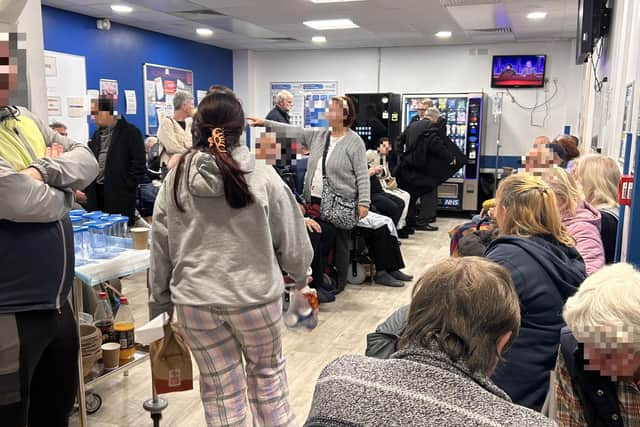
"When we arrived at Wigan A&E, the waiting room was overflowing. There were no seats, people were sitting on the floor in pain, and my nan, a frail immunocompromised cancer patient, was placed beside constantly opening double doors with freezing air blowing directly over her.
"She was visibly shaking and unwell.
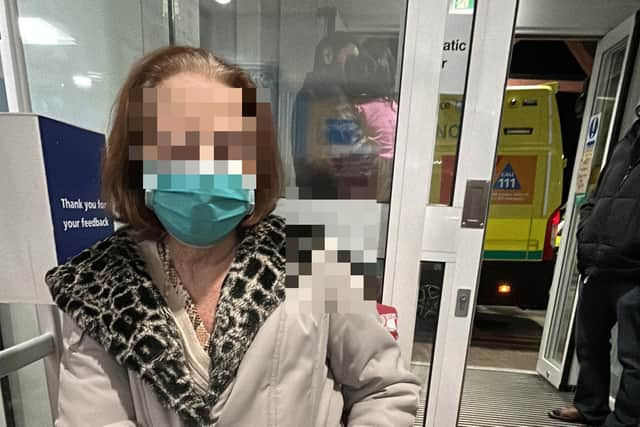
"Even a private ambulance driver, who arrived to collect another patient, expressed shock at what he witnessed inside Wigan A&E.
"He told us that out of all the hospitals he had visited that day and night, this was by far the worst. On a scale of one to 10, he said Wigan A&E was ‘an easy 10,’ describing conditions unlike anything he had seen elsewhere.
"He even commented that Manchester Salford A&E was nothing like this.
“What happened next is something no family should ever experience. Staff told my nan she would have to wait overnight in the car because they could not accommodate her inside A&E!
"This was despite the GP’s letter emphasising her vulnerability and the risk of serious infection.
"I had no choice but to take her back to the car park, bring blankets from home, and try to keep her warm in –1°C temperatures.
"We spent the entire night, from 11pm until 9am, sleeping in the car, leaving only briefly at 12.30am so my nan could receive her first antibiotics. She had been at the hospital for nine hours at that point
"The car had to remain running most of the night just to keep us from freezing.
“The conditions were so uncomfortable and the sleep deprivation so severe that I was unable to go to work the next morning, despite being a teacher with important responsibilities.
"Meanwhile, despite the fact we repeatedly told staff my mother had not eaten or drunk anything for four days, it took 21 hours before she was given intravenous fluids.
"This is extremely dangerous for someone at risk of infection or sepsis.
“Following the night she was forced to sleep in the car, she then spent another full night in a cramped, overcrowded corridor inside A&E because she was attached to a drip.
"Vulnerable, exhausted, and already extremely unwell, she was left for hours among other unwell patients in conditions that were not remotely appropriate for someone with her health risks.
"What makes this situation even more alarming is what staff have been openly telling patients.
"Multiple staff members stated that the reason the department is so overwhelmed is because ‘no staff want to work night shifts anymore’ and that most staff only arrive around 8am, leaving the hospital critically understaffed through the night.
"Patients were also told that the waiting time for a bed was 50 hours or more: an utterly unsafe and unacceptable delay for anyone, let alone elderly and immunocompromised patients.2
The granddaughter said these comments raised extremely serious concerns about staffing levels, management decisions, and patient safety at Wigan Infirmary.
She said her grandmother was finally given a bed, but only after the granddaughter made it clear in writing to PALS that the hospital would be accountable if her condition worsened.
This came after she had already been forced to spend one night in a freezing car and another in chaotic, overcrowded corridors.
The granddaughter said: “No patient, let alone someone elderly, vulnerable, and undergoing chemotherapy should ever be placed in such conditions.
“This situation is not simply a matter of being busy. It reflects a system that is failing, dangerously understaffed, and putting lives at risk.
“The public deserves to know exactly what is happening inside their local hospital.
“We are speaking out because no family should ever have to go through this, and no vulnerable patient should endure what my nan has endured.
“What happened at Wigan Infirmary is unacceptable, unsafe, and amounts to clear neglect.
“People need to be aware of these conditions, and we hope that by bringing this to light, urgent action will be taken to address the serious failings within Wigan Infirmary and ensure no other patient is subjected to this in the future."
She said that her nan was now back home, and saying that even if she thought she was dying she would not return to A&E.
Another pensioner has also contacted Wigan Today about his “traumatic and worrying” experiences in Wigan A&E.
Richard Jackson, 81, from Worsley Mesnes was there for two days before a bed could be found for him and he worried about hygiene, staffing and food issues.
He said: “I went into the hospital with an upset stomach and came out with the superbug C Difficile.
"It was absolute chaos in there. There were 10 ambulances waiting outside and there were people everywhere. It took from the Sunday night to the Tuesday night for me to be found a bed.
"I was put on a little side ward where two nurses were looking after 15 patients. Food was brought on a tray and it ended up with my daughter going round handing it to patients in bed.
"When people left, there was no-one disinfecting seats before someone else got there and the toilet ran out of toilet roll. I told a nurse but none was brought and eventually I had to go to provide a sample and ended up having to use hand towels to clean myself.
"They were clearly stretched beyond breaking point.”
Mary Fleming, chief executive officer ofWrightington, Wigan and Leigh Teaching Hospitals NHS Foundation Trust (WWL) said: “Our Emergency Department (ED) has been experiencing exceptional pressures, with numbers attending on Monday November 24 at one of our highest levels ever.
"Because of increased demand in our ED and a rise in patients awaiting hospital admission, along with discharge delays, some patients are waiting longer than we would ever want.
"We understand how worrying and stressful it can be when someone you love needs urgent care, and we are deeply sorry that any patient has experienced a wait that has caused concern.
"This is not the experience we want for anyone, and hearing that we haven’t met the high standards to which we aspire, is extremely disappointing.
“WWL plans and prepares as much as possible, and our teams work tirelessly to provide safe, compassionate care for those who need it most during these challenging times. At the time in question, our staffing levels were within our safe staffing escalation levels.
"We have committed to ongoing investment, through our system wide Better Lives Programme, in new ways of working, strengthening support in the community, and collaborating closely with system partners to make care more accessible and responsive across the borough.
"We sincerely apologise to patients experiencing extended wait times for admission to our hospital.
"We want to assure you that we are committed to reducing wait times each day, making sure that everyone is seen as quickly and safely as possible, in order of clinical priority.
“We welcome patient feedback and take every concern very seriously.
"We are grateful to this patient’s family for contacting us directly and we are reviewing what has happened in this case and we will learn from it.”