
Improvements continue at Wigan's A&E unit as more patients seen in four hours
More than three-quarters of patients who arrived at Wigan’s casualty units last month were seen within four hours, new figures show.
Bosses at Wrightington, Wigan and Leigh Teaching Hospitals NHS Foundation Trust (WWL) have been working hard to tackle the demand faced in A&E.
This has included an initiative offering appointments for patients to be seen the following day, rather than staying overnight, and delivering care to patients in their homes.
It seems to be paying off, as new data from NHS England shows the trust had its best A&E performance for four years.
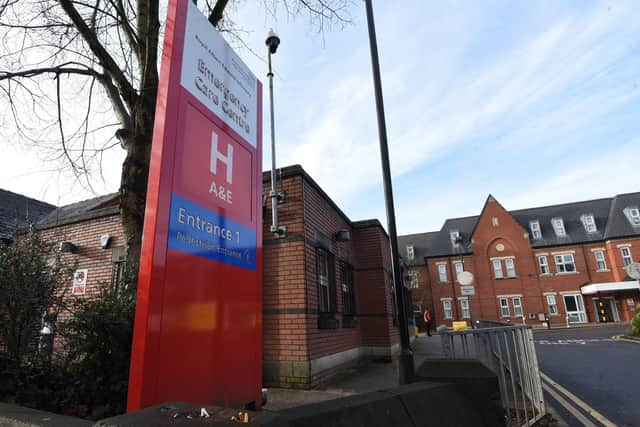

Figures show there were 12,244 emergency visits to the trust in August – 7,288 at Wigan Infirmary’s A&E department and 4,956 at Leigh Urgent Treatment Centre.
NHS England said it was the busiest August ever in A&E nationally. The overall number of emergency attendances in Wigan fell by five per cent from the 12,871 visits recorded during July, but was five per cent more than the 11,622 patients seen in August 2024.
In August, 9,426 people were seen within four hours at WWL – accounting for 77 per cent of arrivals.
This was up from 75.6 per cent in July and was the highest since August 2021.
It means WWL is approaching the target of 78 per cent of patients being admitted, discharged or transferred within four hours by March, which was set in the NHS recovery plan.
Around 75.9 per cent of patients in England were seen within four hours in A&Es last month, down from 76.4 per cent in July.
At Wigan’s A&E unit alone, 61.7 per cent of patients were seen on time, up from 57.9 per cent last month and the best performance for more than three years.
There were 3,135 emergency admissions, with 790 patients waiting longer than four hours for a bed, after the decision to admit was made, including 260 who were delayed by more than 12 hours.
This was an improvement from July, when 1,042 people waited more than four hours and 394 waited for more than 12 hours.
A WWL spokesman said: “WWL staff, alongside our partners across the health and social care system, are continuing to work hard to ensure our patients are safely treated in the right place, at the right time.
“As is evident in the latest figures, much is being done to improve our services to enable us to meet the standards of care expected from us and our patients are being seen as safely and as quickly as possible, in order of clinical priority.
“Alongside our Better Lives programme, our ‘Right Treatment, Right Place, Right Time’ initiative – offering appointments to people in our emergency department (ED) to be assessed and treated at either the urgent treatment centre or same day emergency care (SDEC) department the following day, rather than stay overnight – is also helping to address long waits in our ED.
“As always, the public can really help us by remembering that our ED should only be used for life, limb and sight-threatening illnesses and injuries. If you need help in these situations, you must come forward. For conditions which are less urgent, please use NHS 111 online or by phone, or consider visiting a local pharmacy, walk-in centre or GP practice for support.”