
New figures show more patients faced long waits to be seen at Wigan Infirmary's A&E last month
The proportion of patients seen within four hours at Wigan Infirmary’s A&E unit fell last month, new figures show.
The Government and NHS England have set a target of March 2026 for 78 per cent of patients attending A&E to be admitted, discharged or transferred within four hours.
But new figures from NHS England show only 39.1 per cent of people going to Wigan’s A&E unit were seen within that time in February.
That was down from 45.2 per cent in January and from 46.8 per cent in February last year.
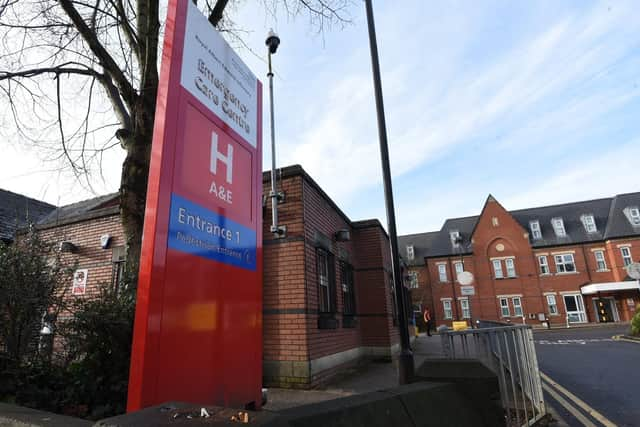

Overall for Wrightington, Wigan and Leigh Teaching Hospitals NHS Foundation Trust (WWL), which includes Leigh Urgent Treatment Centre, 65.0 per cent of patients were seen in four hours.
That performance fell from 65.7 per cent the month before and 67.8 per cent in February 2025.
Nationally, 74.1 per cent of patients were seen within four hours in A&Es in February, up from 72.5 per cent in January, with 59.4 per cent seen on time in hospitals with a major A&E department.
WWL recorded a total of 11,347 emergency attendances last month – 6,165 at A&E and 5,182 at the urgent treatment centre.
While there were fewer attendances at A&E than in January and in February 2025, the urgent treatment centre saw more patients.
A total of 2,103 emergency admissions were made, down from 2,312 in January and from 2,603 in February last year.
But when the decision to admit was made, 1,176 patients waited more than four hours for a bed last month – up from 1,107 the month before and down from 1,455 in February 2025.
A total of 520 patients waited for more than 12 hours, which was a fall from 567 in January but up from 440 in February last year
Nationally, the number of people waiting more than 12 hours in A&E departments from a decision to admit to actually being admitted stood at 54,649 in February, down from a record 71,517 in January.
The number waiting at least four hours was 132,238 last month, down from 161,141 in January.
WWL has been approached for a comment.