
Tens of thousands of Wigan patients waiting for routine treatment
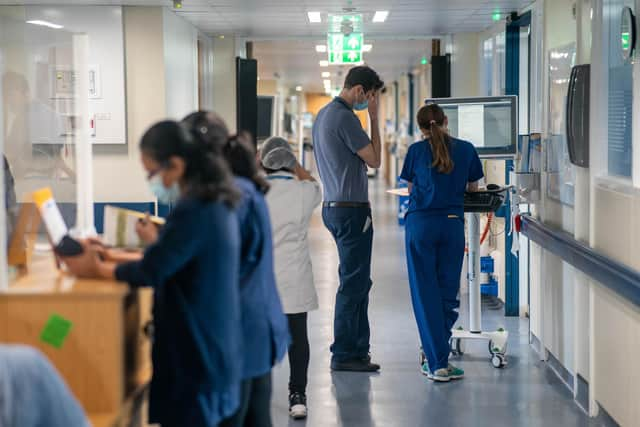
Tens of thousands of patients were waiting for routine treatment at Wigan’s hospitals in September, new figures show.
The statistics were published as the Health and Social Care Secretary Wes Streeting announced a package of "tough" reforms to tackle the NHS crisis, including the introduction of a new league table of NHS providers.
NHS England figures show 52,134 patients were waiting for non-urgent elective operations or treatment at Wrightington, Wigan and Leigh Teaching Hospitals NHS Foundation Trust (WWL) at the end of September – down from 55,359 in August, and 55,805 in September 2023.
Of those, 2,194 (four per cent) had been waiting for longer than a year.

The median waiting time from referral to treatment at WWL facilities was 16 weeks at the end of September – up from 15 weeks in August.
Nationally, 6.3 million people were waiting to start treatment at the end of September – down from 6.4 million at the end of August.
Siva Anandaciva, chief analyst at The King’s Fund, said: "Transparency is a good aim, but league tables alone will not lead to better and faster care this winter.
"It could result in the unintended consequence of health leaders becoming too focused on reporting upwards to national bodies, instead of outwards to what their local communities need.
"The mix of measures will need very careful implementation to avoid perverse incentives."
He said care outside hospitals must be factored in, adding: "Shifting more care into the community, reforming social care and bolstering prevention will all be key to making our healthcare service fit for the future."
Separate figures show 1.6 million patients in England were waiting for a key diagnostic test in September – the same as in August.
At WWL, 9,038 patients were waiting for one of 14 standard tests, such as an MRI scan, non-obstetric ultrasound or gastroscopy at this time.
Of them, 1,964 (22 per cent) had been waiting for at least six weeks.
Other figures show cancer patients at WWL were not being seen quickly enough.
The NHS states 85 per cent of cancer patients with an urgent referral should start treatment within 62 days.
But NHS England data shows just 82 per cent of cancer patients urgently referred to Wigan hospitals in September began treatment within two months of their referral.
That was up from both 77 per cent in August and 72 per cent in September 2023.
Tim Gardner, assistant director of policy at think tank the Health Foundation, said the figures show the immense challenge the Government faces.
Although he highlighted the encouraging fall in the waiting list for routine care and the number of over 52-week waits, he added: "This winter will undoubtedly be a difficult time for the NHS, but seasonal pressures do not have to inevitably cause an annual winter crisis."
Welcoming the new NHS reforms, he said: "It’s right for the Health and Social Care Secretary to focus on value for money and to be clear about the performance expected, but the measures announced must be supported by other policies to improve performance.
"Improvement will only happen if staff believe these new processes to be fair, that support is genuine and that their voice is heard – or we risk further lowering of morale.”