
How a new unit at Wigan Infirmary and a host of other measures will ease pressure on A&E this winter
The chief nursing officer at Wigan’s hospitals explains how the trust is preparing for winter.
Winter is certainly on its way and that means staff at Wigan’s hospitals are gearing up for an extremely busy few months.


Preparations are being made at Wrightington, Wigan and Leigh Hospitals NHS Foundation Trust (WWL) for how best to cope with the large number of patients that will come through the doors.
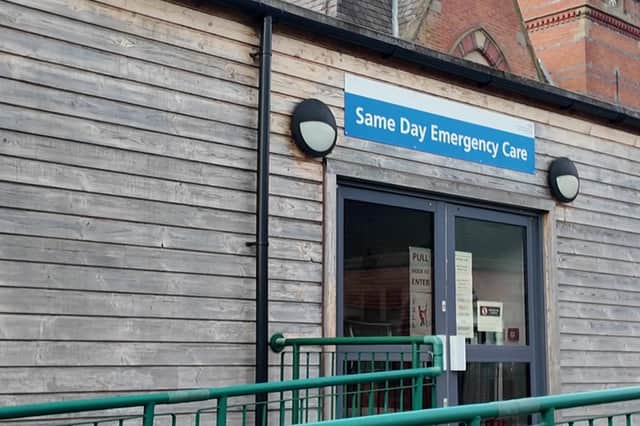
That has been given a huge boost with the opening of a new unit at Wigan Infirmary - an acute medical offer.
Patients who have been referred to A&E by their GP or taken there by ambulance with a medical condition can instead go to the unit to be seen by the right doctors, rather than going to the casualty unit, which speeds up their care and cuts queues in A&E.
Chief nursing officer Kevin Parker-Evans said setting up the unit had been a “team effort” involving staff across WWL.
He said waiting times in A&E have gone down “significantly” since the unit opened on November 3, along with ambulance handover times.
New NHS England figures show just 42.8 per cent of patients were seen within four hours at A&E in October, down from 43.4 per cent in September and from 55.9 per cent in October last year.
This rose to 67.7 per cent of people being seen within the target time when the trust’s urgent treatment centres are included, compared to 69.0 per cent the month before and 72.5 per cent in October 2025.
But Mr Parker-Evans said an impressive 87.2 per cent of people were admitted, discharged or transferred within four hours last Thursday, showing the difference the new offer is making.
Another way of keeping patients away from A&E is work with North West Ambulance Service (NWAS) through the Better Lives programme.
Instead of simply taking patients to hospital, NWAS workers can phone WWL to discuss whether its staff can instead care for someone in their home.
There is also a project involving five care homes and WWL’s community response team, which sees staff regularly discussing concerns for any patients and how to support them.
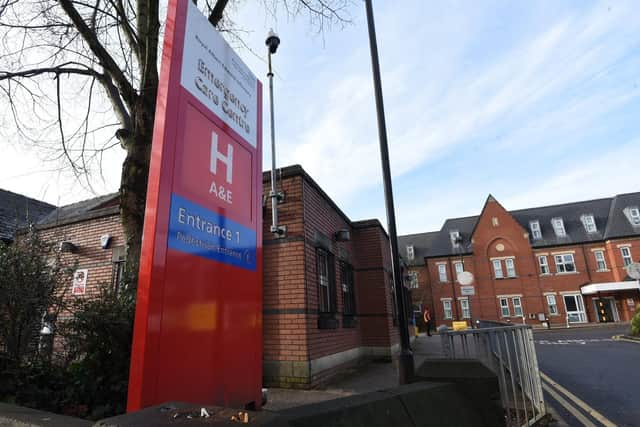
For people who do need to be seen in A&E, one important goal this winter is making sure patients are not being treated on corridors.
This issue was highlighted by the Care Quality Commission (CQC) during an inspection a few months ago, the results of which led to both urgent and emergency care and medical care being downgraded from “good” to “requires improvement”.
And only last month, 86-year-old grandmother Joan Jones, from Ashton, reported spending 30 hours in A&E - which included being on a bed in a corridor - before being admitted to a ward.
Mr Parker-Evans said: “We have had nobody being cared for on the corridor since October 26, which is brilliant news for staff and patients. We don’t want patients to be cared for on the corridor, we want them to be in the right place and we want our staff looking after patients in the right places too.”
He said staff had raised corridor care as a concern, as well as that they did not like being moved from where they normally work to other parts of the hospital, which he says is also being addressed.
One reason for delays in A&E can be a lack of bed availability on wards, so work is being done to look at supporting patients to leave hospital.
Mr Parker-Evans said: “We are looking at almost the fundamentals of how we get patients home. We want to make sure they are ready for discharge, how we use the discharge lounge, making sure patients have a date of discharge.”
Multi-disciplinary team meetings involving doctors, nurses, allied health professionals, social care teams and others are held regularly to make sure patients can go home when they are medically ready.
WWL is also working with Wigan Council and Greater Manchester integrated care board to reduce the number of patients in beds who no longer need to be there.
They have a new domiciliary referral portal that helps them to identify what patients need to help them get home quicker.
Mr Parker-Evans says all this is helping to cut the number of A&E patients facing long waits for a bed on a ward, after the decision to admit has been made.
NHS England figures show 863 patients waited for four hours for a bed in October and 339 waited for 12 hours.
This was an increase from September, when there were 694 four-hour waits and 238 12-hour waits, but was an improvement on 12 months earlier, with 1,081 four-hour waits in October 2025 and 434 12-hour waits.
Winter preparation has included encouraging staff to receive the flu vaccination.
Mr Parker-Evans said; “It’s really, really important that our staff are vaccinated to look after themselves, look after their loved ones and look after our patients in winter.
“We are in the sixth or seventh week of our vaccination campaign. We have got 33 per cent of our frontline staff vaccinated so far and we are on trajectory to have a good number of our staff ready for winter.”
Mr Parker-Evans is confident that the changes being implemented will make a difference this winter, but he urged people across Wigan to help ease pressure on the the health service.
He said: “The best way for patients to help is to only come in if they need to be here. There are all the other brilliant services out there in primary care, where you can be seen by the right person in the right place, because that isn’t always the emergency department.”