
Wigan's A&E unit sees more patients within four hours
More patients were seen within four hours at Wigan Infirmary’s A&E department last month, new figures show.
Data from NHS England shows more than half of people (52.7 per cent) were admitted, transferred or discharged within the target time in May.
That was the highest proportion since August, when 54.0 per cent of patients were seen within four hours, and was a significant rise from 47.2 per cent in April.
It follows efforts to ease pressure on the casualty department through the Better Lives programme, in partnership with Wigan Council and NHS Greater Manchester Integrated Care Board.
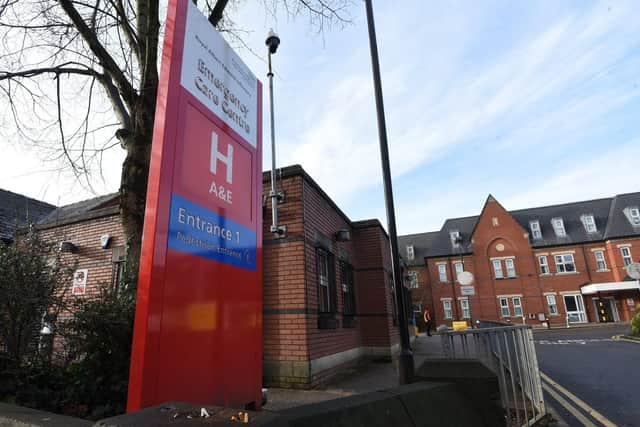

This has included addressing patients being treated on corridors and having members of the community team speaking to patients to find out if there are ways to help them away from the hospital.
The scheme also offers more support to Wigan residents to help them stay in their own homes, rather than needing to be in hospital.
Across Wrightington, Wigan and Leigh Teaching Hospitals NHS Foundation Trust (WWL), 72.2 per cent of patients were seen on time, up from 71.4 per cent the month before.
The Government and NHS England have set a target of March 2026 for 78 per cent of patients attending A&E to be admitted, discharged or transferred within four hours.
Some 75.4 per cent of patients in England were seen within four hours in A&Es last month, up from 74.8 per cent in April.
WWL had a total of 12,795 attendances throughout the month – 7,397 at the A&E unit and 5,398 at Leigh Urgent Treatment Centre – which was up 5.4 per cent from 12,138 in April.
That led to 2,909 emergency admissions, compared to 2,689 the month before.
Once the decision to admit had been made, 1,560 patients had to wait more than four hours for a bed, up from 1,539, while 367 people waited more than 12 hours, down from 444.
The number of people waiting more than 12 hours in A&E departments in England stood at 42,891 in May, down from 44,881 in April.
The number waiting at least four hours also fell, from 132,040 in April to 130,035 in May.