
Scores of Wigan borough jobs are at risk after Poundland plunges into administration
Devastating news as it is announced that the budget retailer Poundland has gone under, jeopardising many Wigan jobs just before Christmas
Scores of Wigan workers are fearing for their futures this evening after budget retail chain Poundland finally fell into administration.
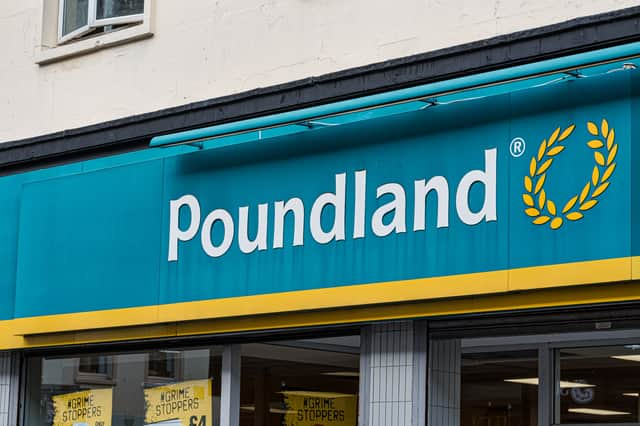

The chain, which runs roughly 600 stores, has held urgent talks over the past month to seek a buyer but has entered insolvency after failing to strike a deal before a key deadline late on Wednesday.
AlixPartners confirmed that experts from the corporate finance firm have been hired as administrators for Poundland.
The company has stores in Wigan, Ashton and Leigh along with a distribution centre in Ashton.
The retailer will continue to trade from its stores as the administrators continue to seek a sale of the company and its assets.
Poundland’s ownership had received a number of offers, including from Irish real estate firm Martin Property Group, investment firm Xyra Holdings and German investment firm Zachert Private Equity but failed to secure a deal.
Gordon Brothers has faced mounting political pressure to protect the chain’s future and MPs have accused it of deliberately cutting off funds and pushing the retailer to the brink of insolvency.
Prime Minister Andy Burnham called for executives to work with the Government to find a solution that saves shops and jobs.
Molly Monks, personal finance and insolvency expert at Parker Walsh, said: “Today’s news will be devastating for thousands of Poundland employees, particularly with Christmas just weeks away.
“For many, this is not simply the loss of a job; it is the sudden uncertainty of how they will pay their bills and support their families at one of the most expensive times of the year.
“Administration does not automatically mean every employee is made redundant immediately.
“The administrators will initially assess the business, its finances and whether any parts can be sold or rescued.
“Some employees may continue working while that process takes place, but there is inevitably a very real risk of redundancies if stores close or parts of the business cannot be sold.
“Customers shouldn’t necessarily assume that every Poundland store will shut its doors overnight. When a retailer enters administration, the immediate priority is to assess whether the business can continue trading while potential buyers are sought.
“However, the future of individual stores will depend on their profitability, location, leases and whether there is interest from other retailers.
“We could see some stores continue under new ownership, while others become surplus to requirements. The prospect of a significant number of closures is now very real.”
She said that administration doesn’t necessarily mean the end of the Poundland brand. A buyer could emerge interested in acquiring the entire business, or another retailer could purchase selected stores, distribution operations or other valuable assets.
But she said there is a significant difference between rescuing the entire company and buying the parts that are commercially attractive.
A purchaser may want the best-performing locations without taking on the less profitable stores, existing liabilities or the wider financial problems. That could mean a much smaller Poundland emerging from the process.
Ms Monks added: “The collapse could have serious consequences well beyond Poundland’s own workforce. Retailers rely on extensive networks of suppliers, manufacturers, transport companies and other businesses, many of which may have significant sums tied up in unpaid invoices.
“Suppliers who are owed money could find themselves facing substantial losses. In an administration, unsecured creditors generally rank behind secured creditors and certain preferential claims when money is distributed. For smaller suppliers operating on tight margins, losing a major customer and potentially millions of pounds in unpaid invoices could be extremely damaging.”