
Wigan's hospital bosses have revealed how they are getting ready for a busy winter, with more patients and industrial action
As temperatures fall and days get shorter, preparation kicks in for the busy winter months at Wigan’s hospitals.
It has always been the busiest time of year for the NHS, with cold weather exacerbating existing health conditions and leading to accidents such as falls, and germs spreading more quickly as people stay indoors together.
And this winter will bring extra challenges, with resident doctors set to take industrial action this month.
Previous winters have seen high demand at Wrightington, Wigan and Leigh Teaching Hospitals NHS Foundation Trust (WWL), leading to long waits to be seen in the A&E department, sometimes in corridors.


People in the borough are living for longer, but it means they have more health conditions and illnesses and need more support from health and social care services.
Prof Sanjay Arya, consultant cardiologist and chief medical officer, said: “It’s a matter of celebration that people are living longer and the longevity of people in Wigan borough is rising. We used to have one of the worst life spans in the country, but we are now showing signs of improvement. Thanks to our residents, the incidence of smoking is going down, incidence of excess alcohol is going down, people are exercising better and eating healthier. That’s all contributing to people living longer.
"But even though we may be doing that, we will get more health conditions and that’s why people need healthcare.”

Prof Arya and chief nursing officer Kev Parker-Evans are already planning how to treat patients in a timely and safe manner during the colder months.
Prof Arya said: “This winter we are keen to ensure we manage our patients successfully. We are aware that in the past we have had patients in corridors and waiting rooms in A&E but we are making preparations to help improve patient experience this winter.”
There will be “escalated” areas in various places in Wigan Infirmary for when the A&E department is very busy, along with extra staff.
Prof Arya said: “Every winter we do try to get additional staff through the seven-day period to help manage the increased workload.”
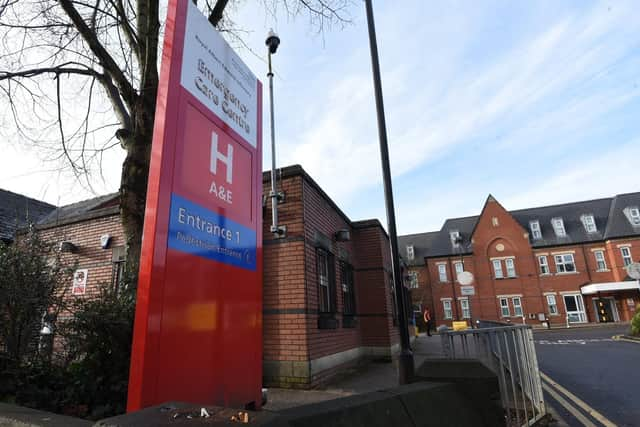
More patients are being seen within four hours at the A&E this year, after concerted efforts by staff to improve performance.
This has included the introduction of a community practitioner in the casualty unit, who looks at whether patients could be treated elsewhere, and more use of same day emergency care (SDEC), surgical ambulatory emergency care (SAEC) and a frailty unit.
The Better Lives programme, which also involves Wigan Council and NHS Greater Manchester Integrated Care Board, has been running throughout the year to keep people out of hospital and to discharge patients quickly.
Its work will continue throughout the winter months, to keep beds in the hospital available for those who really need them.
Wigan’s public infection control team now sits with WWL’s team, so they have oversight of what is happening both within the hospitals and in the community and can address any issues.
WWL is helping to ensure its staff receive flu vaccinations, with 90 employees trained as peer vaccinators, while jabs are also being given to frailty patients.
While hospital staff are doing what they can to ease pressure on the NHS, they are urging people across the borough to play their part.
Patients facing a life, limb or eyesight-threatening accident or emergency should still go to A&E, but others are asked to “choose wisely” when it comes to the source of healthcare.
Prof Arya said: “Please, please use the NHS111 service if you are not well, because there are alternatives to the hospital where you can be seen quicker and with the same standard of care, rather than waiting for hours in A&E.”
Mr Parker-Evans said: “Choosing wisely is really important for us. People can get access to the help they need as quickly as possible and that’s not always at the hospital. There are really good services across the borough that people need to access as a first port of call, so we can help the sickest patients as quickly as possible.”
They urged people to stay at home if they have infectious illnesses such as flu and diarrhea to stop them spreading.
People are also asked not to visit loved ones in hospital if they are unwell, but instead use an email system set up by the trust to send messages to patients.
Prof Arya said: “People with lung disease will develop some chest infections, so please have a good supply of inhalers and antibiotics if you need them, so you do not feel ill and need hospital care.
"To everyone else, keep your stock of medications during the winter period, because it may be difficult to go out and to source your prescriptions or medications.”
He also encouraged people to get the flu jab and asked for support for loved ones who are ready to leave hospital, so they can recover at home.
Winter is not the only challenge facing WWL – the British Medical Association has announced that resident doctors will stage a fresh round of industrial action in a dispute over pay.
The five-day strike will run from 7am on Friday, November 14 until 7am on Wednesday, November 19.
Prof Arya said: “The resident doctors have got no conflict with us as an organisation, their differences are with the Department of Health.
"In recent industrial action, we have seen that many of the resident doctors have responded by coming to work if they have felt that the hospital needs them to look after poorly patients.”
He said while there will be reduced staffing levels, nursing and therapy colleagues would step in to help and he was “really grateful” to them.