
Wigan's hospital trust's £10.5m deficit
Wigan’s hospital trust overspent by £10.5m last year, new figures show, amid concerns about the "fragile" financial health of the NHS.
Analysis by the Nuffield Trust think tank suggests NHS finances are as unstable as they were before the pandemic with deficits across England's trusts more than doubling.
The figures show Wrightington, Wigan and Leigh NHS Foundation Trust (WWL) reported a £10.5m deficit in the 2023-24 financial year, meaning the trust's spending exceeded its income.
It was a significantly bigger gap than the year before, when it reported a £3m overspend.
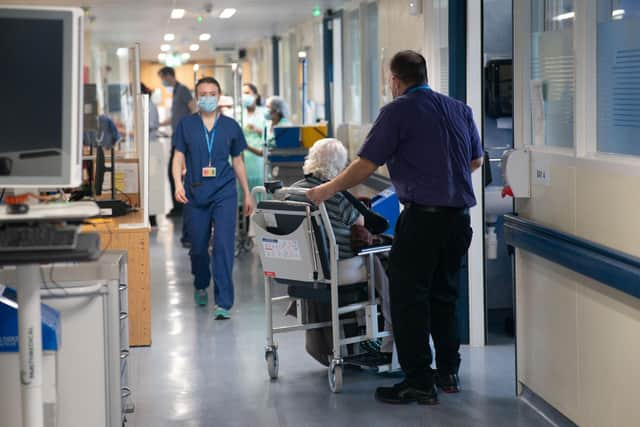


Overall, the deficit last year accounted for two per cent of the trust's revenue.
Across England, NHS provider trusts reported a £1.2bn overspend in the 2023-24 financial year – 0.9 per cent of revenue.
Collectively, they reported a £448m overspend the year before or about 0.4 per cent of revenue.
WWL’s chief finance officer, Tabitha Gardner, said: “WWL is committed to addressing our financial challenges while continuing to provide high-quality, safe and effective care to our patients.
“We are actively working across all areas to improve our financial sustainability and efficiency, ensuring that resources are utilised effectively to meet the needs of our community.
“We recognise the wider financial pressures faced by the whole of the NHS and are dedicated to working collaboratively with partners across the Borough and Greater Manchester system to navigate these challenges.
“Whilst 2023/24 was a particularly challenging year, due to industrial action and ongoing work to meet our waiting list, WWL delivered within the agreed financial control total.”
The Nuffield Trust said it puts the sector in a similar overall position to 2019-20, when "financial instability left it poorly equipped to deal with the pandemic".
Sally Gainsbury, senior policy analyst at the think tank, said: "These findings reveal just how fragile the financial health of the NHS is, which should sound alarm bells over the Government's promise of extensive reforms but with no new money to pay for them."
She added the Government's aim to shift care out of hospitals and reduce waiting lists requires community and mental health care to be "adequately resourced."
She said: "With over six million people on an NHS waiting list – many of them needing treatment in a hospital – it is not realistic to assume expenditure on acute hospitals can just be switched to expand other services such as community and mental health care.
The figures also show the deepest overspends are in the North West and the Midlands which, along with the North East and Yorkshire, have also seen the steepest declines in financial health since 2022-23.
Meanwhile, the steepest declines were recorded among acute hospital trusts in the most deprived areas, while modest improvements were seen in more affluent areas.
Ms Gainsbury warned this is "particularly concerning".
"It is well known that people living in poverty have poorer health, more complex conditions and die younger. A strategy that targets investment in these areas, rather than allowing it to flow away from them, is needed to reverse these worrying trends," she said.
The think tank added widespread strikes among medical staff, increased temporary staffing, and an increase in expenditure on outsourcing care to the independent sector had a significant impact on the sector last year.