
Wigan's hospitals prepare for another 'challenging' winter as demand for care rises
Wigan’s hospitals are already starting to face higher demand this winter, but a series of measures are being taken to help patients, according to a top doctor.
Winter is a tough time for the NHS and health bosses have already issued warnings about Wigan Infirmary’s busy A&E department.
Preparations are made throughout the year to help deal with the increased number of patients needing care during winter and staff at Wrightington, Wigan and Leigh Teaching Hospitals NHS Foundation Trust (WWL) are bracing themselves for a busy few months.



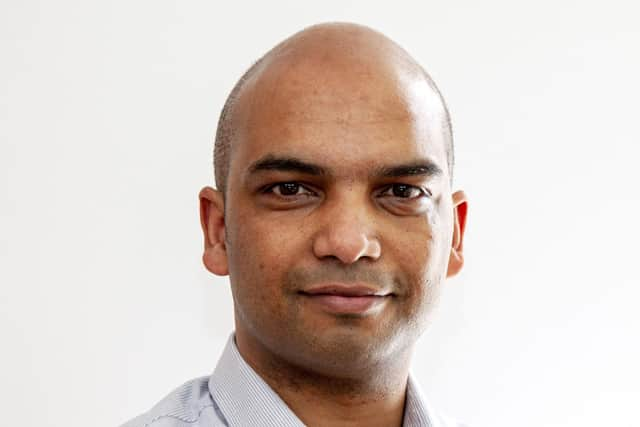
Speaking exclusively to the Wigan Observer, medical director and consultant cardiologist Prof Sanjay Arya said: “Winter has always been challenging for the NHS and the reason for that is we always have high demand. Elderly people, people with co-morbidities like diabetes, high blood pressure, heart failure and COPD, are more likely to fall ill during the winter time and when they fall ill, they fall ill badly. Therefore winter is a challenging time for the NHS as a whole.
"We have already started seeing the impact of winter in our A&E and hospital wards. People are coming in who are elderly and with co-morbidities. It’s already causing pressure on the NHS.
"We knew this was going to happen and winter was likely to be worse. The reason it’s likely to be worse is because people are getting older. Wigan has got a high deprivation rate and one of the fastest ageing populations in Greater Manchester and when you have these things together, along with co-morbidities, you are looking at getting ill during the winter.”
To help cope with the demand, staff have been working to put a series of measures in place.

A new programme has been launched called Better Lives, which sees WWL work as one health and social care system with Wigan Council and NHS Greater Manchester Integrated Care Board (ICB).
It has four key workstreams, which look at avoiding admissions, the flow of patients through the hospital, using a “one Wigan” model and being able to see across the whole system, so leaders can make better informed decisions.
Prof Arya said: “By being a single model, someone at the council can see what’s happening in the hospital and I can see what’s happening at the council and the ICB can see what’s happening too.
“What this will do is allow us to develop models of care which will bring social and health care together. We know from experience that just healthcare on its own and social care on its own does not have the maximum benefit. The maximum benefit happens when health and social care join hands to make the patients better and able to be discharged to an appropriate place of care.”
The first port of call for many people going to hospital is A&E, leading to it becoming extremely busy.
Prof Arya said: “During the winter, we know there will be a need for more people to come to the hospital. We have opened additional beds in the hospital and called them escalation areas. With these additional beds, we need additional staff.
"Towards mid-November, we had to open these escalation areas to make sure patients are treated promptly and safely by appropriate healthcare professionals.”
Prof Arya reminded people to only go to A&E in limb, life or eyesight-threatening situations and to seek treatment via NHS 111 for other conditions.
He said: “My request to people is only come to the hospital if you have an emergency need and use NHS 111 if it’s not, so the patients we are treating can be looked after.”
The flow of patients through the hospital and the support for those ready to be discharged is another focus, with families urged to support their loved ones to return home when they are medically ready.
Prof Arya also asked people not to visit relatives when unwell, such as with vomiting or diarrhoea, to prevent the spread of illness.
Virtual wards continue to be used, so patients can stay at home while being closely monitored by hospital staff, helping to free up beds.
More specialities now have virtual wards and they can be used for step-up care to prevent admissions.
Proactive work aims to prevent patients with respiratory conditions needing hospital care, led by deputy medical director and consultant respiratory physician Dr Ashish Abdul.
Prof Arya said: “He is working with primary care colleagues and proactively contacting patients with respiratory conditions ahead of winter, giving them the right advice and ordering their treatment, so that come the worst of the winter, they are better prepared.
"What we have also found through this initiative and proactive work is that people with chest infections, people with coughs that have been triaged, we have found there is a significant number of people we are managing to pick up with lung cancer sooner, so that they can have further investigation and treatment with a better outcome.”
Prof Arya urged people across Wigan to play their part by staying healthy and preventing the spread of illnesses this winter.
"My request is take your flu jab and take your Covid jab,” he said.
“Covid has not gone completely. We are still seeing some patients with Covid in the hospital.
"Go to the pharmacy or go to your GP and take the flu jab and Covid jab, if you have not already done so. It’s never too late.
"My request to people with heart conditions and lung conditions is to keep yourself indoors, only go out when necessary, keep yourself warm and make sure you have adequate supply of your medications.”
He also urged elderly and frail people to stay indoors during snow and ice to prevent falls, after seeing an increasing number of patients with hip fractures.
He added: “A big thank you to the people of Wigan borough. Merry Christmas! Enjoy Christmas and I wish you a very prosperous, healthy and happy 2025.”