
Changing face of Wigan's working men's clubs
On a Saturday night in 1973, the lounge of a Wigan working men’s club would be packed.
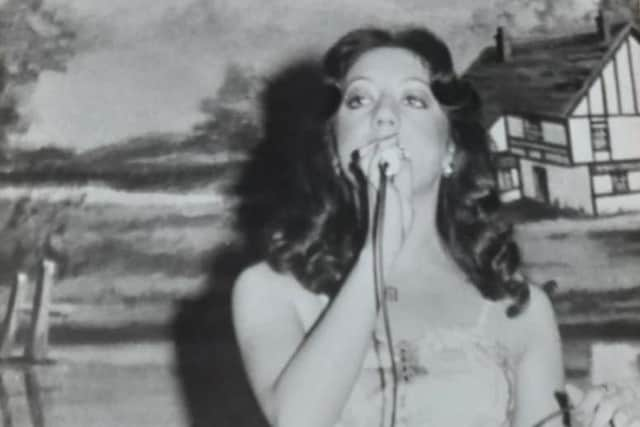
The rows of tables would be crowded with pints, cigarette smoke thick in the air, and all eyes would be fixed on Susan Lawrence, mic in hand.
“Everyone would go quiet to listen to the act,” she remembers. “It wasn’t like performing in a pub.”
The crowd, mostly couples in their 30s and 40s, would settle in with their drinks and sandwiches. Some arrived early for bingo, then went home for their tea before returning for Sue’s next performance.

At the end of the night, the last spot would be dance music and people would gather in the front, dancing to her melodies.
“If you did well and people liked you, you’d get rebooked for later in the year,” Sue (real name Susan Barrow) adds.
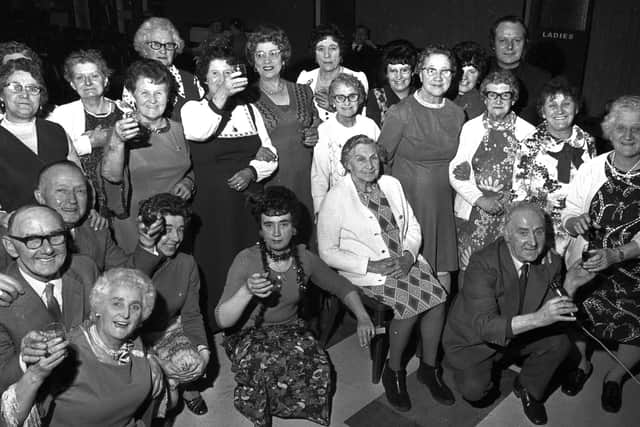
Back then, working men’s clubs – and other similar manifestations including Labour clubs, Conservative clubs, social clubs and Royal British Legions – were at the heart of northern town social life.

They were the “third place” between home and work, where you could meet your neighbours, win at bingo, host a christening or play darts. In Wigan alone, so many of these clubs thrived.
Today, many have vanished, either developed or left derelict. But in a handful of these clubs, the lights are still on and a new generation is fighting for their survival.
Working men’s clubs first appeared in the late 1800s, when booming industries brought working-class men closer.
These clubs were typically governed and funded by their own members and built on principles like mutual aid and solidarity.
Often linked to trade unions or political causes, they became a cornerstone of community life. By the early 1900s, most neighbourhoods had their own.
By the 1950s and 60s, they were thriving with bars and extended function rooms.
You could play darts or snooker on weekdays and catch a singer or a band on the weekend.
The Club and Institute Union (CIU) connected clubs across the country and guaranteed members a cheap pint wherever they went.
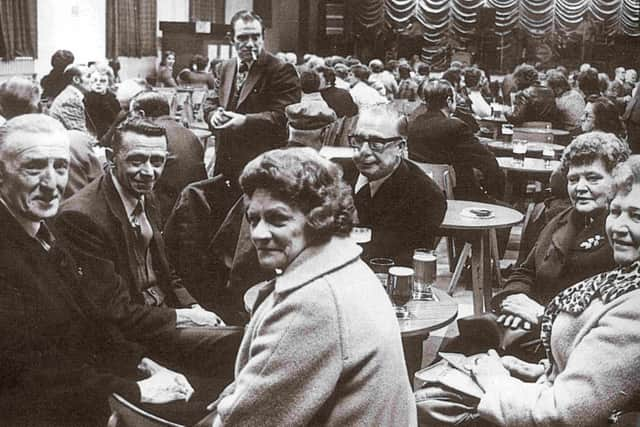
At their peak, working men’s clubs were not just entertainment venues but an expression of proud working-class culture.
“You had Labour clubs, Conservative clubs, ex-service men clubs, Royal British Legions, and they were all run by their own committees,” Sue recalls.
“I brought my own gear. A mic, a speaker. There was usually an organist and a drummer.”
And most importantly, there was an audience.
“They were packed every weekend. Families came. There were no drunks, no riff-raff. Just people out for the night,” she said.
But economic decline, changing social habits and the rise of supermarkets selling cheap alcohol meant that from the 1990s onwards, many clubs began to decline.

The 2007 smoking ban dealt another blow, with a British Institute of Innkeeping poll finding revenue going down as smokers chose to drink at home.
Today, working men’s clubs are a much rarer sight.
What were once well-known local institutions like Lower Ince Labour Club, Gidlow and Beech Hill Labour Club or Scholes Social Club have all closed their doors in recent years, victims of economic pressures and shifting social habits.
Their absence marks the end of an era for many residents who remember these venues as vibrant community hubs.
With only a handful of clubs still serving the area, places like Stubshaw Cross carry the weight of keeping this proud tradition alive.
Stubshaw Cross Community and Sports Club, tucked away behind a stretch of houses in Ashton, is one of Wigan’s few surviving social clubs – and it’s thriving.
Adam Arstall has been involved in the club since 2013 and took over as general manager and licensee in 2018.
Since then, he’s helped transform it into a modern welcoming hub, while holding onto the community spirit of decades past.
That success has not happened by accident.
“None of this would have been done without the hard work of our club president Martin Knowles and the bar staff team,” Adam says.
It's a crew that keeps things running through packed functions, busy weekends and midweek community events, and brings the warmth that regulars rely on.
Stubshaw Cross today offers a wide and colourful programme to attract the community: salsa classes, acting lessons, Friday and Saturday breakfasts, quizzes, bingo nights and pizza-making evenings with ice cream treats.
The club also often welcomes groups from local schools, with around 80 pupils recently enjoying pizza-making and mini-golf.
Every Thursday, bird auctions draw in more than 100 people.
The function room is a hub of local life, used for christenings, weddings and wakes.
The club sponsors three football and three darts teams, and boasts a beer garden, live sports screenings, mini-golf and a children’s play area.
“People can be put off by memberships and feel intimidated,” Adam admits.
“But while members do get rewards, everyone is so welcoming here; you don’t have to be a member to feel part of the community.”
But staying afloat in today’s climate hasn’t been easy.
“The size and age of the building, prices of energy, the cost of products… it can be hard to turn a profit,” Adam admits.
Live sports are an important part of life at working men’s clubs, drawing in crowds for big events and local games. However, the charges for Sky Sports, which are based on rateable value, can hit clubs hard, even when their lounges are small.
Adam and his team have met this challenge with innovation: “We bought a cinema-style 200in TV for the function room that moves up and down electronically. We can get up to 300 people in for World Cups and big rugby games.”
The club’s thriving calendar makes it clear that these venues still hold a vital place in the community.
They offer more than drinks and entertainment, they provide a gathering space for families, friends, and neighbours to come together and make memories.
Despite the challenges of running an older building and rising costs, Stubshaw Cross embodies how working men’s clubs can evolve while staying true to their roots.
With dedicated staff like Martin and the bar team working tirelessly behind the scenes, the club remains a lively hub full of warmth and life.
For those who remember when Wigan was dotted with so many clubs, most now long gone, places like Stubshaw Cross are proof that, even in the 21st Century, working men’s clubs continue to be essential social anchors for their communities.
“It’s sad to see so many clubs close,” Adam says. “But there is hope with hard work and belief.”
For him and the team, the best part is knowing “it feels good to be a venue that holds so many happy memories for people.”