
The suicide of a young Wigan dad at Hindley Prison was preceded by system failings, a watchdog has ruled
A watchdog report highlights systemic failures preceding the suicide of a young Wigan man at Hindley Prison.
A number of staff and system failings before the death of a young Wigan dad in his cell have been identified by the prisons watchdog including falsifying documents.


Dylan Woodhead was just 22 when he was found hanged at HMP Hindley on January 8 2021.
In a report, whose publication has been long-delayed, the acting prisons and probation ombudsman Kimberley Bingham criticised the lack of proper monitoring of inmates during the night, a lack of mental health assessments and the easy availability of drugs at the Bickershaw institution.
Two members of staff were subjected to disciplinary proceedings for not looking in on Dylan, as they should have done, during their patrols - but filled in documents to suggest they had. So it was only 8am, when inmates were being let out of their cells, that he was found hanged.
There is further criticism in that staff then tried to perform CPR when it should have been obvious that he was already lifeless and in a state of rigor mortis.
Ms Bingham said: “Trying to resuscitate someone who is clearly dead is distressing for staff and undignified for the deceased.”
The former Ince Rose Bridge High School pupil had a month earlier been given a two-and-and-half year custodial sentence and five-year restraining order for assault and controlling and coercive behaviour towards his then partner.
The ombudsman found fault with Forest Bank Prison in Manchester, where Dylan was remanded before his sentencing, for not considering starting suicide and self-harm procedures for him when he arrived there.
It was his first time in prison and he had made an attempt on his life in the community in 2020 although, it was admitted in the report, he was not showing any suicidal tendancies at Forest Bank, nor in the days and hours leading up to his death at Hindley.
The post-mortem into Dylan’s death showed that he had taken psychoactive substances (PS).
Ms Bingham said: “Although this was not found to have caused his death, PS is known to affect mental health adversely.
“I am concerned that Mr Woodhead was able to obtain PS with apparent ease at Hindley, even though strict restrictions had been put in place during the Covid-19 lockdown.
“Hindley needs to continue in its efforts to reduce the supply of and demand for drugs and ensure that staff can recognise and are vigilant for signs of PS use.”
The report states that there had been several heated phone calls between Dylan and his partner as well as a clash with other inmates the day before tragedy struck.
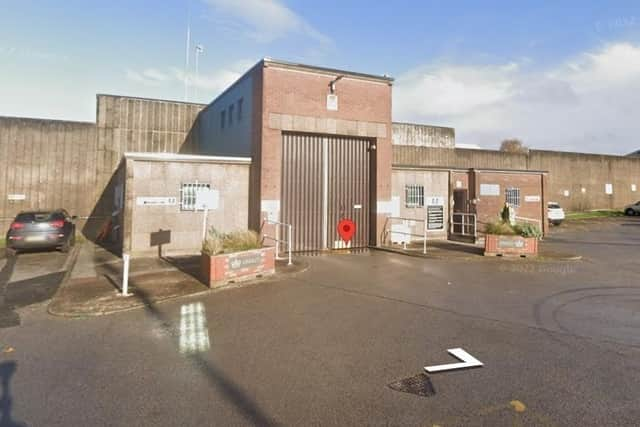
CCTV shows that a warder, known as an operational support grade (OSG), carried out a roll check shortly before 7pm on January 7 and checked that doors were locked but did not look through the observational panels to check on the prisoners.
Footage also shows that at 2.57am, the OSG walked along the landing and opened cell door observation panels but did not look through them. She then failed to conduct the morning roll check between 5am and 6am, despite signing the roll check sheet and wing observation book at 5.50am to state that she did.
The OSG completed a handover to an officer before her duty finished at around 6am. At 6.17am, CCTV footage shows that this latest officer did not conduct the morning roll check after he arrived for his shift either.
While he checked that cell doors were locked, he did not look in on the occupants.
It was only at 8am when an officer was completing her medication round that she headed towards Dylan’s cell and saw a piece of paper protruding - his suicide note - from under his cell door. Dylan was found unresponsive inside.
The report reads: “Falsifying documents is a serious disciplinary matter and Hindley subsequently suspended the OSG and an officer from duty and they are subject to disciplinary proceedings.
“While we cannot know whether the outcome for Mr Woodhead might have been different if the OSG and the officer had conducted their respective roll checks correctly, it may be critical in another emergency.”
The jury at an inquest held in January 2024 concluded that Dylan died by hanging and that it was an intentional act.
The ombudsman made a number of recommendations in the wake of Dylan’s death, which have been accepted and said to have been adopted by the prisons.
She said Forest Bank should “ensure staff consider and record all the known risk factors of newly arrived prisoners when determining their risk of suicide or self-harm, including information from suicide and self-harm warning forms, person escort records and medical records, and consider ACCT (Assessment, Care in Custody and Teamwork) monitoring in light of those risk factors.”
Since then Ms Bingham said that all those involved in the reception process who deal with newly arrived prisoners had been reminded of the need to ensure that when a prisoner’s known risk factors are highlighted they are considered and documented within the necessary records.
A governor’s order was sent out to enusre that roll checks were carried out properly at Hindley and the prison’s drug strategy was reissued to all staff, with bulletins sent to staff covering any changes and updates.
A new system using under-the-influence monitoring forms was also introduced. These forms are to be completed when a prisoner shows signs of being under the influence of any substance which ensures the prison remains alert to the signs of drug use.
And fresh guidance was issued to staff covering the circumstances in which resuscitation is deemed inappropriate.
The pandemic and a police investigation were cited in the report for delaying the ombudsman’s report.