
'Happy' Wigan 16-year-old with cerebral palsy died from pneumonia, inquest told
Neglect during the birth of a “happy boy with an infectious laugh” played a role in his tragic death 16 years later, a coroner has ruled.
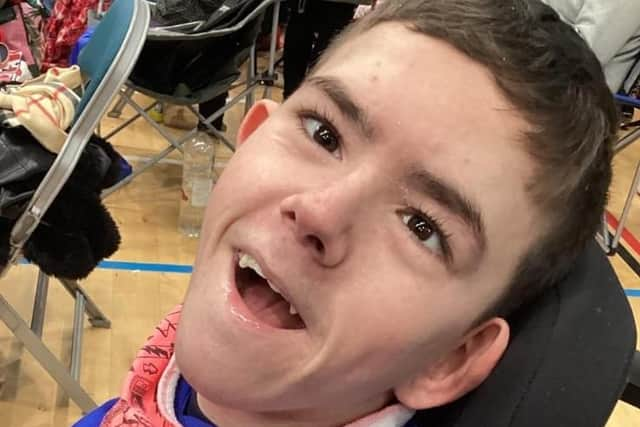
Lewis Holland was described as having a “belting life” which was “filled with love, laughter and adventure” by his mum Leanne Cunliffe.
But sadly, he died at his home in Hindley on December 24, 2023, just six days before his 17th birthday.
Bolton Coroner’s Court heard Lewis was born at Wigan Infirmary by emergency Caesarean section.

On December 29, 2006 – two days after her due date – Mrs Cunliffe had a pre-natal appointment and was told to go to Wigan Infirmary as she was in slow labour. She was told she had signs of pre-eclampsia and the birth would need to be induced.
She went to the labour ward, but it was very busy so she was sent to the maternity ward to be monitored.
She was taken to the delivery suite at 3am on December 30 and checked every half an hour.
But the inquest heard that at around 6am the nurses could no longer find baby Lewis’ heartbeat.
Plans were made for an emergency delivery, with a faint heartbeat then found.
Lewis was born at 6.33am but was very poorly and was taken to the special care baby unit.
He had been deprived of oxygen during his birth and his mum was told there was a chance he could have cerebral palsy, which was confirmed several months later.
The hospital trust later accepted 55 per cent liability, with the inquest hearing that continuous cardiotocography (CTG) monitoring might have highlighted issues with Lewis’ heartbeat more quickly and action could have been taken sooner.
Lewis lived with his mum and stepdad Ian, communicated mainly with his eyes and used a wheelchair.
He loved food, especially chocolate and meals from McDonald’s, but had to stop eating by mouth in 2021 amid signs of aspiration, so a nasogastric (NG) tube and then a peg was fitted.
It was hoped this would help Lewis to gain weight, as he had always been very thin, but Mrs Cunliffe said he only put on a few kilogrammes. She described him as being the same size as an eight-year-old boy.
The court heard he was generally well and only spent time in hospital for hip surgery.
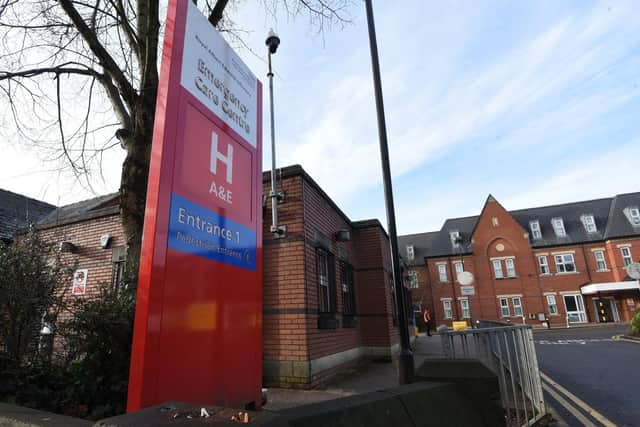
But on December 18, 2023 he was taken to Wigan Infirmary with breathing issues, having been quiet, tired and unwell in the days before.
He was treated as having chest sepsis, secondary to aspiration pneumonia.
He was admitted to Lowton ward, which is an adult medical assessment unit, after discussions between the on-call medical consultant and a paediatric consultant.
His mum asked several times for Lewis to be transferred to a paediatric ward, but the court heard the bed manager said he did not meet the criteria and a message left for an on-call paediatric consultant went unanswered and was not followed up.
Mrs Cunliffe raised concerns about the care given to Lewis on Lowton ward.
On one occasion she said she saw a nurse using a long, thin suction tube to clear his throat, despite a Yankauer always being used previously, and he vomited afterwards.
She also told the court she saw a nurse trying to provide medication incorrectly via Lewis’ Mic-Key button gastrostomy tube.
Danielle Littler, who was ward manager at the time, told the inquest that staff were trained to manage airways using suction and Lewis had an obstruction which needed to be cleared.
She said the nurse who tried to give medication via the Mic-Key button was not a substantive member of staff and she later contacted the agency to give feedback on what happened and training that could be provided.
But Ms Littler also said that while the ward saw patients with pegs, she had not treated someone with a Mic-Key button during her 18 years in nursing.
Coroner John Pollard questioned why Lewis was on an adult ward, particularly given his size and additional needs, and asked why “common sense” had not been used.
Dr Vineeta Joshi, consultant paediatrician and clinical director for child health, said there was a “grey area” for people aged 16 to 18 and it was a national issue, rather than specific to Wigan.
She said a “collaborative” approach was needed between paediatric and adult staff, which happened with Lewis’ case, but his family was not “taken along” and their voices considered.
Dr Joshi said it may be that “bespoke” care plans were needed for patients like Lewis.
She also said that Mic-Key buttons are seen regularly in paediatric care and staff know how to use them.
Lewis went home on December 21, when he was brighter and more settled.
A carer reported he was “a bit whingy” on December 23 and he was put in bed, with his mum reporting he just wanted to sleep and did not watch television.
He vomited after taking medication that evening, but later smiled during a phone call with his grandmother.
Mrs Cunliffe woke up at around 8am on December 24 and left Lewis to sleep, but she later went to check on him and found he was unresponsive.
She called 999, but sadly paramedics found he had died.
A port-mortem examination found Lewis died from pneumonia, with cerebral palsy as a contributing factor.
Mr Pollard recorded that Lewis died by natural causes, contributed to by neglect at the time of his birth.
After the hearing, Mrs Cunliffe said: “Lewis was a happy boy with an infectious laugh. He loved life and every opportunity he had to go on trips or days out, he went. The 16 years he was with us were filled with love, laughter and adventure. He was loved by everyone who knew him. We all miss him so much. He’s left a huge hole in our hearts.”