
Tragic death of Wigan army veteran six weeks after being admitted to hospital
An army veteran died from health complications weeks after being admitted to hospital, an inquest heard.
The proud family of 46-year-old David Clement took the medals he earned during his military career to the hearing at Bolton Coroner’s Court.
He was brought up in Wigan and attended schools in the borough, before joining the army and travelling around the world.
But he could not speak about his experiences and was affected by what he saw, which led to him being diagnosed with post-traumatic stress disorder (PTSD) and drinking alcohol as a coping mechanism.


Mr Clement, who lived in Standish, developed liver disease due to his alcohol use and he had regular appointments with a gastroenterology team.
The inquest heard he started suffering with pain in his lower stomach and went to see a GP at Standish Medical Practice in July.
Blood tests revealed he had abnormal salt levels and deranged liver function and when he later reported bladder issues, he was advised to go to A&E.
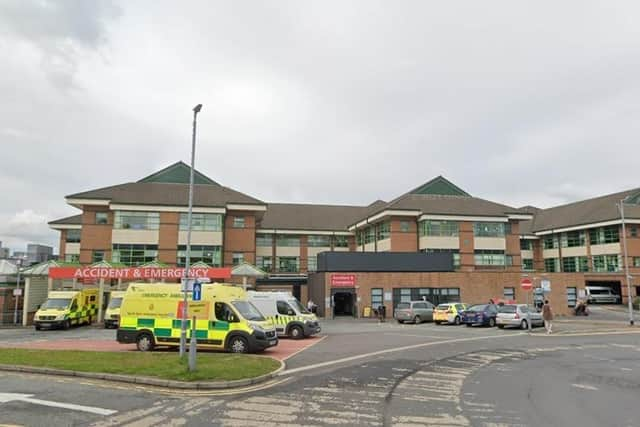
Mr Clement went to Wigan Infirmary on July 22 and a scan found an abscess on the abdominal wall.
It was sitting above mesh which had been inserted in 2007 and 2008, when Mr Clement developed an incisional hernia from extensive abdominal surgery after becoming seriously ill with severe acute pancreatitis.
He was transferred to the Royal Bolton Hospital that day and given antibiotics for what was a suspected haematoma.
The inquest heard the surgical team was reluctant to operate due to Mr Clement’s complex medical background and the risks involved.
But when his condition deteriorated, he was taken to surgery on August 2 so the infected tissue in the abscess could be removed. The mesh was left in place.
Mr Clement went to intensive care to recover and was moved to another ward on August 25 as his condition improved.
Consultant gastroenterologist Dr George Lipscomb told the inquest he was pleased to see Mr Clement there, as he feared he would not survive when he saw him on the ICU.
He remembered him being alert and sitting in bed doing a crossword on August 29, though he was still “very sick”.
But the next day, Mr Clement was struggling with a crossword and Dr Lipscomb suspected toxins from his liver were going to his brain, making him more unwell.
He also became anaemic over the following days and tests were carried out, but both his liver and kidney functions got worse and he became increasingly drowsy.
Dr Lipscomb told the inquest that patients with liver disease can be very susceptible to infections and the mesh could have been a focus for them.
Doctors spoke to Mr Clement’s family about his worsening condition on September 1 and palliative care was started.
Sadly, he died the following morning.
Consultant histopathologist Dr Patrick Waugh carried out a post-mortem examination and found Mr Clement died from liver failure, caused by decompensating alcohol liver disease. Diabetes and the infected abdominal wall mesh were listed as contributory factors.
Coroner Michael Pemberton recorded a narrative conclusion that Mr Clement died “as a consequence of a natural disease, contributed to by co-morbidities and a recent infection of mesh that had been historically inserted following surgery”.