
PART TWO: Wigan Athletic: The 12th Man - 'Right now, Wigan Athletic feels fragile...the fanbase feels fractured...'
In the second of a bumper two-part special, our panel of Latics experts run the rule over a disappointing start to the home league campaign at Brick, while the off-field picture continues to be a hot topic.
George Arkwright:
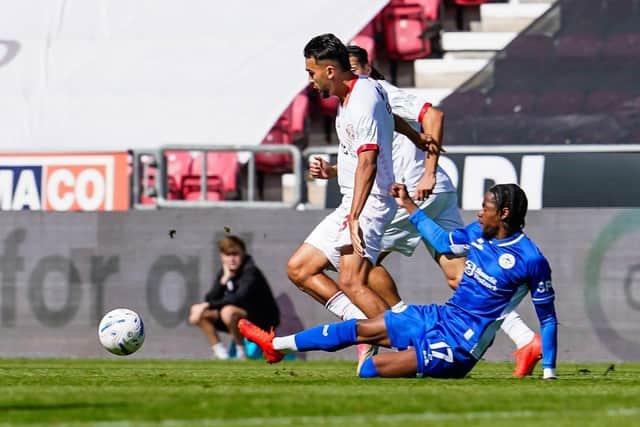

The positives. Yes, let’s focus on the positives. Let’s not focus on the fact we haven’t won a game against an EFL side this season. And let’s definitely not re-tread the well-trodden ground that is our stark need for a goalscorer.
We’re all aware of our forward line’s shortcomings by now. It is not endeavour that they lack, but the ability to connect foot, to ball, to goal.
Unfortunately, Sonny Perkins and Dara Costelloe, despite their best efforts, remain languid in front of goal, and this season does not feel like the time to allow them to bed in with a run of goalless games.
However, as mentioned, the positives. Reggie Walsh is evidently the headline act. For a 17-year-old, his ability, forethought and vision are unparalleled - in our team, at least. Assuming he stays fit, I could see him playing virtually every game for us and probably clean sweeping the awards, save for a triumphant but wholly unexpected resurgence elsewhere in the team.
A disallowed goal, a number of line-breaking, progressive passes, he seems to be exactly what a team like ours needs - someone to literally brute-force chances up to our strikers despite the odds. If they can’t score with the numerous chances he puts on a plate for them, then the questions over whether they’re capable of delivering at this level become increasingly difficult to ignore.
Another positive: a marauding centre-back, surname Burn(s). I had to rub my eyes and ask what year it was. Finley looks assured, technically competent and, dare I say, progressive. For a centre-back who looks strong defensively, the ability to push onwards and take a man on in midfield is incredibly rare at this level, and I’m already excited to watch more of him.
Physically imposing and great aerially, he has all the attributes of a top-level defender. Having secured him on a permanent deal, this is the exact sort of prospect we should be looking to capture long-term.
Max Power also looked strong. A natural leader - something I truly feel we have very little of in this side. Losing our spine through the summer - Jason Kerr, Will Aimson, Sam Tickle, Matt Smith - meant we were left without much direction in the dressing room, and I think Max is probably one of the most capable, articulate leaders in a League One dressing room this season.
His work with Gary Caldwell and David Perkins has its obvious merits, and he has travelled far and wide, captaining sides on the continent and further afield. He is the exact sort of player we needed to pick up and, although there was trepidation regarding his enduring ability, he seems to have lost none of what made him such a great player for us last time.
Seeing Ryan Trevitt come back into the fold is also a massive positive. He is evidently a great player, but there are still huge questions to be asked of his endurance. Paying him a premium to sit on the bench is not ideal and, frankly, it is a gamble on our management’s part that we’re all hoping pays off.
So, positives. That is about as far as I could take that train of thought. Unfortunately, there was probably more bad news than good in the wake of Saturday’s game. As a whole, while there were strong passages of play, several players looked out of sorts.
James Carragher did not look the assured presence in our defence that he has been previously. Jon Mellish, having performed well in pre-season, looked shaky and at times a liability. Our strikers don’t score. Joe Walsh, regrettably, looks completely out of his depth at this level. Akeel Higgins, having played well previously, looked tired and ponderous.
We evidently have technical ability in our team, but when you’re allowing unforced errors and individual mistakes to dictate the scoreline of a game we really should be winning, what hope do you have?
There have been rumours that we will be bringing in more quality before the end of the window, but currently I couldn’t tell you how this season is going to pan out. Rid ourselves of a few stragglers, cut out the individual errors, replace our leaky goalkeeper with a young Premier League number two or three, and suddenly we look like a far more capable team.
However, you can’t win if you don’t score. And we aren’t scoring, so we’re not winning.
Soccerates:
An Open Letter: Response to the Recent WASC Statement
To the Committee of the Wigan Athletic Supporters Club,
Your recent public statement was framed as a pragmatic plea for realism. Having watched this club pushed to the brink of liquidation by previous ownership models lacking basic due diligence, the fanbase’s trauma is palpable. Gratitude to the Danson family for the acquisition of a distressed asset and averting immediate insolvency is a universal baseline. However, gratitude is not a substitute for fiduciary scrutiny.
Adopting a fatalistic posture—and actively rationalising austerity as long-term 'sustainability' - conflates short-term cost containment with structural viability. When subjected to rigorous commercial accounting and macroeconomic stress-testing, the club’s current operational trajectory is not sustainable corporate governance; it is managed decline.
1. Asset Lifecycle Management and Organisational Churn
From a technical coaching and human capital perspective, sporting ROI (Return On Investment) is predicated on operational synergy and tactical continuity. Since the takeover, the club has executed roughly 140 player transactions. While turnaround management necessitates some initial turnover, the lack of strategic foresight is galling.
In corporate sporting accounting, contracted players are capitalised intangible assets. To claim 'sustainability' while allowing 60 to 80 of these primary assets to depreciate to zero and exit the organisation via free transfers is a catastrophic failure of asset lifecycle management.
Letting unrealised asset value walk out the door without a funded succession plan is not a strategy; it is hyper-transactional churn. You cannot synthesise tactical identity or positional chemistry when human capital is treated as a short-term liability rather than a compounding asset. We are effectively gambling on selling a prime asset at a profit, with a sell-on clause, without recognising that other assets exist.
You cannot build a winning team if 90 per cent of your assets are treated as disposable filler while you pray for one lottery ticket to hit. This concentration risk of the playing squad undoubtedly comes unstuck if the well of young talent runs dry.
It also begs the question: would a young player coming through the ranks want to remain at the club, knowing this is the business model? We've already seen an embryonic shift, losing two young players to Chelsea and Bury.
2. The SCMP Trap and the Weaponisation of the Tenant Model
Your statement conceded that 'any sustainable model may well need to operate at a different level of the footballing pyramid'. This is an alarming pre-authorisation of structural relegation under the guise of fiscal prudence. In corporate finance, downsizing your primary market position is not a path to equilibrium; it triggers a terminal revenue-contraction loop.
This loop is actively accelerated by the club’s current real estate structure. Under the EFL’s newly enacted Salary Cost Management Protocol (SCMP) - a framework clubs themselves voted to implement - allowable OPEX (player wages) is legally capped as a percentage of top-line turnover.
However, because the Brick Community Stadium is held by a separate corporate entity, Wigan Athletic operates as a tenant. This structure systematically starves the football club of the 365-day, non-matchday revenue streams required to maximise its SCMP limit. While modest, reactionary maintenance has been undertaken, the lack of long-term CapEx investment in the stadium’s commercial infrastructure proves an absence of strategic foresight.
The stadium model currently deployed provides a physical venue for both the football and rugby clubs, but financially empowers neither. If the club accepts relegation to League Two or the National League, EFL central distributions are decimated, commercial leverage vanishes, and ticketing yields collapse. You cannot achieve financial sustainability under SCMP regulations while operating as a revenue-starved tenant, actively destroying your own top-line income.
3. Intangible Asset Monetisation and Market Penetration
The persistent requirement for owner equity injections is a symptom of a historic and ongoing failure to aggressively monetize the club’s brand equity. Modern sports business has transcended geographic locality. Wigan Athletic possesses a unique, globally recognized narrative, yet the club has failed to execute borderless market penetration.
Instead of blending localized B2B partnerships with aggressive digital expansion into international markets, the club’s digital footprint remains buried under a churn of generic content. Operational wins like the O'Neills kit deal merely scratch the surface of our commercial ceiling. A new CEO has been employed to directly address this, however, this has been offset by redundancies - some of which have alienated the fanbase further, the exact demographic that provides the top-line turnover required to fund the footballing operation.
4. Peripheral Asset Starvation and Organisational Risk
To understand this stagnation, we must analyse the parent company. The ownership’s engagement has amounted to little more than maintaining baseline liquidity. Crossing the line from structural optimisation (a corporate restructure) to indiscriminately hollowing out key operational staff—such as commercial anchors and the Head of Women's Operations—transitions the business from lean to starved. This approach alienates core consumer demographics and introduces severe organisational risk, virtually guaranteeing the burn-out of the remaining workforce. You cannot cut your way to growth.
5. The Divestment Paradox and Liquidity Lock
Ultimately, the subsidiary is being operated on an American franchise model: aggressively strip out operational OPEX, isolate the real estate asset, and prep the sporting entity for divestment. In the highly regulated English football ecosystem, this M&A playbook is dead on arrival. The incoming Independent Football Regulator (IFR) and updated EFL statutes exist precisely to block asset-stripping and separate stadium ownership.
A football club stripped of its real estate collateral, locked out of 365-day non-matchday revenues, and burdened with third-party commercial rent becomes a toxic, un-leverageable asset. No serious institutional capital will acquire a club structured this way.
Conclusion
The Supporters Club has a mandate to provide independent strategic scrutiny, not to act as a corporate buffer that cushions the blow of managed decline. Reassurances of 'better communication' require zero capital expenditure and alter no strategic vectors. We must stop treating systemic institutional hollowing-out as responsible stewardship. Wigan Athletic does not need an absentee spreadsheet model dictated by parent-company preservation; it requires an integrated sporting and commercial architecture that respects the unique financial physics of the EFL.
Yours faithfully,
Soccerates
John Fisher:
I’m afraid the first two weeks of the season have had a familiarly depressive feeling, but one that was sadly very predictable.
A summer of further cuts to the budget, combined with losing the spine of last year's team, as well as the sporting director and managing director being sacked - for reasons the owners haven’t bothered to explain to the fans - hasn’t exactly had us jumping for joy with optimism.
I was in one of the lounges on Saturday, and heard the very sad news about Tommy Gore’s departure. To see a legend of the club treated like this is emblematic of the lack of care the club continues to be treated with by this ownership group.
Most rational people understand football clubs cost many millions to run, but dispensing of so many supporters and legends leaves a nasty taste, and certainly reduces the feel of a family club with owners running it in the interests of the local community.
I also popped into the Supporter’s Club bar where Lucas Danson was unable to walk a few yards to join the new CEO and Brenda Spencer on stage. If he really meant what apparently he had said last week around communicating better with the fans, surely this could’ve been a good start.
While it would be ludicrous to write our new group of players - and Gary Caldwell - off after just three competitive matches, I do think we have enough evidence to judge the ownership group and their continued neglect of our football club.
I feel it is now the time for the owners to sell us to an appropriate buyer. The club has regressed significantly in each year of their ownership, and the decline shows no sign of being arrested. I hope the fans groups and those with an audience can also find their voice.
We’ve been through other awful times over the last six years, but the lack of interest shown this summer should be the final straw. I look at squads such as Leyton Orient, Blackpool, and Stockport County...each of whom get either similar, or lower, crowds to ourselves...why are these teams spending more money than us and seemingly in much better states to begin the season?
It is really hard to feel any hope for the future while these people continue to run the club in what appears to be a way of managed decline. We have had three years of this, and I think we all know what is likely to happen if things don’t change.
If Mike Danson and his family really care about the town of Wigan, they must sell us with a suitable deal struck around the stadium, or drastically change their strategy. The alternative is unthinkable.
Tony Moon:
Disappointing result, but decent in patches,
In order to gel, well it takes a few matches;
But with sloppy mistakes and two give-away goals,
The defence has got to patch up all those holes.
Cos missed chances galore and a ponful of promise,
Won’t get very far to convince Doubting Thomas;
Any good stuff that happened is yesterday’s news,
It’s all about the result (well, it is when we lose);
So Premier League starlets, you’d better learn quick,
They’ll be right on your back when you lose at The Brick!
John Walker:
Well once again, a new season is upon us. Having just watched our first home game of the season, have we not learned nothing from the previous season? Bringing players in during the close season...do we even look at the players' stats?
Dara Costello and Christian Saydee were brought in last season with very poor goalscoring stats, and throughout the season both produced absolutely nothing in front of goal. Like it or not, Joe Taylor kept us up with his goal contributions.
Most fans appreciate we can’t afford a Joe Taylor sort of player, but signing a player with absolutely worse stats than Costello is football madness! Sonny Perkins' stats are 53 games played over four seasons, with a grand total of four goals. There have to be better centre-forwards playing football at National League level and worth a gamble.
If we don’t address the goalscoring, we will be down the bottom fighting relegation once again. And it's the same with the goalkeeper, whose stats were also shocking. It's a big week coming up to find us a centre-forward.
Shaun Houghton:
Right Now, This Is How It Feels:
I never thought I’d see Wigan Athletic like this. Not again. Not after everything we’ve already been through. But here I am, watching my club get stripped back piece by piece, and it feels like people are shouting into a void.
Every day there’s another rumour of redundancy. Another department gutted. Another sign that the club is being hollowed out. And the worst part is the silence...the absolute silence from the Dansons. It doesn’t feel like leadership. It feels like absence. Like they’re miles away from the reality we’re living.
Sitting in the chairman’s seat is Lucas Danson. I don’t have anything personal against him, but it’s painfully clear he doesn’t understand football, never mind Wigan Athletic. He talks like someone reading lines handed to him. He looks lost, and the club is paying the price for it.
Then the Supporters Club - the 'Official' Supporters Club - released a statement. Not defending the fans who are worried sick. Not challenging the silence from the owners. Nope, they seem to welcome it. They defend it.
They talk about patience and trust like we haven’t been patient for years. Like we haven’t trusted through administrations, takeovers, and chaos. Their statement feels like it’s written for the Dansons, not for us.
And that’s when something hit me...something Ian Lenagan said years ago, before the Bahrain takeover. A warning. A fear about what could happen if the wrong people (Mr Lenagan) ever got hold of Wigan Athletic.
Back then, it felt like a distant possibility. Something that might happen somewhere else. But now? Now it feels like it’s happening right in front of me. The very thing he said is unfolding in real time. Not under Lenagan but under Mr Danson.
I'm going to say what I see: I say the owners don’t seem to care. I say the chairman doesn’t understand the club. I say the Supporters Club statement feels like a betrayal. I say Wigan Athletic is being stripped to the bare minimum. I get attacked, not only me but many fans who disagree with how the club is being run.
Not debated. Not challenged. Attacked. People who 'support the club' go after people personally. They insult people. They mock people. They defend the Dansons more fiercely than they defend fellow supporters who’ve stood on the terraces for decades.
The only comeback they seem to give out is 'at least we have a club'. They act like criticism is treason. Like concern is negativity. Like speaking up is the real problem. Because I’m not doing this to be negative. I’m doing it because I care. Because I love this club. Because I don’t want to watch it die quietly.
Right now, Wigan Athletic feels fragile. Right now, the fanbase feels fractured. Right now, the owners are silent. Right now, the chairman looks out of his depth. Right now, the Supporters Club feels disconnected. Right now, Lenagan’s interview/warning story feels like prophecy.
And in the middle of all this chaos is Gary Caldwell. I genuinely feel for him. He’s walked into a job that barely resembles the football club he managed and played for.
He’s been handed a squad that’s thin, patched together, and missing the depth any manager needs. He’s been given a budget that looks more like a punishment than a plan.(what it looks like from the outside) He’s trying to build something with scraps/loans and frees, while the walls around him are being pulled dow.
And yet he’s expected to compete. Expected to motivate the team and fans. Expected to deliver for the fans. Expected to carry the weight of a club being stripped back behind the scenes.
Gary and his staff have a massive job on their hands - bigger than any manager should have to deal with. They’re trying to keep the football side alive while everything around them feels like it’s being dismantled.
I don’t envy them. I don’t blame them. I just hope they can survive it.