
Wigan businesses' pre-budget call to the Chancellor: cut taxes, fuel growth!
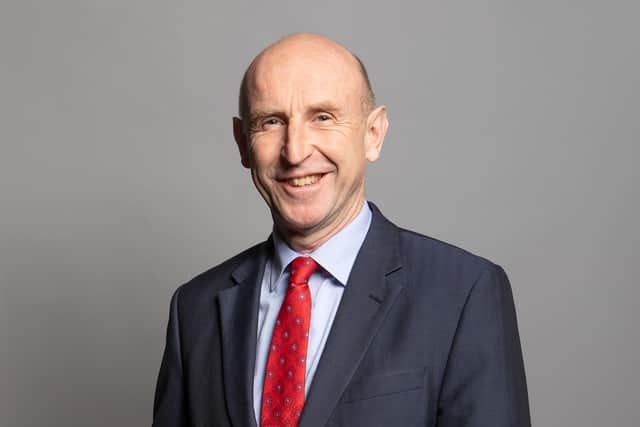
As the final countdown begins to a much-anticipated first budget of the new Andy Burnham era, we speak to local businesses to find out what they would like Chancellor John Healey to do next
“What are we doing it for?” asks Nicola Stevenson, director of Link Contracting Services, when considering the tax burden on her maintenance business that employs around 80 people.

“People should get rewarded for working hard. At the moment, you feel like the more you work, the less you get.”
In the run-up to the Autumn Budget on Wednesday October 28, Wigan Today spoke to five local businesses to ask what the Chancellor John Healey could do to support them.
Britain’s leading economic think tank, the Institute for Fiscal Studies, has warned that the government needs to find an extra £35bn to fund its existing commitments without making cuts to spending.
Yet all five businesses told this paper that the current tax burden is already holding back their growth, with the cost of employing staff their most common concern.
Lisa Ledson says that her one ask to the Chancellor would be to reverse the rise in employer contributions to National Insurance (NI).
The director of the family-run Ledson Motor Factors has had to think carefully about replacing retirees with new staff and “absolutely would have taken on more” had it not been for the increase in April 2025.
She believes in “paying people a decent wage, but it’s the additional cost of the NI which [employees] don’t see anyway” that is the problem.
Joel Edgerton, director of the estate agents Regan and Hallworth, also says that the NI increase “makes a massive difference” and that businesses are “all being hit by the tax man”.
Several said that young people, whom Ledson characterises as a “longer-term investment”, were hardest hit by the rises.
Ms Stevenson argues that apprentices were previously paid less because firms cannot charge for much of their work during training. Given their increasing cost, she now sees “no incentive” in taking them on.
This worries her because “we all want opportunities for our next generation”. She warns that AI could replace much of the unskilled workforce, making it even more difficult for young people to find work.
Beyond employment costs, Edgerton says that stamp duty is the biggest cost facing his clients, especially first-time buyers and families looking to upsize.
He is looking for a stamp duty holiday in the Budget, arguing that it is “crazy” that the tax “can double the cost in real terms” for those in the middle of the market.
All five businesses feel that the current tax system, in picking winners and losers, makes the wrong choices.
Amy Winrow, manager of Postcode Coffee House, a café at The Edge conference centre, wants her business to get the same support as pubs, clubs and music venues, which will receive a 20 per cent cut in business rates from April 2027.
“It’s a little bit unfair. Not everyone wants to go to the pub; some people just want a coffee with their grandma.”
Ben Morgan of The Snug, a grassroots music venue in Atherton that doubles as a café during the day, wants to see reform of alcohol duty too.
He says that there is “no reason why a pint should cost as much as it does in a venue, pub or bar, whereas in Tesco or Sainsbury’s you could pick up the same product for so much cheaper”.
He argues that drinking at home means you are “not around people who care about you, not socialising with friends”.
The hospitality businesses were keenest to stress their social role. Mr Morgan argues that the industry operates “constantly on a knife edge”.
“If the community were to lose us through our financial viability, it would be a real knife in the heart” of the area, referencing the “talent pipeline” of new artists that the venue supports.
Ms Winrow, like Morgan, stresses that “the money we make goes back into the community”, supporting “the work we do to bring people together”.
Ledson too stresses the importance of her local business to the area.
“As business owners, we spend a lot of our own personal money in our community. We and our employees work and live in Wigan.”
In an interview with The Times, the Chancellor said that he was “conscious” of “the cost of business” when planning his Budget, but Edgerton is pessimistic.
“Nothing is going to come out that could help us. They are not going to lower taxes.”
Ms Stevenson went further, arguing that the Prime Minister and MP for Makerfield Andy Burnham is “all smoke and no substance” and no better than his predecessor, who she says damaged business.
Coun Dane Anderton, the Wigan Council cabinet member responsible for economic regeneration, said: “We have a fantastic local business community that continues to lead on growth, investment and job creation.
“I am confident that the Chancellor has listened, balancing the challenging international economic context with Labour’s priorities for growth, investment and economic stability.”