
Nature Notes with Graham Workman: Gone but not forgotten....
Come on you Reds!
Sunday morning the forecast was of bright sunshine and, after the days of rain and gale-force winds, it was off on a Dad and Lad’s Adventure.
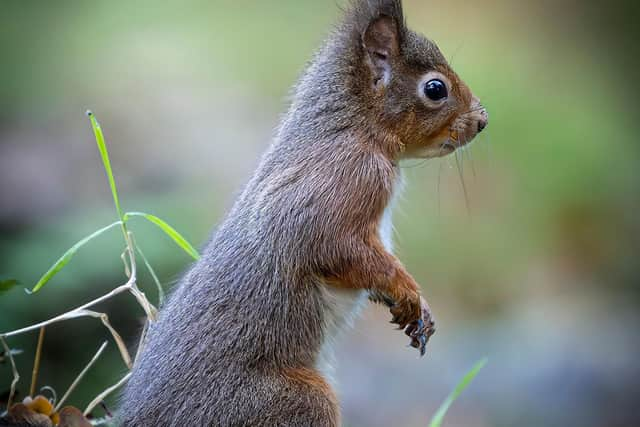

We headed north up to the Cumbrian conifer woodlands in search of the red squirrel.
After some searching we did eventually meet up with some.
So, we spent a couple of hours photographing them before news of a bird that Marcus hadn’t seen before had turned up just north of where we were so it was off further north to hopefully catch up with the Gray Phalarope. – but that’s a story for another day!
Forty years ago, when we first moved into our cottage on the edge of Haigh Plantations it was a dream come true!
The jewel in the crown was a small remanent population of red squirrels and, thankfully at that time, not a grey squirrel in sight or recorded within 10 miles of us.
Hoping to provide suitable foraging areas, we set about planting dozens of Scots pine, underplanted with hundreds of hazel shrubs which we hoped would eventually provide cob nuts for the squirrels.
One of the options we looked at was providing feeding boxes, but with discussions with English Nature (later to become Natural England) and a site manager for one of the large estates in the Scottish Highlands, we decided to leave the provision of additional feeding opportunities until we had managed to look at the population dynamics and develop a proper management plan.
We established there were possibly fewer than 12 adult squirrels which made their long-time survival questionable, never mind increasing the population to such a number we could expect colonisation of neighbouring woodlands.
So that was the challenge, potentially with some success if we looked at introducing reds from other areas – which I wasn’t keen on but it would be better than losing the species eventually from the woodland.
The best laid plans of mice and men were soon completely wrecked.
In the woodland on one of my Breeding Birds Survey I heard a faint chattering.
Sadly I knew what the sound was coming from a grey squirrel. It was at the time that it was thought that the larger more aggressive grey forced out the residents reds by bullying tactics.
They didn’t need to bully as it soon transpired something more sinister was at play here.
Soon research found that a disease carried by greys that had minimal impact on themselves but for the red squirrel it was fatal.
Within 18 months the red squirrel was no longer a resident and, in fact, despite days and days looking for evidence of them it was obvious they were gone.
Gradually the grey population expanded, and it was soon impossible to walk less that a 100m without bumping into a grey!
The only good that came out of this colonisation was the woodland now held a good and plentiful food source for goshawks – although they were and still are a very rare visitor to the woodland.
Then with the comeback of pine marten which would also "dine" on sweet grey squirrels so there could be a very small chance that eventually they may recolonise the wood.
Fingers crossed!