
Nature Notes with Graham Workman: redwings and fieldfare
It won't be long now before the winter thrushes begin heading north.
It seems an age since I first heard the "seez, seez, seez" call of redwings and the chuckling of fieldfares as they flew overhead on their annual winter holiday to the UK.
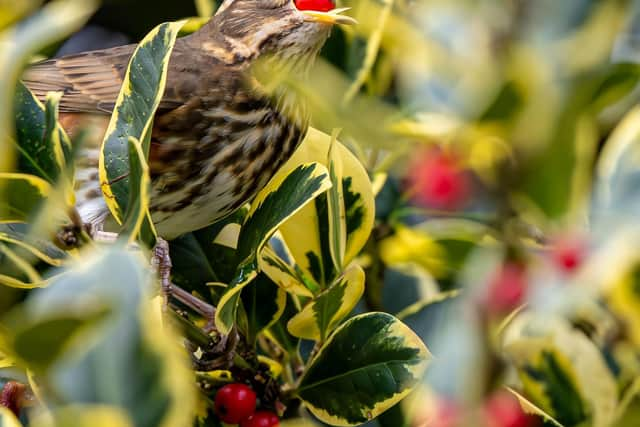

These small thrushes arrive in large numbers each autumn from their breeding grounds in Scandinavia and Iceland.
They are also joined by their close relative - the larger fieldfare from Scandinavia and Eastern Europe.
It is sometimes said that fieldfares are named after their nomadic habit – that they "fare" or travel over the fields.
They make a delightful sight as they come bounding across the fields under a pale clear sky, chuckling to each other as they go.
Some years, when there has been a good berry crop in Scandinavia, both redwings and fieldfares will delay their departure flights for the UK until they have stripped their local bushes of fruit.
However, even birds that start their journey with full bellies and in tiptop condition are often exhausted by the time they reach our coasts.
When a cold snap on the continent develops, large numbers will arrive here desperate for food.
If they don't find it - or the weather here is severe - they will move further south and west.
Once they do arrive, it soon becomes a "berryfest," seeking out berries, first going for those that have lots of nutritious pulp, such as elderberry and blackberry.
Then, as these are used up, they switch their attention to lower energy hedgerow fruits, such as hawthorn.
Large gardens and orchards are a good spot to look for wintering redwings and fieldfares.
They will happily feed alongside blackbirds, song thrushes and mistle thrushes.
Haigh woodlands always holds a good number of both species – lots more joining every night when they snuggle down in communal roosts.
Once the fruit has been scoffed, the birds are forced out into the open to feed on fallen fruit, becoming very vulnerable to hungry sparrowhawks who seem to do well off winter thrushes as a food source.
If you think about it there is quite a bit of meat on a well-fed fieldfare – “this is no ordinary fieldfare – this is a Scandinavian wild raised, organic fruit and berry fed fieldfare” as the advertisement might say!
In early spring, they become very bold as they get hungrier, feeding out in fields on bugs and insects in the soil.
They are prepared to make this risky move, because this food is a rich source of protein - just what they need to get back to Scandinavia and into fine fettle for the spring breeding season.
Here’s some factoids on redwings –
- Though this species is an abundant winter visitor to the British Isles, the breeding population is tiny and is confined mainly to the Scottish Highlands north of the Great Glen.
- Redwings migrate at night, moving generally when the sky is clear and the wind is in the east. They will often fly a considerable distance inland before settling for the first time.
- Estimating the number of redwings that winter in Britain is difficult because of the fluctuations from year to year, but it is thought to be in excess of a million birds.