
Wigan’s green-belt decision is welcome – but who is measuring the mental cost?
What impact do massive, life-changing planning applications have on Wigan people’s mental health?
A pressure specialist has welcomed Wigan Council’s decision not to take forward five controversial green-belt development sites — but says the prolonged pressure and anxiety experienced by residents must not be forgotten now that the immediate threat has receded.

The council has announced that four sites will not be included in its forthcoming Local Plan and that it will oppose proposals for a fifth site at West of Gibfield in Atherton.
Naomi, creator of the Firm Ground methodology and professionally known as The Pressure Assassin, believes the decision will bring considerable relief to affected communities.
However, she says the planning debate has exposed a wider question about how the human impact of uncertainty, industrial noise and overdevelopment is assessed.
“The council’s decision is welcome, and residents should feel that their voices have been heard,” Naomi said.
“But a planning decision does not erase the pressure people have already carried.
“When residents do not know whether the environment around their homes will be permanently changed, that uncertainty follows them every day.
“They are left wondering what development could mean for traffic, noise, light, air quality and whether their home will still feel like the place they chose to live.
“The body does not place that anxiety on hold while it waits for the next consultation or committee meeting.”
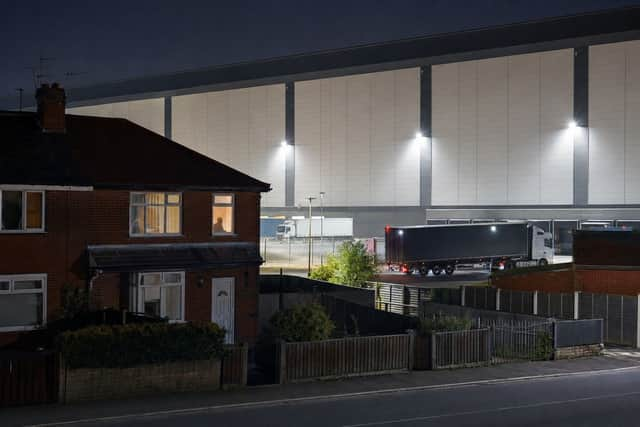
The experience of residents living near Astley Business Park demonstrates why these concerns cannot end once planning permission has been granted.
Wigan Council has acknowledged the strength of feeling surrounding the development and says it has continued working with residents and the developer to address concerns.
A recently published independent noise survey commissioned by the Astley Warehouse Action Group reported substantial night-time industrial noise from vehicle movements, engines, reversing alarms and activity within the service yard.
“Industrial noise is not simply an inconvenience when it repeatedly enters the hours in which people are supposed to sleep, recover and feel safe in their own homes,” Naomi said.
“If residents cannot open a bedroom window, rest without interruption or escape the sights and sounds of industrial activity, their home can stop being the place where they can feel relaxed, so they are pretty much on edge all the time.
“Overdevelopment does not only alter a landscape. It can alter how people experience their homes, their neighbourhoods and their daily lives—and that can create a cumulative mental and emotional impact.”
Environmental noise is recognised internationally as a public-health concern, with established links to stress and sleep disturbance and growing evidence concerning its wider effects on mental wellbeing.
Naomi believes Wigan’s current planning debate should therefore raise an important question:
“When major developments are being considered, who measures the pressure residents experience during years of uncertainty—and who monitors the long-term effect on their sleep, anxiety and mental wellbeing once industrial activity begins?
“Planning may be lawful on paper and still create a lasting human cost. If development is to be described as balanced, the pressure placed on the people living beside it must be counted alongside the square footage, employment figures and economic projections.”
“How many residents living in areas where these complaints are being raised have sought mental-health support, are currently sitting on waiting lists, or are carrying the impact without approaching services at all?
“If nobody asks that question, the mental cost of industrial noise, overdevelopment and prolonged uncertainty remains invisible.”