
Nature Notes: wildlife expert and columnist Graham Workman reflects on a trip round the Arctic
In his latest Nature Notes column, wildlife expert Graham Workman reminisces about a far chillier June he enjoyed last year: in the Arctic Ocean
Grief this week’s been an absolute scorcher: 32c in the garden and not much cooler indoors.

It had me wishing I was in the cooler temps I was enjoying this time last year.
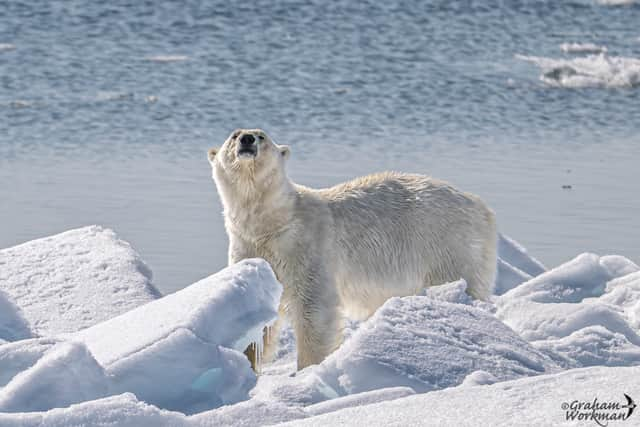
If I said we’d just got back to the ship after a day searching (successfully) for polar bears, that should give you a clue.
I was in the High Arctic cruising around the ice flows, fast ice and up to the permanent ice shelf.
The Arctic really is The Realm of the White Bear.
I was amazed at the “sense of presence” I got when up close and personal, sitting in a small rubber Zodiac just 20m away from a massive boar polar bear staring at me from a large floating ice floe.
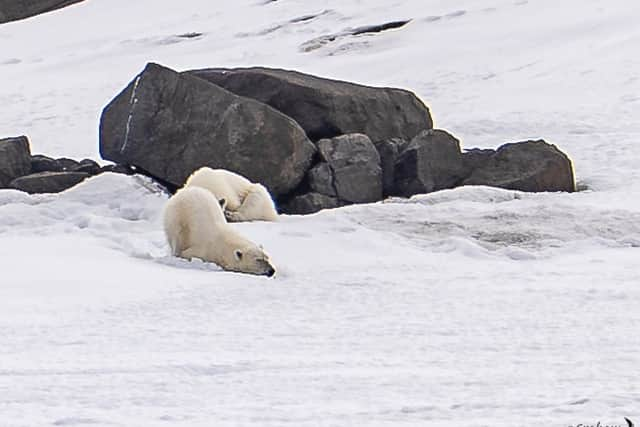
Polar Bears are the largest land carnivore - and the most dangerous for humans as they will actively hunt us.
Here are the Three Bears Rules:
If it's brown - lie down;
If it's black - fight back;
If it's white - goodnight!
Plus the end is not very pleasant.
Polar Bears will maul you but they won't necessarily kill you before they start eating you.
Like most large predators, bears eat large prey starting from the anus first, because it's easier to tear into than skin or hide - ouch!
Here are some facts I discovered while researching polar bears last year:
• In a sprint an adult polar bear can reach 25mph.
• Because they spend most of their lives on the sea ice of the Arctic Ocean and totally depend on the ocean for their food and habitat, polar bears are the only bear species to be considered marine mammals.
• Beneath all that thick white fur, polar bears actually have jet black skin. Their fur is translucent and only looks white because it reflects visible light.
• Although about half of a polar bear’s life is spent hunting for food, their hunts are surprisingly unsuccessful: possibly a success rate of two per cent. Their main prey are seals - ringed seals and bearded seals, which they hunt using several methods. Breaking through the ice into pupping dens, waiting to ambush the seal at breathing holes or at the water’s edge, or stalking unsuspecting seals that have hauled out to rest on the ice. Besides seals, polar bears will also scavenge carcasses or settle for small mammals, birds, eggs and vegetation.
• As you would expect, climate change is the greatest threat to the polar bear’s survival. Now the beast that is the oil and gas industry is now looking at the Arctic, we are very aware of the potential risks of habitat destruction from oil exploration work. Then any contact between bear and oil spills can be deadly by reducing the insulating effect of a bear’s fur meaning they have to use more energy to get warm and can prove deadly if ingested. We are such a sad disaster of a species.
• At birth polar bear cubs weigh just one and a half pounds. Mummy Bear’s milk has an incredibly high fat content which allows the cubs to increase their weight 15-fold from birth to when they emerge from the den.
• Male polar bears (boars - and females are sows) can weigh up to 126st ,(about the weight of 10 men) and are twice the size of females. The males can also grow up to 3m long, making them the largest bear species and the largest land carnivore in the world.