
Tens of thousands waiting for treatment at Wigan's hospitals, amid warning efforts to reduce national waits are "stalling"
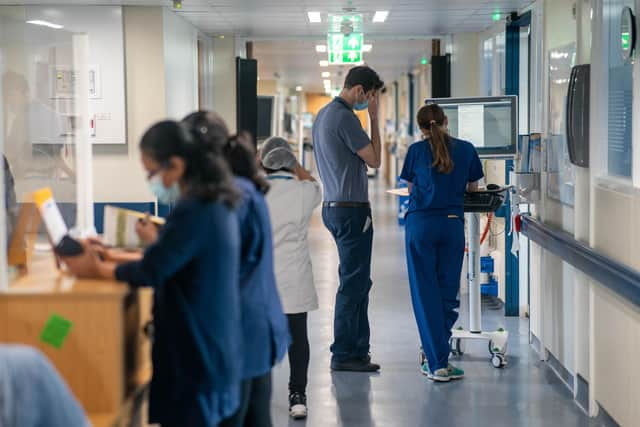
Tens of thousands of patients were waiting for routine treatment at Wigan’s hospitals in March, new figures show.
It comes as a health and social care think-tank warned efforts to reduce waiting times were "stalling".
NHS England figures show 50,122 patients were waiting for non-urgent elective operations or treatment at Wrightington, Wigan and Leigh Teaching Hospitals NHS Foundation Trust (WWL) at the end of March – up slightly from 50,098 in February, but down from 53,182 in March 2024.
Of those, 1,885 (four per cent) had been waiting for longer than a year.

The median waiting time from referral to treatment at WWL was 15 weeks at the end of March, down from 16 weeks the month before.
Meanwhile, 6.25m people in England were waiting to start treatment at the end of March, up slightly from 6.24m in February.
It means the national waiting list for routine hospital treatment has risen for the first time in seven months.
The list hit a record high in September 2023, with 6.5m patients waiting.
Sarah Scobie, deputy director of research at the Nuffield Trust, said: "The number of people facing extremely long waits for a hospital appointment has reduced, but progress in bringing down the overall waiting list is stalling.
"The Government is hoping that initiatives like expanding use of advice and guidance in general practice will help, so a big question as ministers prepare the 10-Year Health Plan is whether things will get back on track with driving down the backlog."
Separate figures show 1.7m patients in England were waiting for a key diagnostic test in March, the same as in February.
At WWL, 9,453 patients were waiting for one of 14 standard tests, such as an MRI scan, non-obstetric ultrasound or gastroscopy at this time.
Of them, 955 (10 per cent) had been waiting for at least six weeks.
Other NHS England figures show cancer patients at WWL were not being seen quickly enough.
The NHS states 85 per cent of cancer patients with an urgent referral should start treatment within 62 days, but just 78 per cent of those referred to WWL in March began treatment within two months.
That was up from 73 per cent in February, but equal to the proportion in March 2024.
Dr Katharine Halliday, president of the Royal College of Radiologists, welcomed the "encouraging progress" on cancer diagnosis times, but warned the improvement pace remains "sluggish".
She added: "Once diagnosed, too many patients still face excessive waits to start cancer treatment.
"Demand for cancer diagnosis and treatment is rising, so we must take a long-term approach to tackle the backlog for good.
"We urge the Government to invest in the workforce by training up more radiologists and oncologists."
Health and social care secretary Wes Streeting said: "Since day one, we have been clear it will take time to reverse the disastrous waiting list we inherited.
"But since July, real progress has been made – including over winter. We have overseen a massive increase in appointments available to meet rising demand, reduced long waits and helped people get diagnosed quicker.
"Our Plan for Change will continue to put patients first as we work to end the misery felt by millions up and down the country who have been denied the care they need for too long."