
7 things you'll remember if you grew up using computers in the 90s

There was no Facebook, Twitter or YouTube
- Computers have changed a lot since the 90s, when the world went online
- There was no Facebook, Twitter or YouTube, for a start
- If you grew up using computers back then, there are some things you’ll remember
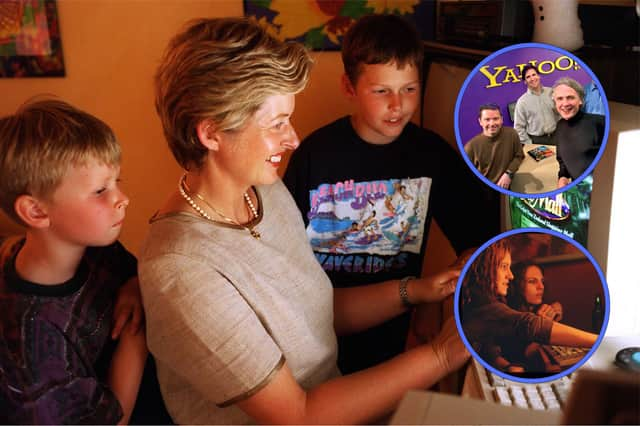

It’s more than three decades since the World Wide Web entered the public domain in 1993.
The internet was a simpler and less scary place back then, full of hope that it would help bring people together to share knowledge and improve our lives.
It didn’t quite work out that way, though there’s still much debate about whether the benefits outweigh the harm it has caused society.
If you grew up in the 90s, you’ll remember the excitement of getting online for the first time.
It’s not just the World Wide Web that’s changed a lot over the last three decades, but computers themselves.
Here are seven things you’ll almost certainly remember if you grew up using computers in the 90s.
Flying toasters screensaver
All computers had a screensaver back in the 90s and early noughties, and there were plenty to choose from.
Two of the most iconic were the 3D pipes and the flying toasters, which could be seen on most screens back then.
Screensavers were designed to protect monitors from burn-in, but as people switched from CRT and plasma screens to modern LCD ones, they became largely obsolete.
Screeching modems
These days we’re always connected to the internet, but it wasn’t always thus.
Back in the 90s, you had to check the landline was free before going online.
You then had to endure the horrendous screeching of the modem, which sounded like a small creature was being tortured.
Once you did get on, pages typically took an age to load, especially if they had photos on them, which would often reveal themselves line by line, such were the painfully slow speeds most users encountered.
Cleaning out your mouse

It was filthy work, but it had to be done.
Back in the days of ball mice, every so often you would have to take the mouse apart and give it a good clean to get it moving smoothly again.
What you found inside could be a bit disgusting, but it was pretty satisfying clearing out all the dead skin and hair that had accumulated.
Everyone also had a mouse mat back then. Nobody bought one, of course, as branded mouse mats were almost as popular as the clicky pens and those little furry creatures that businesses loved giving away.
Internet cafés
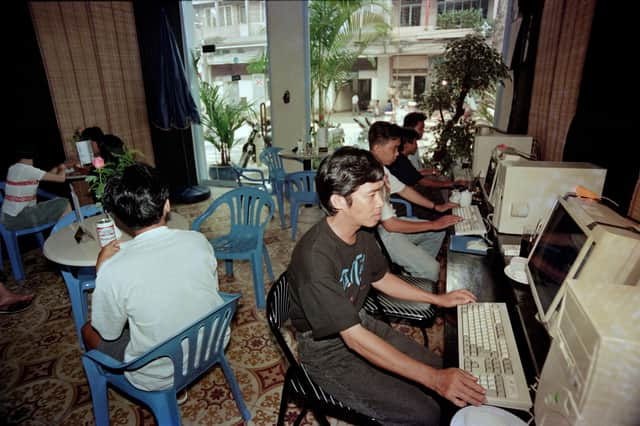
Before everyone was online, internet cafés provided access to those who couldn’t otherwise afford to browse the web.
The first internet cafés opened in 1994, and they soon proliferated.
Even if you had the internet at home, you might have visited one when you were out and about and needed to check your emails, or to keep in touch with friends and family while abroad.
In the days when the online world was friendlier, internet cafés could be highly sociable places, with people often gathering there to play games.
As more people got smartphones, however, internet cafés quickly became redundant.
Ask Jeeves
In the days before Google became a verb, and part of our everyday lexicon, it was Jeeves who had all the answers.
Well, that wasn’t strictly true, but he gave it a jolly good try.
Ask Jeeves, named after Bertie Wooster’s valet in the popular P.G. Wodehouse books, launched in 1997, promising to fetch the answers to whatever questions you asked.
It was particularly popular with schoolchildren seeking to save time on their homework in the days before AI became their friend.
The Jeeves was eventually dropped from the title in 2006, with the search engine becoming simply Ask.com.
Sharing music on Napster
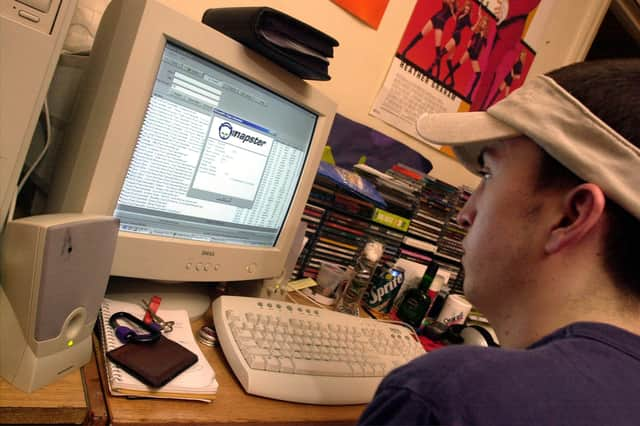
Before Spotify, YouTube or even MySpace, there was Napster.
Millions of people shared singles and albums via the platform, which launched in June 1999, sending a collective shudder down the spines of music industry bosses.
Lawsuits soon followed, with Metallica and Dr. Dre among the first to take legal action against Napster for allowing their tracks to be shared for free.
But some smaller artists found it was a helpful promotional tool, increasing awareness of their music and boosting sales, even though some users were getting their music for free.
Napster didn’t last long, initially shutting down in 2001 as it sought to settle a case brought by the recording industry, and subsequently filing for bankruptcy in 2002.
The brand lived on, however, with the name and other assets being bought and used for an online music store, among other services.
Chatting with strangers on AOL
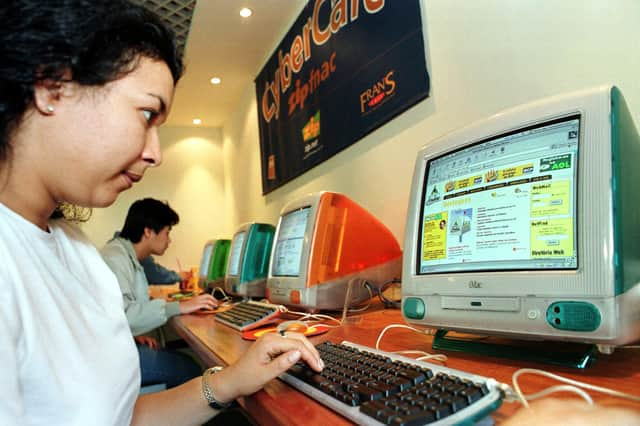
When the internet first became popular, the new virtual world was so exciting that we seemed to forget about the inherent dangers of sharing our personal details with strangers online.
One of the first things many people did once they got online was head to a chat room.
For many of us, that chat room was on AOL, though MSN Messenger and Yahoo soon challenged its dominance.
What was the best thing about growing up in the 90s? This retro photo gallery, telling the story of the decade in 14 memorable images, might help jog your memory.